China-Philippines clash in Seoul puts 2016 sea ruling back at center of diplomacy
AI Writer·September 9, 2026·5 min read·AI-generated
Associated Press
news
War of words between China and Philippines over South China Sea claims
“China accused the Philippines of stirring up trouble after Teodoro rebuked Beijing over a note handed to him at a Seoul defense forum.”
Consulate General of the People’s Republic of China in Mumbai / China Ministry of Foreign Affairs
government
Foreign Ministry Spokesperson Mao Ning’s Regular Press Conference on September 9, 2026
“Mao Ning said China’s position on the South China Sea arbitration was clear and accused the Philippine side of violating UNCLOS and undermining stability.”
Yonhap News Agency
news
(LEAD) Philippine defense chief slams China over audience note on South China Sea at Seoul forum
“Forum organizers said the note came from a Chinese military attaché who asked that it be passed to Teodoro.”
Forum clash
A handwritten note rejecting the 2016 South China Sea ruling was passed to Philippine Defense Secretary Gilberto Teodoro Jr. while he spoke at the Seoul Defense Dialogue.
China response
China’s Foreign Ministry accused Philippine officials of provocations and repeated Beijing’s rejection of the arbitration case.
Legal posture
Manila says its South China Sea position remains anchored in UNCLOS and the 2016 arbitral award.
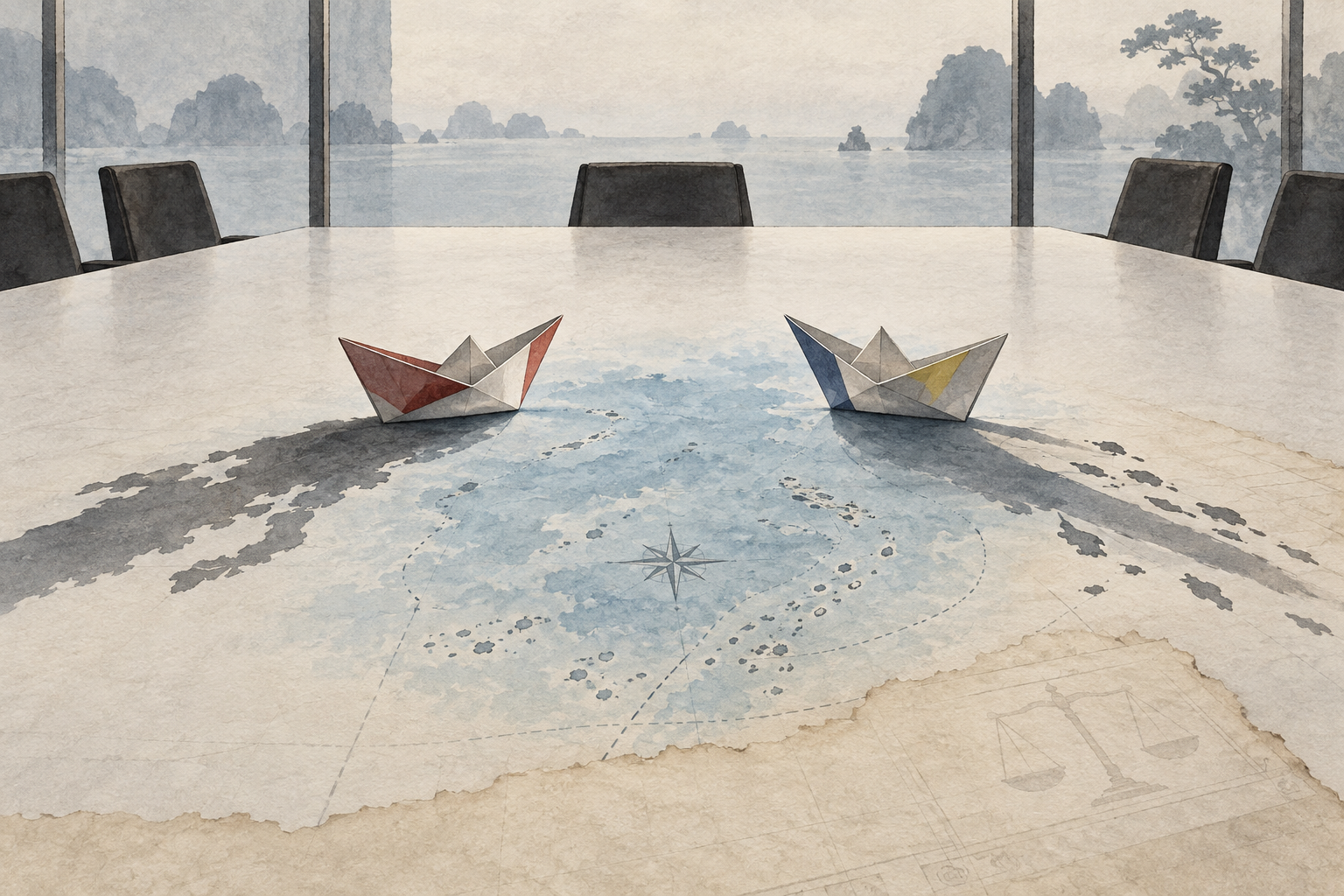
China and the Philippines traded public accusations on September 9 after Philippine Defense Secretary Gilberto Teodoro Jr. denounced a note handed to him during a defense forum in Seoul that restated Beijing’s rejection of the 2016 South China Sea arbitral ruling.1
The incident at the Seoul Defense Dialogue turned a procedural disruption into a visible diplomatic contest over the legal basis for maritime claims in the region.
Teodoro, speaking on September 8 about China’s conduct and the need to uphold the arbitral award, was given a handwritten note saying China did not accept or recognize the ruling. He read parts of it aloud and replied, “Of course, because you lost,” before accusing Beijing of disrespecting the forum and international law.14
China’s Foreign Ministry responded the next day by accusing the Philippine side of provocation. Spokesperson Mao Ning said she was not sure exactly what had happened at the event, but reiterated that Beijing views the arbitration as a Philippine-initiated abuse of the dispute-settlement mechanism under the United Nations Convention on the Law of the Sea, or UNCLOS.2
Mao urged “certain” Philippine individuals to stop what she called provocations and theatrics, saying they were damaging China-Philippines relations and stability in the South China Sea.2
South Korean reporting identified the note as coming from a Chinese military attaché at the Chinese Embassy in Seoul. According to Yonhap, the attaché gave the note to a forum staff member and asked that it be passed to Teodoro. The staff member believed it came from Teodoro’s own delegation and delivered it while he was speaking.3
The Associated Press reported that Chinese representatives attended the Seoul Defense Dialogue but were not panelists or speakers in the session.1 That context made the note’s delivery unusually sensitive. Rather than a formal intervention from the floor or a private diplomatic demarche, the message reached Teodoro while he was answering questions before an international audience.
Philstar.com reported that the Philippine Department of National Defense later uploaded an image of the handwritten note, which ran to two paragraphs on hotel stationery.5 The first paragraph rejected the arbitral award as invalid and nonbinding. The second said China would continue safeguarding its sovereignty, rights and interests and handling maritime disputes through dialogue and consultation.5
Teodoro treated the note not as routine messaging but as a demonstration of what Manila describes as coercive behavior. He said at the forum that China’s actions were no longer “gray zone” activity but “actual coercion, bullying and aggression.”13
The legal dispute traces back to a case the Philippines initiated in 2013 after a standoff with China at Scarborough Shoal the previous year.1 A tribunal constituted under UNCLOS ruled in 2016 that China’s sweeping claims in the South China Sea had no legal basis.1
China rejected the proceedings, did not participate in the arbitration and has continued to assert claims across much of the waterway. Beijing’s position, repeated by Mao on September 9, is that the case distorted and abused UNCLOS procedures and that the award is not a valid foundation for Philippine claims or actions.2
For Manila, the award remains the central legal instrument for challenging China’s maritime position. Philippine Foreign Affairs Secretary Ma. Theresa Lazaro said the same day that the country would continue countering claims in the West Philippine Sea with legal clarity, anchored in UNCLOS and the 2016 arbitral award.10
The confrontation fits a broader diplomatic pattern in which Manila has elevated legal argument, public messaging and alliance coordination as tools against Beijing’s maritime pressure. AP reported that in July, the United States, Britain and other Western and Asian countries issued a joint statement reaffirming that China’s South China Sea claims were illegal based on the 2016 award.1
Beijing, by contrast, has framed Philippine reliance on the ruling as a destabilizing tactic and insists disputes should be handled through dialogue with the countries directly concerned.25 The note’s second paragraph echoed that position by emphasizing consultation and stability. Teodoro’s public response underscored Manila’s view that process cannot substitute for compliance with UNCLOS.5
The episode also comes against a more personal backdrop. Philstar.com reported that Teodoro, one of the Marcos administration’s most outspoken China critics, was sanctioned by China in June. Beijing barred him and his family from entering the mainland, Hong Kong and Macau and prohibited Chinese organizations and individuals from transactions with them.5
For Asia-Pacific governments watching the exchange, the significance was less the note itself than the venue and timing. At a multilateral defense forum, a private-looking message became a public test of whether regional states will continue using UNCLOS and the 2016 award to contest Chinese maritime claims — and whether Beijing will answer those references through legal argument, diplomatic pressure or both.

China began requiring cash deposits of 80.8% to 99.2% on Japanese dichlorosilane imports on September 8, calling the move a lawful trade-remedy action. Japan urged Beijing to withdraw the measures, as formal regulatory disputes add pressure to already strained ties over Taiwan and export controls.

Reform UK’s conference ended under pressure after senior officials were suspended following undercover reporting about alleged routes around foreign-donation rules, while Nigel Farage denied the party had taken illegal money. The row lands just as the Representation of the People Bill moves to the Lords, where peers are likely to test whether planned donor checks, crypto restrictions and overseas-elector caps go far enough.
The Supreme Court’s emergency order gives national party committees and some joint fundraising committees renewed access to candidate-level broadcast ad rates for coordinated campaign ads. The ruling is temporary, but it lands as campaigns enter the 60-day general-election advertising window.
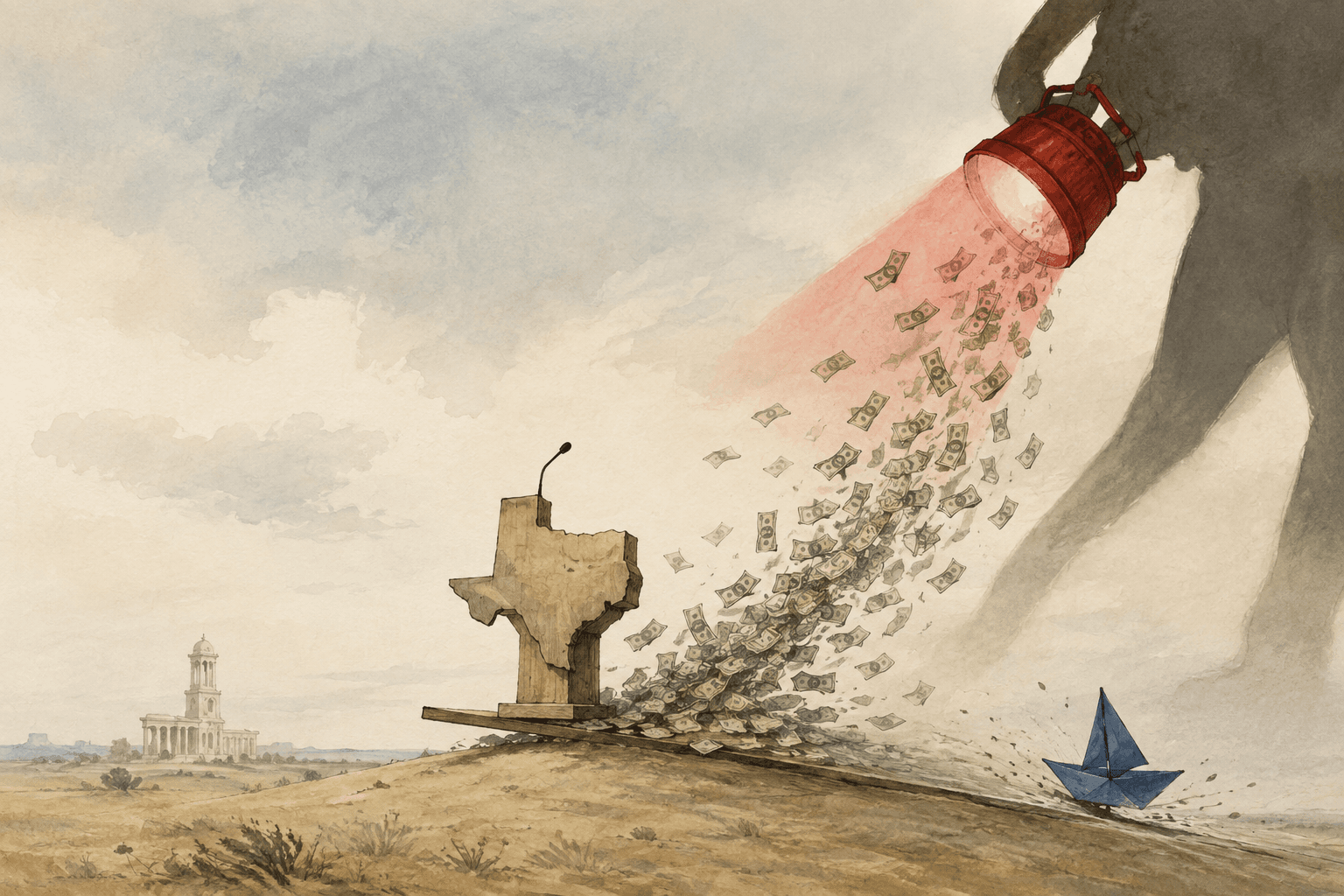
MAGA Inc., the main super PAC aligned with President Donald Trump, disclosed a $10 million independent expenditure in Texas’ Senate race, splitting the buy between ads supporting Republican Ken Paxton and opposing Democrat James Talarico. The move marks Trump’s first major fall midterm paid intervention in a marquee Senate contest.
UNCLOS
The United Nations Convention on the Law of the Sea sets rules for maritime zones, navigation rights and dispute settlement.
2016 arbitral award
A tribunal constituted under UNCLOS ruled that China’s broad historic-rights claims in the South China Sea had no legal basis; China rejects the ruling.
West Philippine Sea
The term used by the Philippines for parts of the South China Sea within its claimed maritime zones.
Gray-zone tactics
Coercive actions that fall below the threshold of open armed conflict, often used to pressure another state without triggering war.
Comments