China uses APEC stage to manage U.S. rivalry and host Putin

Ministry of Foreign Affairs of the People’s Republic of China
government
Foreign Ministry Spokesperson Guo Jiakun’s Remarks on October 3, 2026
South China Morning Post
news
Putin’s hopes for ‘productive’ Apec fuel talk of summit with Xi and Trump
Pekingnology
other
Putin, Answering Henry Huiyao Wang, Says Xi-Trump-Putin Meeting at APEC Is Possible
Untracked bias
South China Morning Post
Putin’s hopes for ‘productive’ Apec fuel talk of summit with Xi and Trump
Pekingnology
Putin, Answering Henry Huiyao Wang, Says Xi-Trump-Putin Meeting at APEC Is Possible
Myanmar International TV
Russia's Putin welcomes possible trilateral meeting with Trump and Xi
Devdiscourse / Reuters
Putin sees boost to ties from APEC meet with China's Xi, Russian agencies say
Business Recorder
Putin sees boost to ties from APEC meet with China's Xi, Russian agencies say
Sky News
Ukraine war latest: Putin admits toll of Ukrainian strikes - as he eyes new world order
Bias and factuality ratings from Media Bias Fact Check. Outlets without a rating are marked “Untracked.”
Putin welcomed
China said it welcomes Vladimir Putin at November’s APEC Economic Leaders’ Meeting in Shenzhen.
Trilateral unclear
Beijing said it had no information to offer on Putin’s suggestion of a possible China-U.S.-Russia meeting.
Security backdrop
Putin observed drills involving Chinese troops one day before Beijing’s October 3 remarks.
Beijing has confirmed it would welcome Russian President Vladimir Putin at November’s APEC Economic Leaders’ Meeting in Shenzhen, putting China’s host year at the center of a widening diplomatic test: managing competition with the United States while showing that China-Russia ties remain part of the Asia-Pacific’s mainstream political calendar.1
The October 3 Foreign Ministry remarks were carefully calibrated. Asked whether a Putin-Xi meeting at APEC was confirmed, spokesperson Guo Jiakun said China welcomed Putin’s attendance and was ready to work with Russia for “fruitful outcomes” during the APEC “China Year.”1 But when asked about Putin’s statement that a trilateral meeting with Chinese and U.S. leaders was possible, Guo offered no endorsement. He said only that China would work with all parties for a successful host year and had “no information to offer.”1
That distinction matters. China is not rejecting Putin’s idea, but it is also not allowing Moscow to define the Shenzhen agenda. Beijing is preserving the flexibility of the host: it can welcome Russia, leave room for U.S. engagement after the recent Xi-Trump summit, and avoid prematurely turning APEC’s economic forum into a three-power security negotiation.
China’s immediate goal is to keep APEC framed as an Asia-Pacific economic platform, not a crisis summit among major powers. The Foreign Ministry’s answer repeatedly returned to the language of the APEC “China Year,” economic growth and regional contribution.1 That fits Beijing’s broader host-year message: China wants the Shenzhen meeting to present it as a convener of regional development, trade, connectivity and innovation, especially as U.S.-China competition continues to shape regional choices.
The timing gives Beijing an opening. According to reporting and commentary on Putin’s remarks, Xi had recently returned from a September 23-25 visit to the United States and summit with President Donald Trump, while Putin is expected to attend the Shenzhen APEC meeting in November.3 South China Morning Post reporting said speculation about a possible three-way encounter has grown because Trump is also expected at the forum, though analysts cautioned that any such meeting would require groundwork and realistic expectations.2
For China, APEC is useful precisely because it is multilateral. Bilateral U.S.-China competition can be folded into a wider regional setting where Beijing can emphasize cooperation, growth and Asia-Pacific agency. Rather than hosting an event defined only by the United States, China can use the APEC stage to show that Washington is one participant among many — important, but not singular.
Putin’s own formulation increases that pressure. At the Valdai Discussion Club, he said a trilateral meeting at APEC was possible, but stressed that it would depend largely on China as host and that the parties would first need to identify an agenda.3 That effectively placed the scheduling and political burden on Beijing.
China avoided taking that bait. By saying it had no information to offer, Beijing kept the idea alive without owning it. That is consistent with how China often manages high-stakes summit diplomacy: maintain ambiguity, avoid public commitments before choreography is complete, and preserve the appearance that any leader-level encounter serves the broader multilateral agenda rather than another country’s tactical needs.
Moscow-linked coverage had already framed China’s position as welcoming Putin’s plan to attend the Shenzhen summit before the October 3 Foreign Ministry remarks.4 The official Chinese statement sharpened that line: Putin is welcome at APEC, but Beijing is not confirming a trilateral process.
A Putin-Xi appearance in Shenzhen would signal that China-Russia ties are not confined to the bilateral track or to institutions dominated by non-Western powers. It would place the relationship inside APEC, a forum that includes the United States and key U.S. allies and partners across the Pacific.
The symbolism would be significant. APEC is formally economic, but leaders’ weeks are also diplomatic marketplaces. If Putin and Xi meet there, Beijing can show that its relationship with Moscow remains stable, visible and regionally relevant, even as China manages channels with Washington. That image would reinforce Beijing’s preferred message: China can talk to all sides, host all sides and resist pressure to isolate Russia diplomatically.
The optics would extend beyond economics. On October 2, Putin attended military drills in the Urals involving troops from China and other countries, according to the Associated Press.5 The drills included 47,000 troops overall, with about 6,000 taking part in the final phase at Chebarkulsky, and Chinese contingents were listed among participating forces.5 Against that backdrop, a Putin-Xi appearance at APEC would be read not only as summit protocol but as part of a wider pattern of strategic coordination.
That does not mean APEC itself becomes a security forum. But for regional policymakers, the distinction between economic diplomacy and strategic signaling is increasingly thin. China’s ability to host Putin at an economic leaders’ meeting while engaging the United States would illustrate Beijing’s effort to normalize its Russia relationship within routine Asia-Pacific diplomacy.
For Washington and U.S. partners, the Shenzhen meeting could test whether China’s host-year language of openness and cooperation translates into restraint or simply provides diplomatic cover for parallel alignment with Russia.
Beijing’s likely goal is not to force a dramatic choice on regional economies. APEC’s membership is too diverse for that, and China’s host-year messaging depends on broad participation. Instead, China can use the event to show that its regional leadership is compatible with managing U.S. competition and maintaining Russia ties at the same time.
That is why Guo’s October 3 response matters. Beijing welcomed Putin, invoked China-Russia head-of-state diplomacy and APEC outcomes, but did not elevate the trilateral suggestion into a confirmed initiative.1 The message to Moscow is that Russia has a place in Shenzhen. The message to Washington is that China still controls the format. The message to the region is that Beijing intends to use APEC as a platform for order, not rupture.
The key question is whether China keeps the Putin-Xi track bilateral or turns it into part of a wider sequence that includes Trump. If a trilateral encounter occurs, it would be a major diplomatic moment, but its substance would depend on whether the parties can define an agenda beyond symbolism. If it does not occur, China can still use the leaders’ week to show that it can host both U.S. competition management and Russia engagement under the same institutional roof.
For Asia-Pacific policy readers, the larger point is that APEC’s economic setting is becoming Beijing’s next strategic stage. China wants Shenzhen to produce host-year outcomes and regional language on growth, while also showing that China-Russia coordination remains visible and durable. The success of that balancing act will depend on whether Beijing can keep the summit focused on Asia-Pacific cooperation even as Putin’s presence — and the possibility of U.S.-China-Russia interaction — pulls attention toward great-power diplomacy.
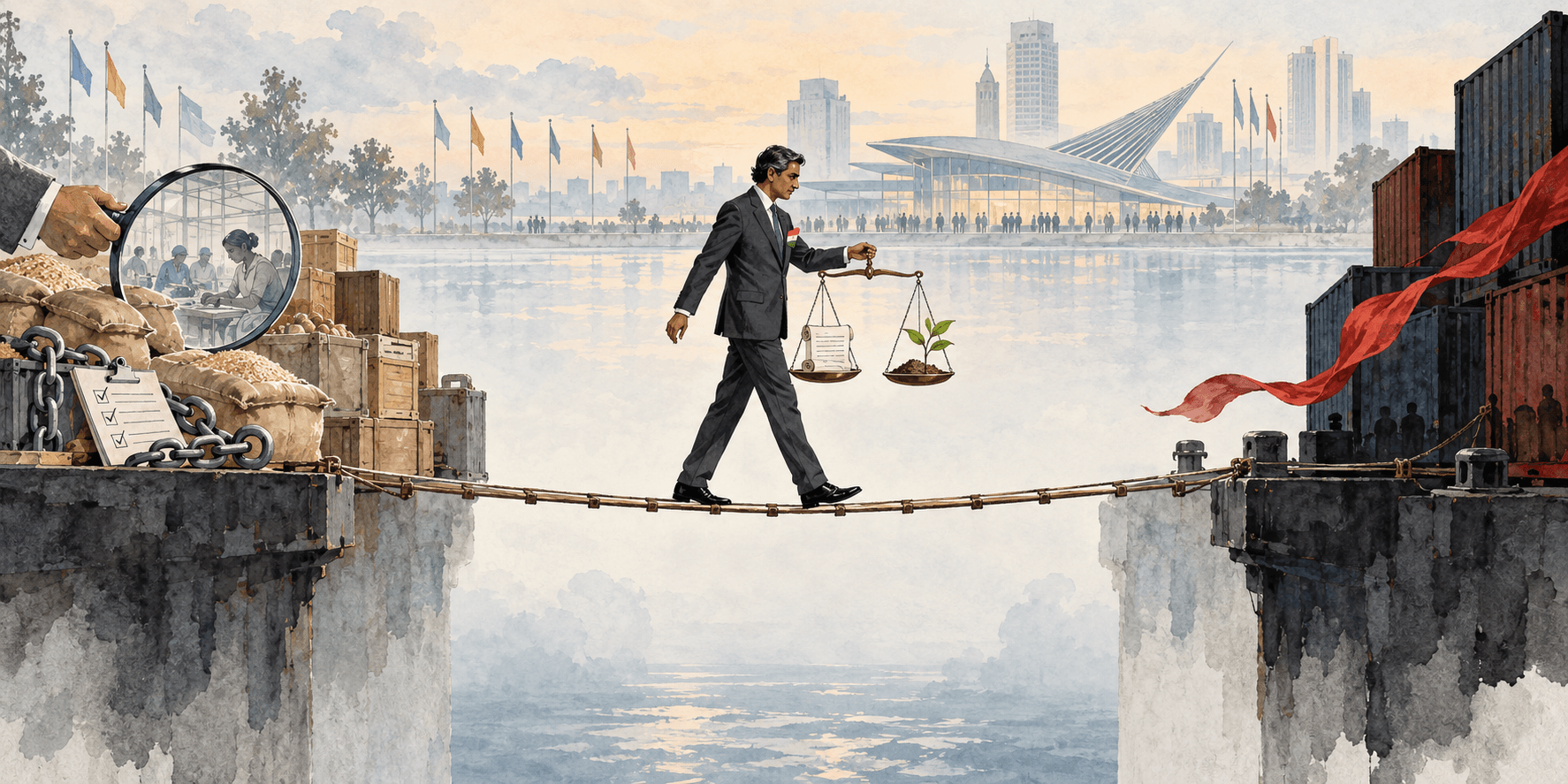
At the G20 trade ministers’ meeting in Milwaukee, Piyush Goyal backed action on food coercion, forced labor and trade distortions, but framed India’s support around WTO compliance, verifiable evidence and developing-country policy space. The position placed New Delhi between U.S.-led supply-chain enforcement priorities and China’s objections to unilateralism.

Japan and the United States signed a protocol on October 2 extending their bilateral science and technology cooperation agreement indefinitely and updating provisions on intellectual property. Tokyo framed the move as part of wider Indo-Pacific technology diplomacy, including cooperation on a safe and trustworthy AI ecosystem in the Global South.

Two incidents outside the main battlefield — an alleged cockpit attack on an Israel-bound FlyDubai flight and a counterterrorism arrest near RAF Fairford — are putting new pressure on governments to distinguish intelligence leads from public proof. The cases come as U.S. and British officials weigh possible Iranian links while Washington moves additional military assets into the region.

Nearly a year after the October 2025 ceasefire, Gaza health authorities say Israeli strikes have killed 1,439 Palestinians, while WHO says medical supplies still face long approval waits, rejected shipments and limited crossings. Aid agencies say casualty verification, evacuation access and supply approvals remain central measures of whether the ceasefire is functioning.
APEC
The Asia-Pacific Economic Cooperation forum is a 21-member regional grouping focused on trade, investment and economic cooperation.
APEC China Year
China’s 2026 host year, culminating in the November leaders’ meeting in Shenzhen.
Trilateral meeting
In this context, a possible leaders’ encounter involving China, the United States and Russia during the APEC summit.
Head-of-state diplomacy
A Chinese diplomatic phrase emphasizing that leader-level ties guide the broader relationship between states.





Comments