Election officials prepare for possible ICE presence at polling sites despite DHS denial
CNN via KESQ
news
Inside Democrats’ efforts to secure Election Day and respond to fears of Trump interference
The Washington Post
news
With threats to midterms, states say Trump administration isn’t helping
MEAWW
news
‘Fearmongering, false statements’: Todd Blanche hits back at armed poll monitor claims
Untracked bias
100% of tracked sources are High factuality
Bias and factuality ratings from Media Bias Fact Check. Outlets without a rating are marked “Untracked.”
DHS posture
DHS says ICE is not planning operations that target polling places, while leaving room for specific actions tied to warrants or threats.
Legal limit
Federal law restricts federal officials from bringing troops or armed personnel to election sites except in extremely limited circumstances.
Voter impact
Voting-rights groups warn that even an isolated image of immigration agents near a polling place could deter eligible voters in mixed-status families.
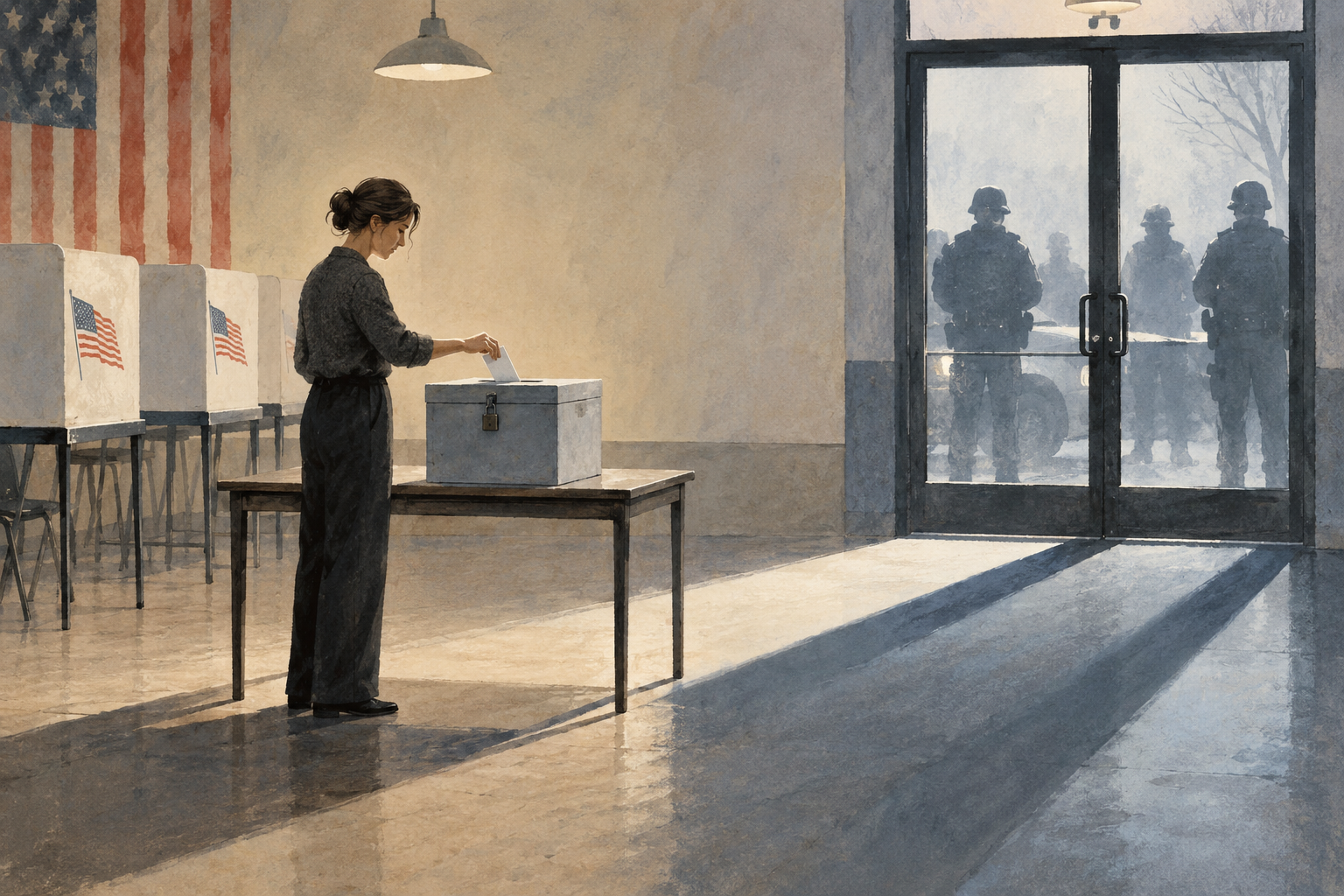
The Department of Homeland Security says Immigration and Customs Enforcement is not planning operations targeting polling places in the November 3 midterm elections. But that assurance has not stopped election officials, voting-rights groups and party lawyers from preparing for the possibility that federal agents could appear near voting sites.4
The issue is not only whether ICE will show up. President Donald Trump’s broader immigration-enforcement posture has turned even a narrow, legally limited encounter between federal agents and voters into a politically charged election-administration problem. In large jurisdictions and battleground states, officials are preparing to keep polling places open, prevent voter intimidation, document any incident and move quickly to court if needed.12
DHS has called fears of a large immigration-enforcement presence at polling places alarmist. It has said ICE actions are intelligence-driven and specific, not part of a plan to patrol voting locations.6 But DHS leaders have also left room for limited exceptions, including responses to threats or warrants for people already under surveillance.4 That caveat is where election officials’ planning begins.
The administration’s public position is that there is no announced operation to send ICE to polling sites. Reports aimed at Cuban American voters in South Florida said DHS clarified that ICE is not planning operations targeting polling stations, while noting that immigration agents could act in specific circumstances.6
Attorney General Todd Blanche has separately rejected claims that Justice Department election monitors are armed federal agents. In an October 4 interview, Blanche said the monitors would not be armed federal personnel and accused critics of spreading false fears about the program.3 The Justice Department has said it plans to send at least 1,000 monitors for the 2026 midterms, a larger operation than in past cycles, according to MEAWW’s summary of Blanche’s remarks.3
Those statements address related but distinct issues. DOJ election monitors are a civil election-oversight tool used for decades. ICE agents are armed immigration-enforcement officers. Election officials’ legal and practical concerns focus on the latter: what happens if armed immigration personnel appear at or near a place where ballots are being cast or counted.
Federal law sharply restricts armed federal presence at election sites. Title 18, Section 592 of the U.S. Code bars federal officials from bringing or keeping “troops or armed men” at a place where an election is being held, except when necessary to repel armed enemies of the United States.4 Violations can carry fines, prison time and disqualification from federal office, according to summaries of the statute.46
Election-law experts cited in reports on the issue say the restriction is generally understood to apply not only to military forces but also to armed federal civilian personnel, including ICE agents.6 That makes any planned or visible armed presence inside a polling place legally fraught. It also raises separate questions under federal and state voter-intimidation laws, particularly if agents are near a polling site rather than inside it.6
The legal question could become more complicated if agents say they are acting on a warrant or responding to a security threat. DHS officials have cited those circumstances as possible exceptions to a general no-patrol posture.4 But election lawyers and administrators are focused first on the practical effect: whether voters see agents and leave, avoid the location or spread warnings that discourage others from voting.
Planning is happening at several levels. Congressional Democrats, legal experts and outside groups have run through scenarios involving DHS agents, National Guard troops, ballot seizures, misinformation and attempts to disrupt vote counting or certification.1 Rep. Joe Morelle, who is overseeing House Democrats’ election-preparation work, has outlined more than 150 possible Election Day and post-election threats, including ICE agents appearing at voting locations.1
Response plans include legal filings prepared in advance, rapid documentation of incidents and congressional observer programs designed to record potential interference or irregularities.1 The ACLU has also trained thousands of volunteers and gamed out possible disruptions, including ballot tampering and certification disputes.1
State officials, including Republicans, are also planning for the scenario. The Washington Post reported that multiple Republican state election officials said they have plans in place if ICE agents appear at polling sites.2 Those preparations come amid strained federal-state election-security coordination, with some state officials saying they are receiving less useful support from Washington than in past cycles.2
At the local level, Florida officials in Broward and Palm Beach counties have fielded questions from voters and civic groups about the possibility of ICE appearing at polling places.6 Broward Supervisor of Elections Joe Scott told PolitiFact, according to CubaHeadlines, that the county’s voters are U.S. citizens and there is no reason for ICE to be there.6
The concern is amplified by the administration’s immigration-enforcement record and its effect on Latino communities. NBC News, republished by AOL, reported that 67% of potential Latino voters in a recent NBC News/Telemundo survey said Trump’s immigration enforcement had gone too far. The survey also found that 31% of Latino voters said they or someone close to them had begun carrying identification because of ICE concerns.5
In Texas, the fatal shooting of Houston father Lorenzo Salgado Araujo during an immigration operation has become a flashpoint in Latino politics, according to the NBC report.5 Authorities later said Salgado Araujo was not the intended target of the operation. The case has fed anger and fear in communities already sensitive to immigration enforcement.5
That context matters at polling places. Voting-rights advocates argue that even one image of immigration agents near a voting site could spread quickly online and discourage eligible citizens, especially those in mixed-status families, from voting.6 The legal right to vote does not depend on a relative’s immigration status: naturalized U.S. citizens have the same voting rights as citizens by birth, and a family member’s pending immigration case does not affect an eligible voter’s ballot.6
The central challenge for election administrators is separating what is legally permitted from what is electorally destabilizing. DHS may not be planning polling-place operations. DOJ monitors may not be armed. Federal law may sharply limit armed agents at voting sites. Yet administrators still have to decide in real time what to do if agents appear in a parking lot, outside a vote center, near a drop box or at a site where ballots are being counted.
The likely response will depend on the facts: whether agents are armed, whether they enter the polling place, whether they are enforcing a warrant, whether voters are being questioned, whether local election workers feel intimidated and whether voting is disrupted. Officials and voting-rights groups are preparing to document those facts quickly and, if necessary, seek emergency court intervention.12
That makes the ICE-at-the-polls question less a prediction than a stress test. The administration says it is not targeting polling places. Election officials are planning anyway because the combination of immigration enforcement, partisan distrust and strict federal limits on armed agents creates a scenario that could disrupt voting even if it begins as an isolated incident.

A consultation closing on 5 October would give English mayors outside London powers to call in strategic planning applications, issue Mayoral Development Orders and raise infrastructure levies. The central unresolved question is whether ministers can devolve planning and spending power without leaving scrutiny split between Whitehall, Westminster and regional government.

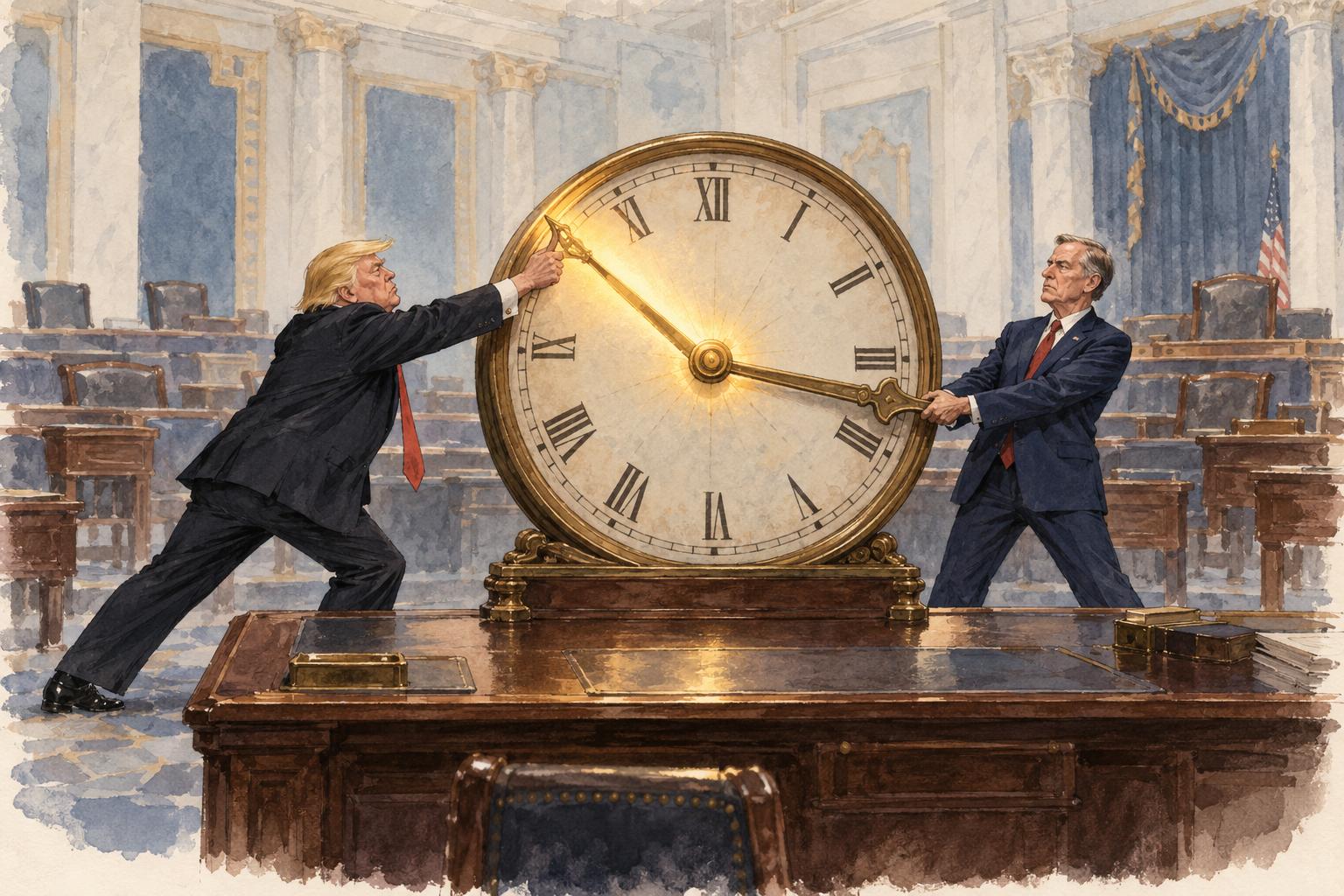
President Trump’s public pressure campaign against Sen. Tom Cotton has not moved Senate leaders toward a vote on the House-passed Sunshine Protection Act. The fight has turned a narrow time-change bill into a test of whether Trump can force action when a loyal Republican ally resists him.

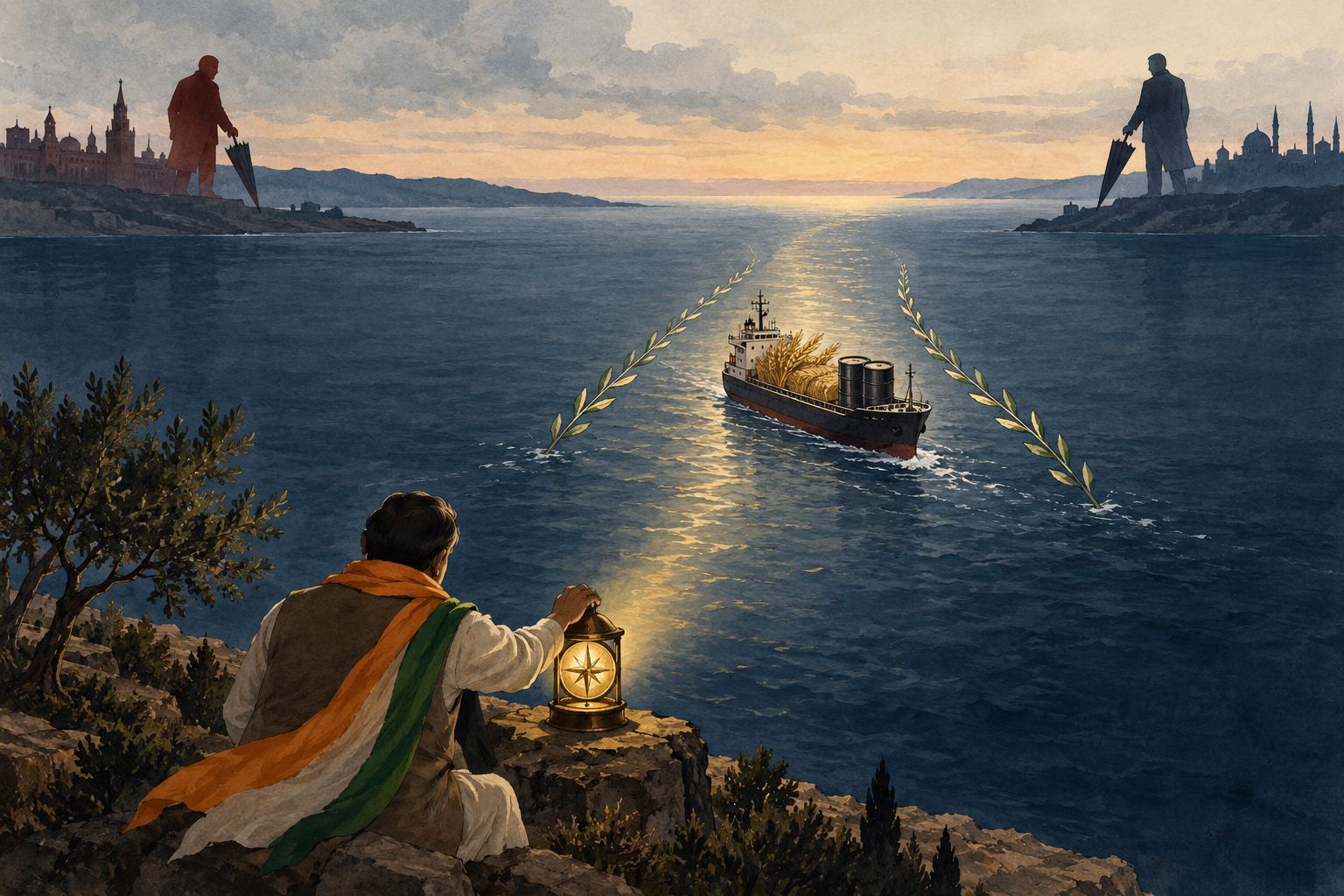
External Affairs Minister S. Jaishankar said India has moved beyond calls for dialogue and is now discussing practical conflict-mitigation steps with both Russia and Ukraine. The disclosed agenda focuses on Black Sea shipping, grain and energy exports, and possible non-attack understandings, while the details of any Indian proposal remain unclear.

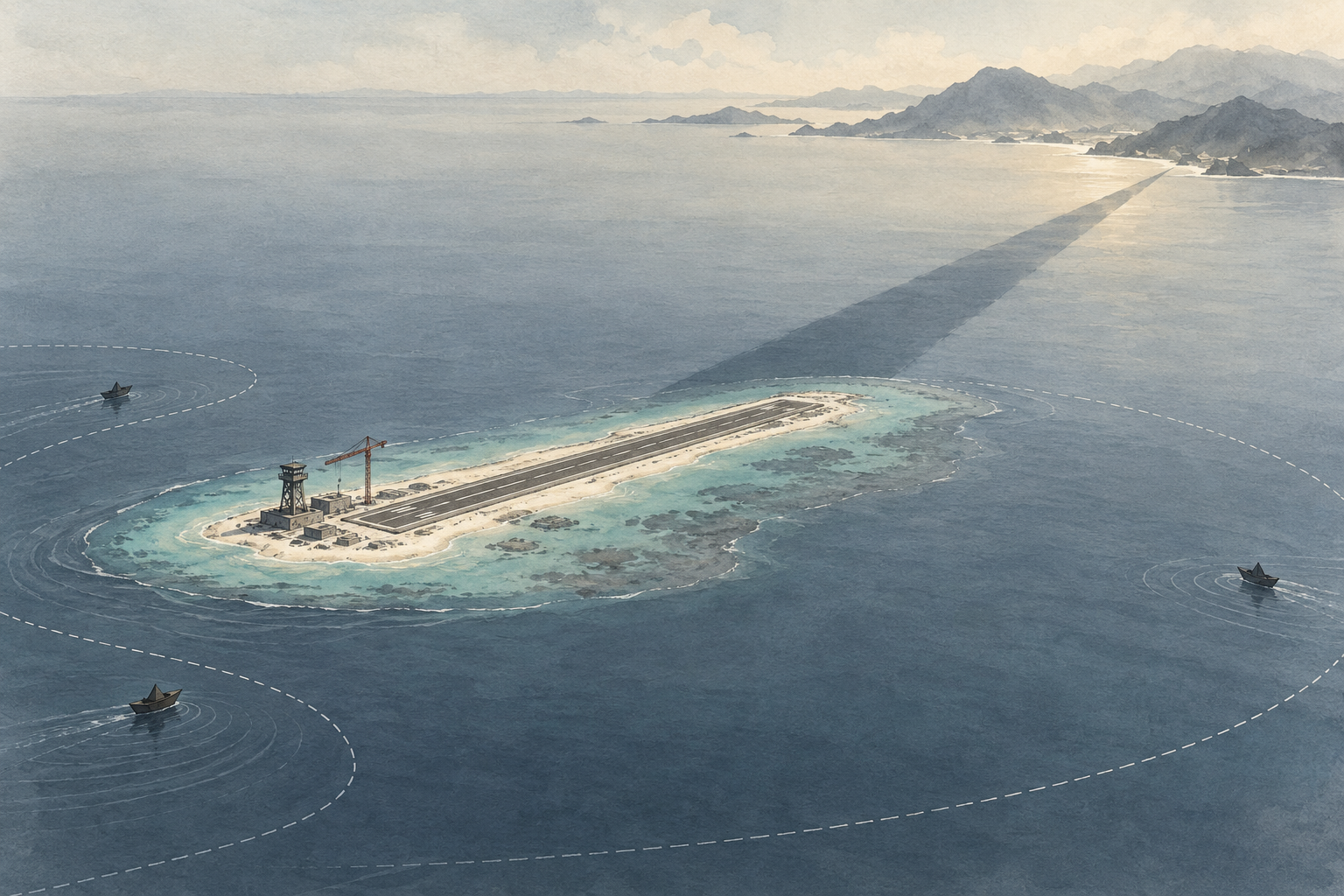
Japan’s defense authorities say the U.S. military will bring the NMESIS anti-ship missile system to Yonaguni, Japan’s westernmost island, during joint exercises beginning October 19. The temporary deployment signals deeper U.S.-Japan planning for sea denial along the southwest island chain while Tokyo continues to manage tensions with Beijing.
18 U.S.C. § 592
A federal statute that restricts federal officials from stationing troops or armed personnel at places where elections are being held, except to repel armed enemies of the United States.
DOJ election monitors
Justice Department personnel sent to observe compliance with federal voting-rights laws. They are different from armed immigration-enforcement agents.
Mixed-status family
A household whose members have different immigration or citizenship statuses, such as U.S. citizens living with relatives who have pending immigration cases.
Voter intimidation
Conduct that threatens, coerces or interferes with a person’s right to vote. It can be addressed under federal and state law.


Comments