Mekelle’s fall tests regional diplomacy as Ethiopia’s Tigray crisis widens
Associated Press
news
Ethiopia’s army chief accuses Eritrea, Sudan and Egypt of supporting Tigray rebels
Al Jazeera
news
Ethiopia accuses Sudan, Egypt of backing Tigray rebels as fighting rages
Al Jazeera
news
Ethiopia blames regional rivals as risk of conflict spillover rises
Untracked bias
100% of tracked sources are High factuality
ABC News
Ethiopian federal forces retake Mekelle airport from Tigrayan fighters, residents say
The Independent
Opposition fighters in northern Ethiopia's Tigray withdraw from regional capital
Los Angeles Times
Ethiopia’s government retakes Tigray capital after opposition fighters withdraw
Zegabi
TPLF Says It Has Temporarily Left Mekelle as Ethiopian Government Forces Enter the City
Bias and factuality ratings from Media Bias Fact Check. Outlets without a rating are marked “Untracked.”
Airport retaken
Federal-aligned forces retook Mekelle’s Alula Aba Nega Airport, according to Reuters sources and AP resident accounts.
Casualty caveat
Reuters cited a humanitarian bulletin reporting at least 17 deaths northwest of Mekelle, while broader casualty figures remain incomplete.
Diplomatic rupture
Ethiopia closed its embassy in Asmara, expelled Eritrean diplomats and declared an Egyptian diplomatic staff member persona non grata.
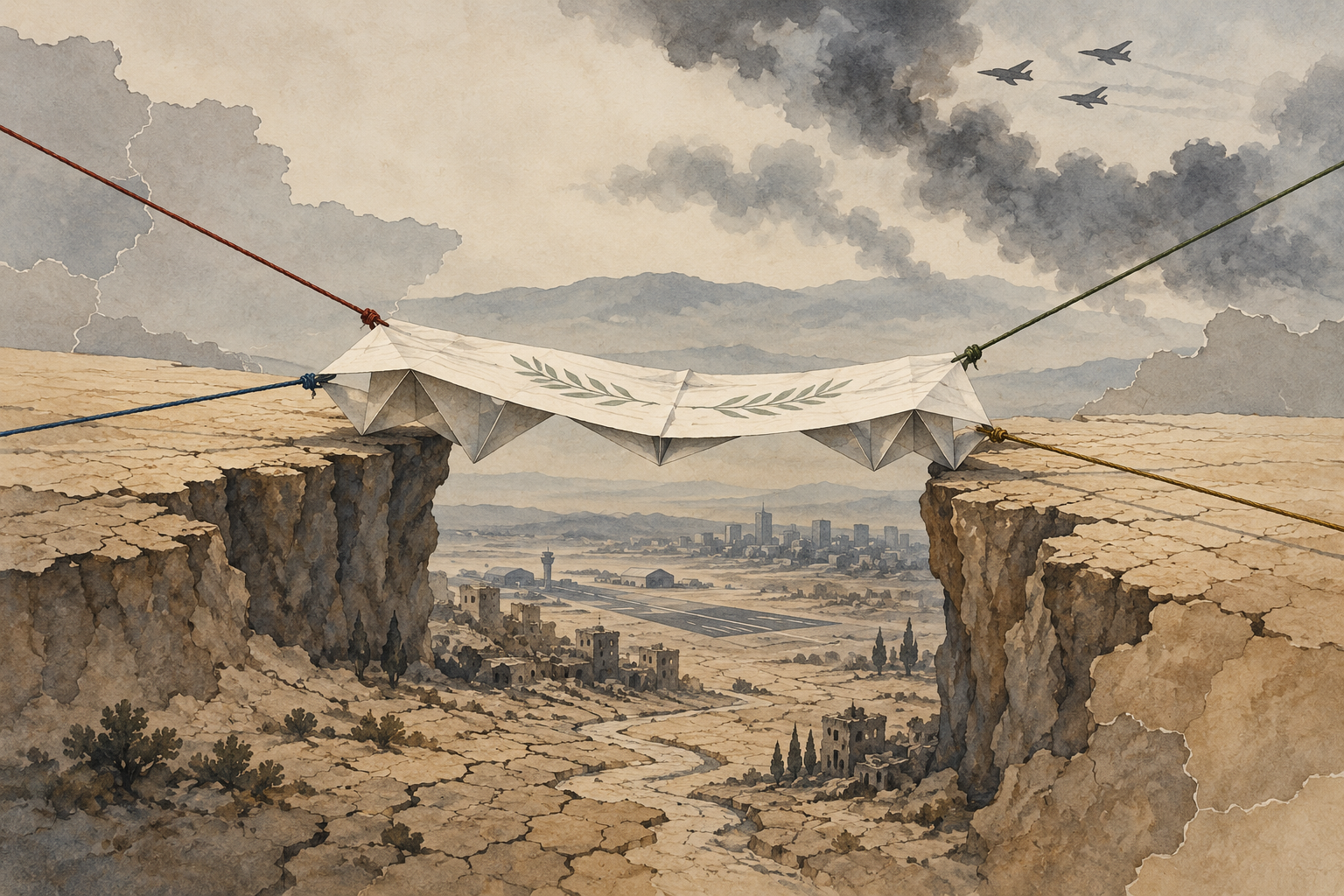
Federal-aligned forces have retaken Mekelle’s Alula Aba Nega Airport and entered the Tigray regional capital, marking the sharpest military reversal for Tigrayan forces since fighting reignited in northern Ethiopia. The advance has intensified fears that the 2022 Pretoria agreement is unraveling.91011 Reports of renewed airstrikes and artillery fire in Tigray followed, including a humanitarian bulletin cited by Reuters that reported at least 17 deaths northwest of Mekelle.12
The crisis is no longer a binary confrontation between Ethiopia’s federal government and the Tigray People’s Liberation Front, or TPLF. Addis Ababa has accused Eritrea, Sudan and Egypt of supporting Tigrayan forces. Those governments have denied the claims or countered with allegations of their own.123 Ethiopia has also closed its embassy in Asmara, expelled Eritrean diplomats and declared an Egyptian diplomatic staff member persona non grata, turning battlefield accusations into formal diplomatic retaliation.678
For Africa policy officials, the central question is whether regional diplomacy can contain a war that is again producing mass displacement, civilian casualties and pressure on humanitarian operations. The alternative is a wider conflict shaped by the same fault lines linking Ethiopia’s Red Sea ambitions, Eritrea’s security posture, Sudan’s civil war and Egypt’s dispute with Ethiopia over the Grand Ethiopian Renaissance Dam.313
The most significant verified battlefield development is the loss by Tigrayan forces of Mekelle’s airport, a strategic asset for control of the regional capital and potential air access. Reuters reported on October 3 that three sources said pro-government forces had retaken Alula Aba Nega Airport, while noting that it could not independently verify all battlefield assertions.9 The Associated Press separately reported that residents said the airport was back under Ethiopian military control.10
By October 4, AP reported that government-allied fighters had entered Mekelle after opposition fighters withdrew. The TPLF described the move as a withdrawal rather than a defeat. AP also reported looting after pro-government forces entered the city.11
That distinction matters. Control of urban terrain, withdrawal claims and casualty narratives are all politically charged in northern Ethiopia, where communications disruptions and access limits have repeatedly made independent verification difficult.29
The airport’s capture does not by itself prove that federal forces have stabilized control over all of Mekelle or the wider Tigray region. Reuters reported on October 5 that aid sources described airstrikes and artillery in northern Ethiopia after the fall of the Tigray capital, suggesting armed resistance and military operations were continuing beyond the city’s change of hands.12
The humanitarian picture is worsening faster than confirmed casualty counts can be established. AP reported that Doctors Without Borders, known by its French acronym MSF, said patients in Korem and Alamata hospitals rose from around 180 to more than 420 in 48 hours. MSF also said 300 wounded had arrived at Suhul Hospital the previous week.1 The same AP report cited an Afar Pastoralist Development Association figure saying about 150,000 people had been displaced.1
Those figures are important early indicators, but they are not a comprehensive conflict toll. They reflect reported wounded at specific medical facilities and one displacement estimate from a local humanitarian actor, not a verified regionwide casualty or displacement assessment.
The United Nations’ Ethiopia office warned of protection risks, new displacement, humanitarian access constraints and attacks or interference affecting aid assets and infrastructure.4 UNICEF said reports indicated that children had been killed or injured and that residential areas and public facilities had been damaged as fighting intensified.5
The most concrete new fatality figure in the latest reporting is the humanitarian bulletin cited by Reuters, which reported at least 17 deaths northwest of Mekelle.12 Even that should be treated as a partial figure. Fighting is dispersed, access is restricted and communications interruptions have made real-time verification difficult.24
For aid agencies, the operational concern is not only the number of casualties already recorded. It is whether renewed fighting will sever supply corridors, damage health infrastructure and block humanitarian access in areas already fragile after the 2020-2022 war.45 The Pretoria agreement was supposed to create conditions for recovery. The current escalation is again turning hospitals, roads, aid sites and civilian neighborhoods into indicators of conflict intensity.
The Pretoria agreement ended the main phase of the 2020-2022 war between Ethiopia’s federal government and the TPLF. It provided for a cessation of hostilities and a political transition in Tigray, where a caretaker administration was installed in Mekelle.111 But the arrangement left unresolved disputes over political control, security guarantees, disarmament, territorial administration and accountability.
The current fighting exposes those unresolved issues. Federal-aligned forces are now reasserting control over key sites in Tigray, while Tigrayan forces and their opponents offer competing accounts of withdrawals, advances and external backing.91011
That makes the crisis more than a ceasefire violation. It is a test of whether the post-Pretoria order can still produce a negotiated de-escalation once major military assets and regional capitals are again at stake.
The United States has appealed for restraint, according to Reuters.9 But diplomatic space is narrowing as Ethiopia’s accusations against neighboring states harden and formal expulsions replace quieter channels of pressure.678
Eritrea’s role is especially sensitive because Eritrean forces fought alongside Ethiopian federal forces against the TPLF during the 2020-2022 war.1 This time, Ethiopia’s army chief has accused Eritrea of mobilizing financial support for the TPLF. Eritrea rejects the claim and accuses Ethiopia of shifting blame for a conflict driven by Addis Ababa’s own policies.13
The diplomatic rupture accelerated on October 1, when Ethiopian state media said the Foreign Ministry had decided to close Ethiopia’s embassy in Asmara and declare 10 Eritrean diplomats persona non grata.6 AP confirmed Ethiopia’s expulsion of Eritrean diplomats and reported Eritrea’s reaction, as well as security measures in Ethiopia including drone restrictions and reports of blasts in Addis Ababa.8
This matters because Ethiopia’s deteriorating relationship with Eritrea is tied to a broader strategic dispute: access to the Red Sea. Prime Minister Abiy Ahmed’s renewed demands for sovereign access to the sea, including attention to Eritrea’s Assab port, have alarmed neighboring states and added a maritime dimension to the land war in Tigray.113
Ethiopia’s allegations against Sudan and Egypt are also rooted in wider regional disputes. Sudan denied backing Tigrayan forces and countered that Ethiopia was supporting militias fighting the Sudanese army, an apparent reference to the Rapid Support Forces in Sudan’s civil war.12 Egypt also denied Ethiopia’s allegations, according to Al Jazeera’s regional account of the crisis.3
Egypt’s inclusion in Ethiopia’s accusations brings the Grand Ethiopian Renaissance Dam back into the strategic frame. Cairo has long opposed aspects of Ethiopia’s Nile dam policy, while Addis Ababa views Egyptian pressure as an attempt to constrain Ethiopian sovereignty and development.3 Ethiopia’s expulsion of an Egyptian diplomatic staff member on October 1 showed that the dispute had moved beyond rhetorical blame and into direct diplomatic punishment.7
Sudan’s role is complicated by its internal war and its own border and security concerns. If either side in Ethiopia’s renewed northern conflict believes Sudanese territory, armed groups or supply corridors are part of the battlefield, the risk of miscalculation rises sharply.23
The renewed fighting echoes Ethiopia’s last civil war, but it is not simply a replay. The military actors, alliances and diplomatic environment have shifted. Eritrea, once aligned with Addis Ababa against the TPLF, is now accused by Ethiopia of aiding Tigrayan forces. Sudan is consumed by its own war. Egypt remains locked in a strategic contest with Ethiopia over the Nile. Ethiopia is simultaneously pressing its case for Red Sea access.1313
That combination makes mediation harder. A ceasefire between Addis Ababa and Tigrayan leaders would not automatically resolve Eritrean security fears, Sudanese accusations, Egyptian-Ethiopian rivalry or Red Sea access disputes. Conversely, regional de-escalation could create political space for a renewed internal settlement if outside governments avoid steps that deepen Ethiopia’s threat perceptions or embolden armed actors.
For now, the facts on the ground point in the opposite direction. Mekelle’s airport has changed hands. Government-allied fighters have entered the Tigray capital. Airstrikes and artillery have been reported after the city’s fall. Humanitarian agencies are warning of civilian harm and access constraints.10111245
The Pretoria agreement has not formally disappeared. But its central promise — that northern Ethiopia’s conflict could be contained through a negotiated political framework — is facing its most serious test since it was signed.

The Security Council extended Haiti’s Gang Suppression Force until March 2027, keeping an international framework in place as elections approach. But the force remains far below its planned size, and violence in Artibonite shows the mandate has not yet translated into durable control outside Port-au-Prince.
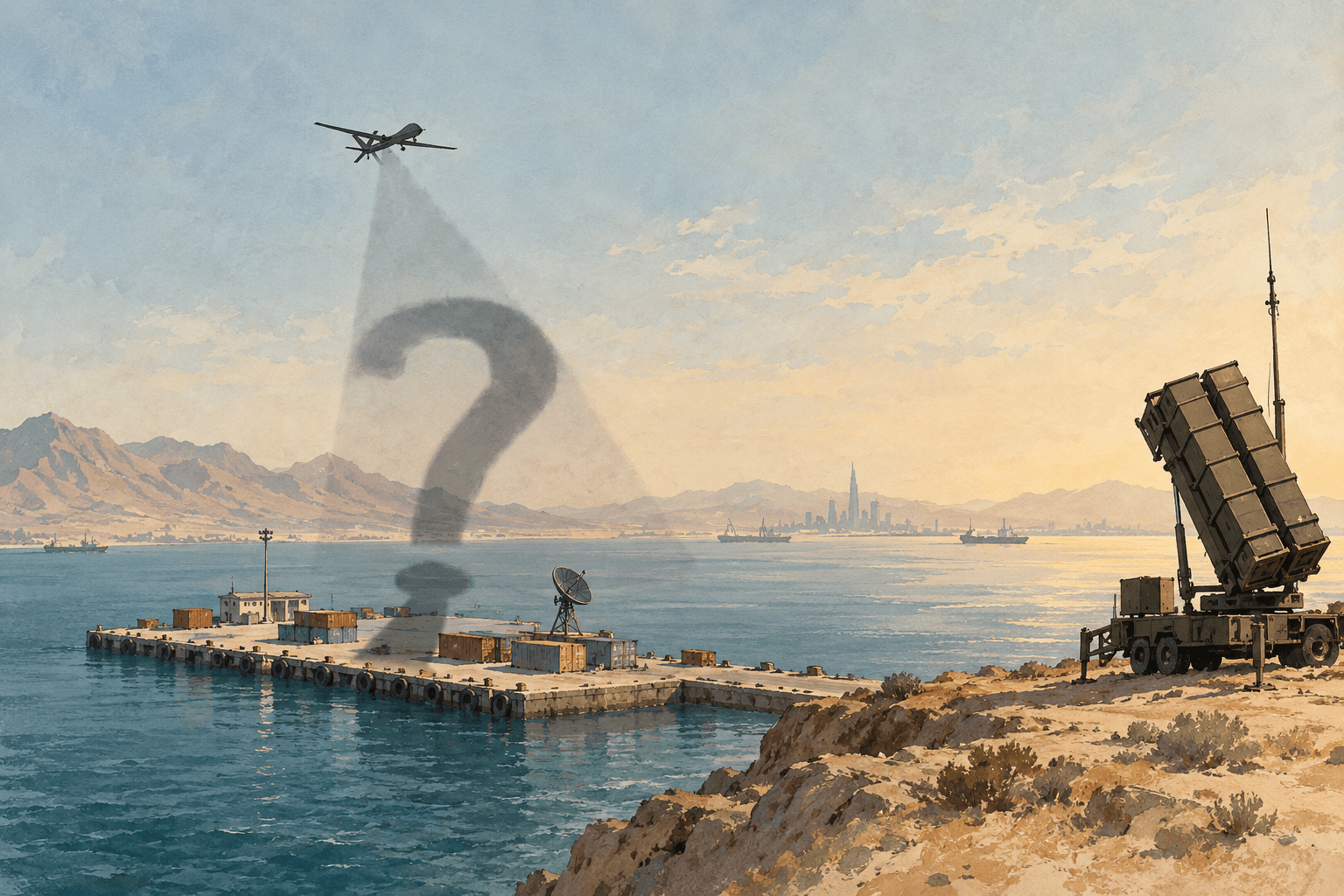
The March 1 Iranian drone strike that killed six U.S. soldiers at Kuwait’s Port Shuaiba has become a case study in whether American bases and logistics hubs have adapted quickly enough to low-cost drone threats. AP reporting points to warnings about the port’s vulnerability, reliance on Patriot defenses better suited to missiles, and gaps in mass-casualty response.

Yemen’s internationally recognized government has launched a major Saudi-backed offensive against the Houthis on the Red Sea coast after rebel advances around Taiz threatened key supply routes. The flare-up has turned the breakdown of Yemen’s pause from a maritime security crisis into a renewed territorial war linking Taiz, Dhubab and Bab el-Mandeb.

Ukraine says its long-range strikes have disabled 51% of Russia’s oil refining capacity, an unverified claim that points to Kyiv’s effort to strain Moscow’s fuel logistics as ground fighting slows. Russia’s overnight launch of 205 drones at Ukraine underscores the reciprocal pressure campaign now centered on refineries, substations, ports and air-defense systems.
Pretoria agreement
The November 2022 deal signed in South Africa that ended the main phase of Ethiopia’s war between federal forces and the TPLF.
TPLF
The Tigray People’s Liberation Front, the dominant Tigrayan political-military movement that fought Ethiopia’s federal government from 2020 to 2022.
Alula Aba Nega Airport
Mekelle’s airport and a strategic site for control of Tigray’s capital and potential air access.
GERD
The Grand Ethiopian Renaissance Dam, a major Nile dam at the center of a long-running dispute between Ethiopia and Egypt.




Comments