China Rejects Philippine Harassment Claims as South China Sea Tensions Shift to the Air
Ministry of Foreign Affairs of the People’s Republic of China
government
Foreign Ministry Spokesperson Guo Jiakun’s Remarks on October 6, 2026
Philstar.com
news
China accuses PH aircraft of ‘illegal’ intrusion over Bajo de Masinloc
Daily Tribune
news
AFP releases video of Chinese J-16 flying dangerously close to Philippine aircraft
Untracked bias
100% of tracked sources are Low factuality
GMA News Online
AFP says Chinese J-16 fighter flew too close to PH aircraft over Bajo de Masinloc
Daily Tribune
AFP releases video of Chinese J-16 flying dangerously close to Philippine aircraft
The Maritime Executive
Philippines Accuses PLA of Unsafe Close Encounter Over South China Sea
Fox News
Chinese military activity nearly doubles around key US ally in disputed waters
Aju Press
Chinese J-16 Fighter Jets Force Philippine Transport Plane to Leave South China Sea
Bias and factuality ratings from Media Bias Fact Check. Outlets without a rating are marked “Untracked.”
Air Encounter
The Philippines said a Chinese J-16 fighter flew dangerously close to a Philippine C-208 patrol aircraft near Bajo de Masinloc on October 3.
Beijing Denial
China’s Foreign Ministry rejected Philippine harassment claims and said Chinese forces acted lawfully in areas Beijing claims.
Ship Surge
Philippine military officials reported 101 Chinese military and coast guard vessel sightings across contested features in September, up from 56 in August.
China on October 6 rejected Philippine accusations that Chinese military and coast guard forces harassed Philippine aircraft and boats in the South China Sea, saying its forces acted lawfully in areas Beijing claims as its own.1
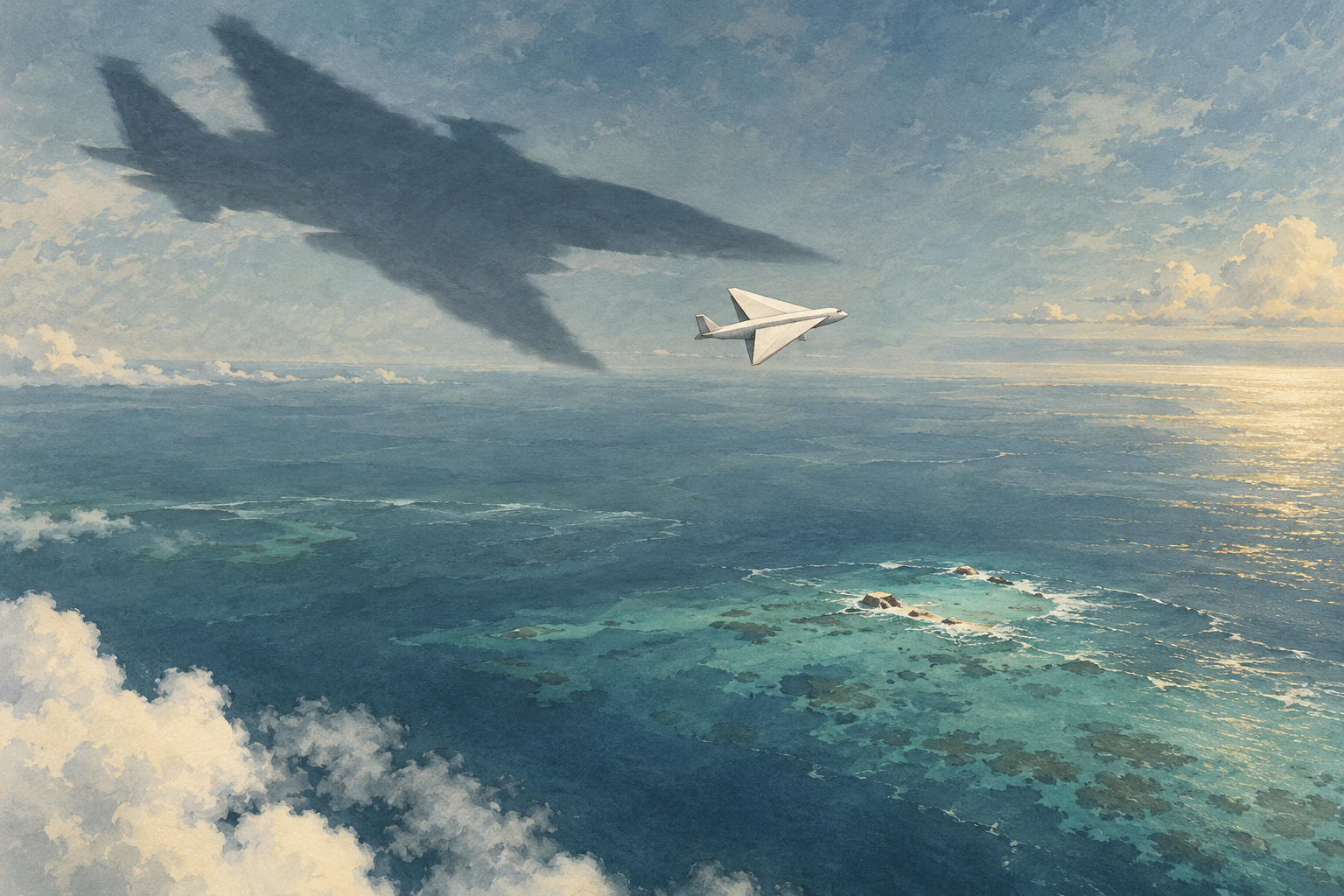
The response followed a Philippine military statement that a Chinese J-16 fighter repeatedly maneuvered near a Philippine C-208 aircraft during a routine maritime patrol near Bajo de Masinloc, also known internationally as Scarborough Shoal, on October 3.2 The episode points to a widening dispute in which confrontations are increasingly occurring in the air as well as at sea, raising the risk of accidents, miscalculation and escalation for Manila, Beijing and the Philippines’ treaty allies.
Foreign Ministry spokesperson Guo Jiakun said China has sovereignty over Huangyan Dao, Beijing’s name for Bajo de Masinloc, and over the Nansha Qundao, or Spratly Islands, including nearby waters.1 He said Philippine aircraft and vessels entered areas under Chinese jurisdiction without permission and that Chinese military and coast guard responses were “legitimate and justified” under Chinese law.1
Philippine accounts dispute that framing. The Armed Forces of the Philippines said its C-208 aircraft was on a routine patrol near Bajo de Masinloc when it encountered two Chinese military aircraft, one identified as a J-16 fighter.2 According to Philippine reporting citing the AFP, the J-16 repeatedly approached the Philippine aircraft, flew ahead of and around it, and positioned itself near the C-208’s wake, creating what the military described as an aviation safety risk.2
The AFP later released video footage that it said showed the Chinese J-16 maneuvering close to the Philippine aircraft during the October 3 patrol.3 The military said the fighter’s actions reduced safe separation and reaction time, and that wake turbulence or disrupted airflow from the faster jet could affect the C-208’s flight performance.3
The Philippine aircraft completed its patrol and returned safely, according to the AFP.3 Manila described the episode as part of a recurring pattern of unsafe and coercive behavior against Philippine vessels and aircraft conducting what it says are lawful operations in the West Philippine Sea.3
China’s Southern Theater Command gave a sharply different account. Chinese military spokesperson Zhai Shichen said the Philippine aircraft had “illegally intruded” into what Beijing calls territorial airspace over Huangyan Dao. He said Chinese naval and air forces tracked, monitored and warned the aircraft in accordance with laws and regulations.2 Agence France-Presse reported that Beijing warned Manila against “provocative acts” after the incident, while noting Manila’s allegation that a Chinese fighter interfered with a routine patrol.5
Regional coverage also underscored the military significance of the aircraft involved. Aju Press reported that China deployed J-16 fighters in the episode and described the aircraft as a major Chinese combat platform capable of air-to-air and strike missions.6 For regional security observers, the use of a high-performance fighter near a slower Philippine turboprop patrol aircraft shows how encounters around disputed features can quickly become aviation safety incidents.
The air encounter occurred alongside renewed maritime friction. Philippine reporting said a second confrontation took place in the Spratly Islands on October 4, when the Philippine Coast Guard said Chinese coast guard ships and a Chinese navy helicopter interfered with Philippine personnel near Pag-asa, also known as Thitu Island.7
United News Philippines reported that one Chinese coast guard ship shadowed and blocked Philippine boats and at one point came within about 10 yards, or 9.1 meters, of one of them.7 The Philippine side said it halted the pursuit of a suspected illegal fishing vessel for safety reasons.7
Daily Tribune reported that Philippine military officials also cited a broader rise in Chinese activity across contested features in September, saying monitoring personnel detected 101 Chinese military and coast guard vessels, compared with 56 in August.4 The reported September sightings included 39 vessels near Bajo de Masinloc, 28 around Pag-asa Island, 23 at Ayungin Shoal and 11 around Escoda Shoal.4
The confrontation reflects the unresolved clash between China’s expansive South China Sea claims and the Philippines’ position that its aircraft and vessels are operating in areas where Manila has lawful rights. Beijing says Philippine aircraft and vessels entered Chinese jurisdiction without permission.1 Manila says its patrols are lawful and that Chinese actions endanger Philippine personnel.2
Bajo de Masinloc lies off the coast of Zambales and has long been one of the most sensitive flashpoints between the two countries.2 China claims most of the South China Sea, while the Philippines and other regional governments reject Beijing’s broad claims. Philstar noted that a 2016 international arbitral ruling rejected the legal basis of China’s expansive claims in the waterway.2
For Manila, the shift from ship-to-ship confrontations to close aircraft encounters adds a new layer of risk. Air incidents unfold faster than maritime standoffs, leaving crews and commanders less time to interpret intent, avoid collision or de-escalate.
For Beijing, the use of military aircraft and coast guard forces reinforces its claims around contested features. For the Philippines and its security partners, including the United States under a mutual defense treaty, the concern is that a tactical encounter at sea or in the air could trigger a wider crisis if personnel are injured or assets are damaged.

Japan hosted an ASEAN-Japan AI focus session on October 6, framing artificial intelligence governance as a diplomatic and capacity-building agenda for Southeast Asia. The initiative positions Tokyo as a trusted standards partner for ASEAN as China, the United States and regional governments compete to shape AI rules and infrastructure.

Russian presidential aide and Maritime Board chair Nikolai Patrushev will visit China from October 8 to 13 for talks with Wang Yi, giving Beijing and Moscow a formal venue to align maritime policy. The agenda has not been disclosed, but the timing points to coordination on sea-lane security, Arctic access and regional deterrence pressures.

Drone attacks on commercial vessels in Bulgaria’s exclusive economic zone and near Odesa are blurring the line between the Russia-Ukraine war at sea and NATO maritime security. The incidents have raised new questions over attribution, insurance costs and how alliance members can respond without treating strikes in economic waters as attacks on NATO territory.
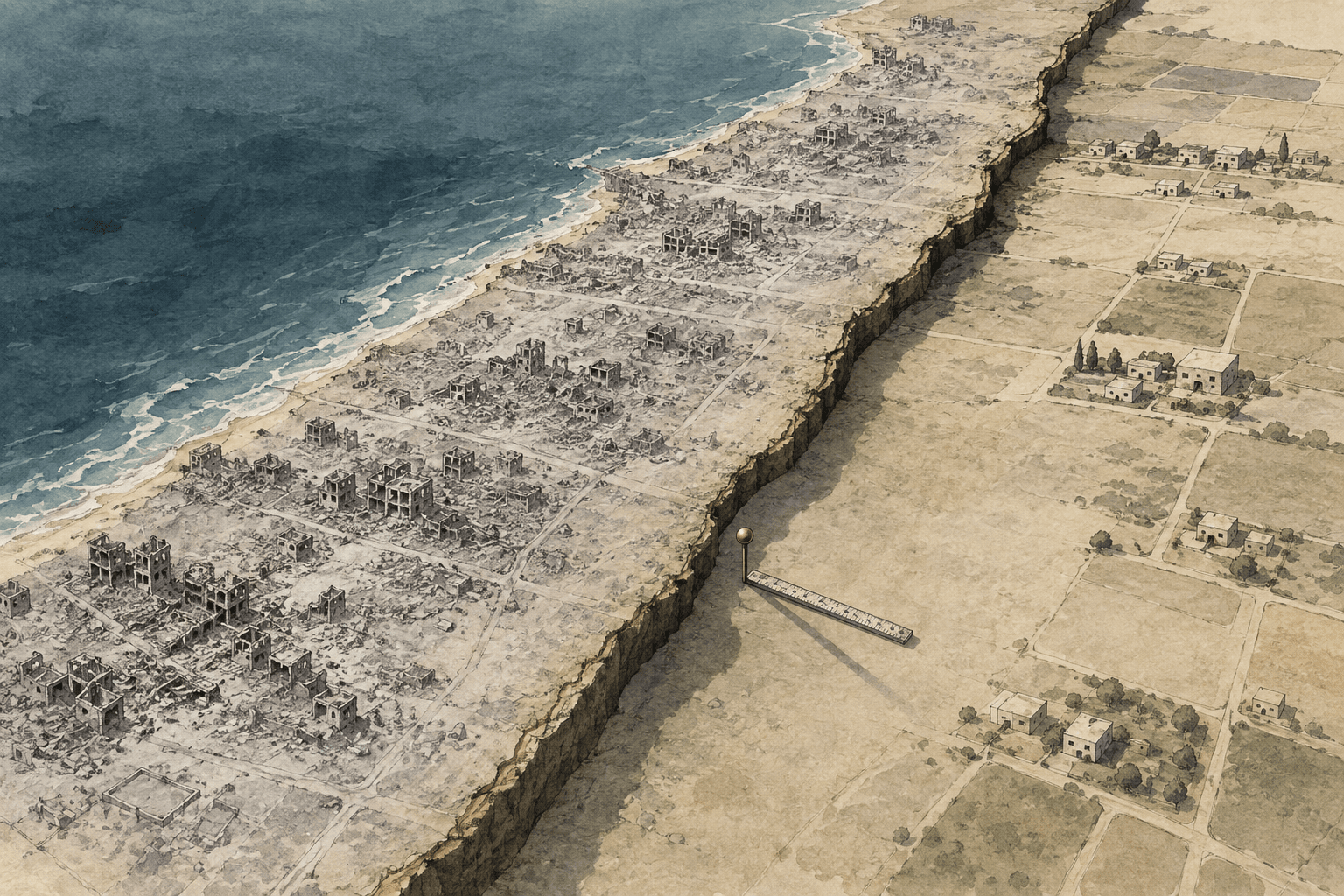
Satellite analysis showing continued Israeli demolitions in Rafah and other Gaza districts points to a ceasefire that has reduced major combat without freezing territorial change. With disarmament talks stalled and reconstruction blocked, the line separating Israeli-held areas from the rest of Gaza is becoming a de facto geography for any future political settlement.
Bajo de Masinloc
The Philippine name for Scarborough Shoal, a disputed feature in the South China Sea that China calls Huangyan Dao.
West Philippine Sea
The term used by Manila for parts of the South China Sea within the Philippines’ claimed maritime zones.
J-16
A Chinese multirole fighter aircraft used by the People’s Liberation Army Air Force.
Wake turbulence
Disturbed airflow left behind an aircraft that can affect another aircraft’s stability, especially if the following aircraft is smaller or slower.
Comments