Drone strikes bring Black Sea shipping risk closer to NATO waters

Associated Press
news
Bulgarian prime minister says 2 commercial vessels hit by drones
Associated Press
news
Russia says nearly 900 Ukrainian drones are downed
Council of Ministers of the Republic of Bulgaria
government
Rumen Radev: The attack against two merchant ships in Bulgaria’s economic zone is absolutely unacceptable
Untracked bias
67% of tracked sources are High factuality
ABC News Australia
Crew missing after drone sinks ship in Black Sea amid Ukraine-Russia war
Fox News
Drone strike sinks ship in NATO waters as Zelenskyy warns of looming ‘massive strike’
The Independent
Black Sea drone attack that sunk ship off Bulgaria condemned as crew still missing
Darik News
Единият потъна, другият пламна: Кои са двата кораба, атакувани с дронове край България?
Bias and factuality ratings from Media Bias Fact Check. Outlets without a rating are marked “Untracked.”
NATO EEZ hit
Bulgaria said two commercial vessels were struck by drones in its Black Sea exclusive economic zone, about 70 nautical miles east of Byala.
Insurance risk
Security and insurance analysts warned that western Black Sea routes through or near Bulgaria and Romania may face higher war-risk costs.
Odesa ship struck
A Russian drone strike hit a Marshall Islands-flagged cargo ship near Odesa, killing one person and wounding seven.
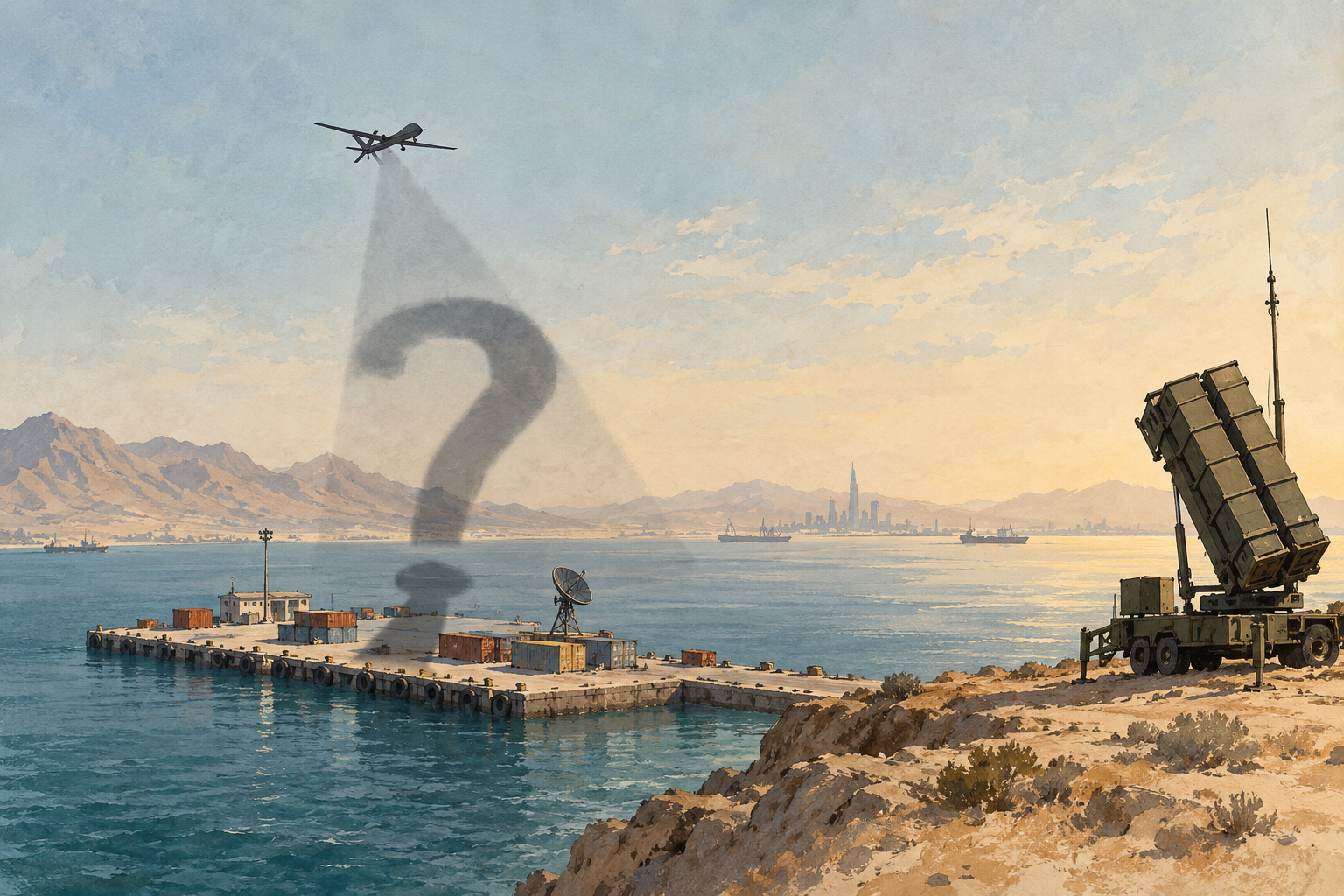
Drone strikes on merchant ships in and near NATO members’ Black Sea maritime zones have intensified concerns that the Russia-Ukraine drone war is turning commercial shipping lanes into a wider battlespace, even where alliance territory has not been hit.
Bulgaria said two commercial vessels were struck by aerial and sea drones in its exclusive economic zone on Oct. 6, about 70 nautical miles east of Byala, in what the Associated Press reported was the first such attack in a NATO member’s Black Sea EEZ.13 One Togo-flagged vessel sank, and Bulgarian authorities later ended the search for missing crew members with no survivors found, according to Al Jazeera.10
In a separate incident near Odesa, a Russian drone strike hit a Marshall Islands-flagged cargo ship carrying rapeseed oil, killing one person and wounding seven, the Associated Press reported.2 The Kyiv Independent, citing Odesa regional authorities, also linked the Odesa attack to the wider pattern of strikes on merchant vessels off Bulgaria and Ukraine.8
Together, the attacks show how quickly the Black Sea’s commercial geography is becoming harder to separate from military risk. Ships serving Ukraine’s export routes, alternative grain corridors through Romania and Bulgaria, or ordinary regional trade now face threats shaped by drones, mines, surveillance and uncertain attribution — not only conventional naval confrontation.
Ukrainian President Volodymyr Zelenskyy blamed Russia for the attacks off Bulgaria, saying Ukraine had conducted no operations in the area. He described the incident as a combined maritime and aerial drone attack intended to make the western Black Sea unsafe for navigation.5
Sofia was more cautious. Bulgarian Prime Minister Rumen Radev called the attack on the two merchant ships “absolutely unacceptable,” but said the origin of the drones had not yet been determined. He warned against political speculation while the investigation continued.34 Bulgaria raised the matter with the European Union and NATO, according to the government.4
The distinction matters. An exclusive economic zone is not the same as sovereign territory. Under international maritime law, coastal states have economic rights in an EEZ, including over resources, but the waters remain outside territorial seas.
That makes the political response more complex for NATO members. A strike in an EEZ can be treated as a serious maritime security incident without automatically being framed as an armed attack on alliance territory.
The attacks put NATO’s Black Sea members — Bulgaria, Romania and Turkey — in a difficult position. They need to protect navigation and reassure commercial operators, while also avoiding escalation if evidence remains incomplete or if the incident occurred outside territorial waters.
Insurance Journal, citing Bloomberg, reported that the attacks did not trigger NATO collective-defense clauses in Sofia’s view. It also noted the risk to shipping and alternative export routes through Bulgaria and Romania.7
That points to a likely response focused on surveillance, mine countermeasures, intelligence sharing, naval patrol coordination and diplomatic pressure rather than an immediate collective-defense posture.
The European Commission’s Oct. 7 midday briefing agenda included questions on the attacks on Bulgarian ships, the Black Sea Strategy, Romania and Bulgaria, showing that the incidents had quickly entered the EU’s security and transport-policy debate.9
For shipowners, the central issue is less whether a strike is formally classified as an attack on NATO and more whether vessels can move safely through the western Black Sea at a predictable cost.
Maritime security firm Ambrey assessed that three merchant vessels had been hit in Romanian and Bulgarian exclusive economic zones within 24 hours and said Russian forces were highly likely responsible.6 Ambrey also warned that NATO-member EEZs should no longer be treated as safe by default, a judgment likely to influence routing decisions, war-risk premiums and chartering terms.6
War-risk insurance was already a defining cost for ships calling at Ukrainian ports or sailing near contested waters. The latest strikes threaten to expand that risk premium into routes that had been treated as safer alternatives, including corridors linked to Romania and Bulgaria.7
Higher premiums can make voyages uneconomic, narrow the pool of willing shipowners and increase the cost of moving grain, oilseeds and other bulk cargoes out of the region.
The strikes fit a broader escalation in the drone war. The Associated Press reported the same day that Russia said it had downed nearly 900 Ukrainian drones, while Ukraine faced renewed Russian drone attacks, including the strike on the Marshall Islands-flagged ship near Odesa.2
That tempo has widened the war’s operational space. Long-range aerial drones, uncrewed surface vessels and electronic targeting systems allow both sides to threaten infrastructure and logistics far from the front line.
In the Black Sea, the result is a gray zone in which commercial vessels may be struck, threatened or misidentified even when operating outside Ukrainian territorial waters.
For European security officials, the risk is not only that another ship will be hit. It is that a pattern of attacks in or near NATO-member maritime zones could normalize violence against commercial shipping without crossing a clear treaty threshold.
That would leave governments to manage a widening maritime security crisis through law enforcement, diplomacy, naval presence and insurance markets — rather than through the alliance’s most formal defense mechanisms.
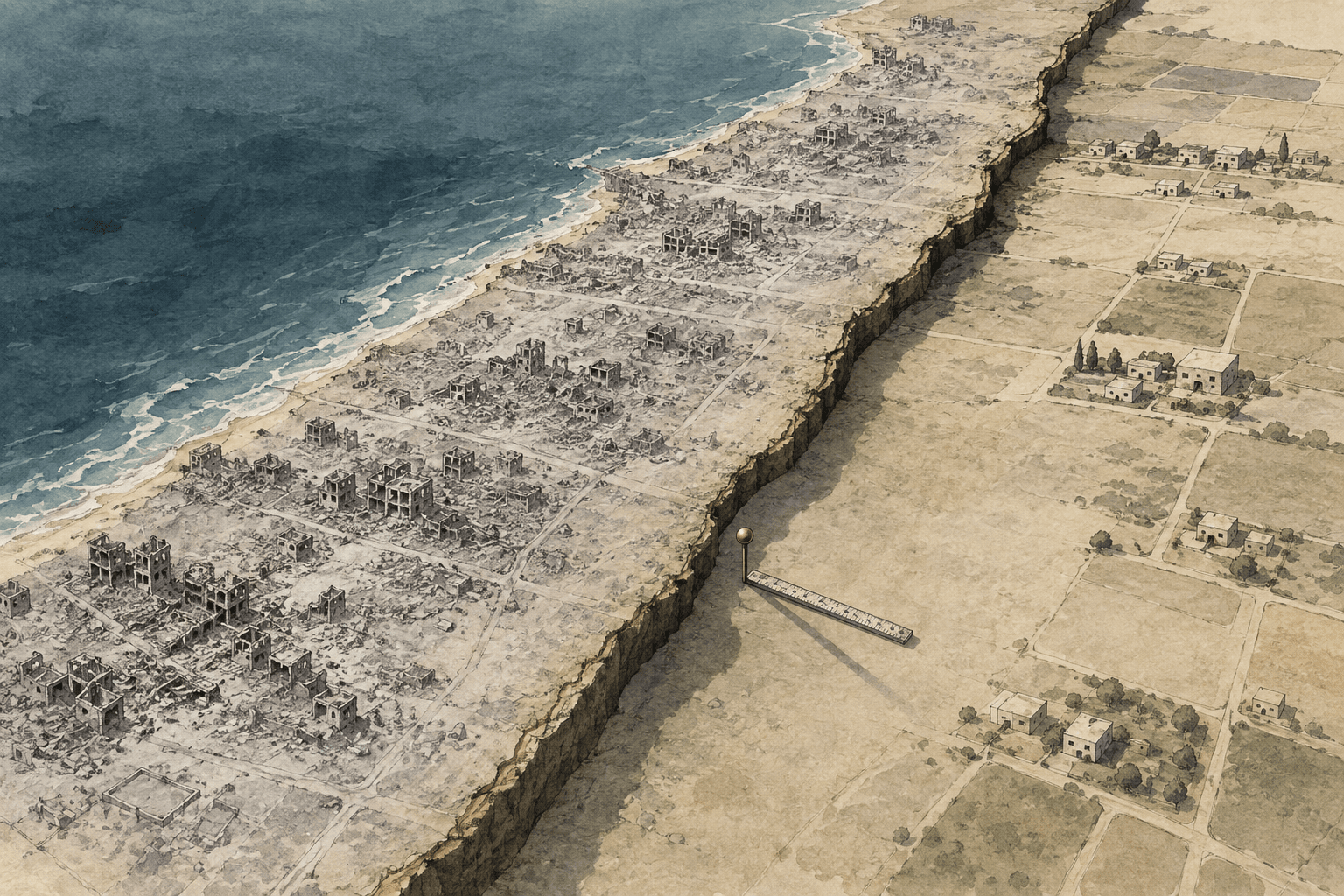
Satellite analysis showing continued Israeli demolitions in Rafah and other Gaza districts points to a ceasefire that has reduced major combat without freezing territorial change. With disarmament talks stalled and reconstruction blocked, the line separating Israeli-held areas from the rest of Gaza is becoming a de facto geography for any future political settlement.

Czechs vote on 9–10 October in municipal elections and in 27 Senate districts, giving parties a local-level measure of national strength. The contest will also test election administration, including voter information, accessibility measures and the use of digital identity after previous service disruptions.

The 2028-2034 EU budget debate has become a proxy for the European Parliament’s next institutional bargain, with the EPP-S&D partnership under pressure from Renew, the Greens and the ECR. The central question is whether the second half of the term will still be organised around a broad pro-European centre or around shifting file-by-file majorities.

The Security Council extended Haiti’s Gang Suppression Force until March 2027, keeping an international framework in place as elections approach. But the force remains far below its planned size, and violence in Artibonite shows the mandate has not yet translated into durable control outside Port-au-Prince.
Exclusive economic zone
A maritime area beyond a country’s territorial sea where the coastal state has economic rights, but not the same sovereignty it has over its land or territorial waters.
War-risk insurance
Special coverage for ships operating in areas exposed to conflict, terrorism, mines, missile strikes or other war-related hazards.
Article 5
NATO’s collective-defense clause, which treats an armed attack against one ally as an attack against all; incidents outside sovereign territory can be politically and legally harder to classify.
Uncrewed surface vessel
A sea drone that can be remotely controlled or autonomous and used for surveillance, attack or disruption at sea.




Comments