Iran Executes Ali Sina Mostafavi as Wartime Security Cases Raise Crackdown Fears
Mizan News Agency
government
تروریست مسلح در کرمان به دار مجازات آویخته شد/ عملیاتهای مسلحانه علیسینا مصطفوی علیه شهروندان ایرانی در حمایت از رضا پهلوی و رژیم صهیونیستی در جریان جنگ رمضان
Associated Press
news
Iran says ship sank after hitting a mine on Strait of Hormuz, and other Middle East developments
Reuters via AOL
news
Iran executes monarchist convicted of armed attacks during war, judiciary news outlet says
Untracked bias
100% of tracked sources are High factuality
NAMPA
Tehran, Oct 14, 2026 (AFP) - Iran executes man accused of attacks in support of Israel
SRN News
Iran executes monarchist convicted of armed attacks during war, judiciary news outlet says
Bias and factuality ratings from Media Bias Fact Check. Outlets without a rating are marked “Untracked.”
Execution carried out
Iran hanged Ali Sina Mostafavi in Kerman on October 14 after a national-security conviction.
Wartime allegations
Judiciary-linked media accused him of armed operations tied to Reza Pahlavi, Israel and conflict involving the U.S. and Israel.
Crackdown concern
Iran Human Rights said Mostafavi was the fifteenth political prisoner executed in 2026 over alleged opposition affiliations.
Iran executed Ali Sina Mostafavi on Wednesday after convicting him of national-security offenses tied to alleged armed operations in support of exiled former Crown Prince Reza Pahlavi and Israel, according to the judiciary-linked Mizan News Agency and international news reports.12
The hanging in Kerman, announced on October 14, came as Iran faces mounting pressure from war, sanctions and confrontation with the United States and Israel. Mizan described Mostafavi as an armed “terrorist” and said he had carried out operations against Iranian citizens during what it called the “Ramadan war,” alleging the acts were connected to Pahlavi and Israel.1 Reuters, citing the judiciary outlet, reported that Mostafavi was convicted over alleged armed attacks in Kerman during the war with the U.S. and Israel.3
Human-rights organizations and Persian-language outlets described the case differently. They identified Mostafavi as a political prisoner and protest detainee, and said the execution reflected a growing use of capital punishment in security cases. Iran Human Rights, a Norway-based group, said Mostafavi was the fifteenth political prisoner executed in 2026 over alleged affiliation with banned opposition groups.4 Amnesty International, in a separate report published a day earlier on protest-related executions, said Iran was using the death penalty to raise the cost of dissent.5
Mizan said Iran’s Supreme Court upheld Mostafavi’s sentence before the execution was carried out.1 The judiciary-linked outlet accused him of “moharebeh,” a capital offense often translated as “enmity against God,” and alleged that weapons and other evidence connected him to armed operations.1
The state account linked the case to Pahlavi, the U.S.-based son of Iran’s last shah, and to Israel. It portrayed the alleged violence as part of a wartime campaign against the Islamic Republic.1 AP reported the execution as part of wider Middle East developments, noting that Iran’s judiciary accused Mostafavi of conducting an armed operation in support of Pahlavi.2
Reuters also reported that the judiciary accused Mostafavi of attacks in Kerman during the conflict involving Iran, the U.S. and Israel.3 Euronews Persian reported that authorities alleged specific attacks in March and April and tied the accusations to unrest around January 2026 protests.9
The allegations could not be independently verified from the state announcement. Iran International noted that the judiciary’s public account did not provide independently checkable evidence or present defense arguments.7
Rights groups and opposition-linked media cast the execution as part of a broader campaign in which wartime security narratives are being used against protesters, dissidents and alleged opposition sympathizers.
Iran Human Rights said Mostafavi was a political prisoner held in Kerman and reported source-based details about his arrest, court process and detention location.4 Radio Farda described him as a political prisoner and a participant in January protests, reporting that the judiciary had accused him of contact with foreign media and hostile actors during protests and war.8
IranWire reported that Mostafavi was a musician and a January 2026 protest detainee, and said the judiciary alleged he filmed wartime scenes and supported the U.S., Israel and monarchists.6 The outlet also reported Pahlavi’s claim that Mostafavi had been subjected to torture and a show trial, a claim Iranian authorities have not publicly accepted.6 Euronews Persian also reported Pahlavi’s allegation of forced confessions and sham proceedings.9
Amnesty International’s October 13 report, published one day before Mostafavi’s execution, said five protest-related executions in one week should prompt global action. It described trials in those cases as arbitrary and tainted by torture allegations.5 The group said Iran was weaponizing the death penalty to intimidate society and deter future protest.5
The timing of the execution underscores how Iranian authorities are framing dissent and alleged opposition activity through a wartime national-security lens. The judiciary’s language connected Mostafavi not only to domestic opposition but also to Israel and the former monarchy, two categories the Islamic Republic has long used to portray internal challengers as agents of foreign-backed destabilization.13
That framing matters because national-security charges in Iran often carry severe penalties and can limit public scrutiny of legal proceedings. In Mostafavi’s case, state media emphasized alleged weapons, wartime activity and Supreme Court confirmation. Rights groups emphasized his political identity, protest links and the absence of transparent evidence in public reporting.147
The execution also comes amid wider concern over the pace and political character of executions in Iran. Iran Human Rights said Mostafavi’s death brought the number of political prisoners executed in 2026 for alleged links to banned opposition groups to fifteen.4 Amnesty’s report on separate protest-related cases warned that executions were being used after proceedings it described as unfair and torture-tainted.5
For Tehran, such cases are presented as counterterrorism and wartime defense. For rights advocates, they signal an expanding crackdown in which protest participation, alleged media contact, opposition sympathy and accusations of foreign alignment can converge into capital national-security prosecutions.
Mostafavi’s execution sits at the intersection of Iran’s external confrontation and internal control: a case officially framed as armed wartime violence, but viewed by rights groups as part of a campaign to suppress dissent at a moment of acute pressure on the state.

An Israeli strike killed a woman in Gaza City early Oct. 14, hospital officials said, while Israel said it targeted a Hamas militant and was still assessing the outcome. The incident highlights a ceasefire that has survived diplomatically while producing near-daily deaths, complicating Hamas disarmament, Israel’s election campaign and mediator credibility.

Iran’s Revolutionary Guard Corps navy said a cargo ship sank after striking a naval mine near the Strait of Hormuz, marking Tehran’s first reported mine-related sinking of the current war. The incident, alongside a surge in reported attacks on tankers and container ships, suggests Iran may be moving beyond episodic harassment toward a more sustained effort to raise the cost and uncertainty of commercial transit.

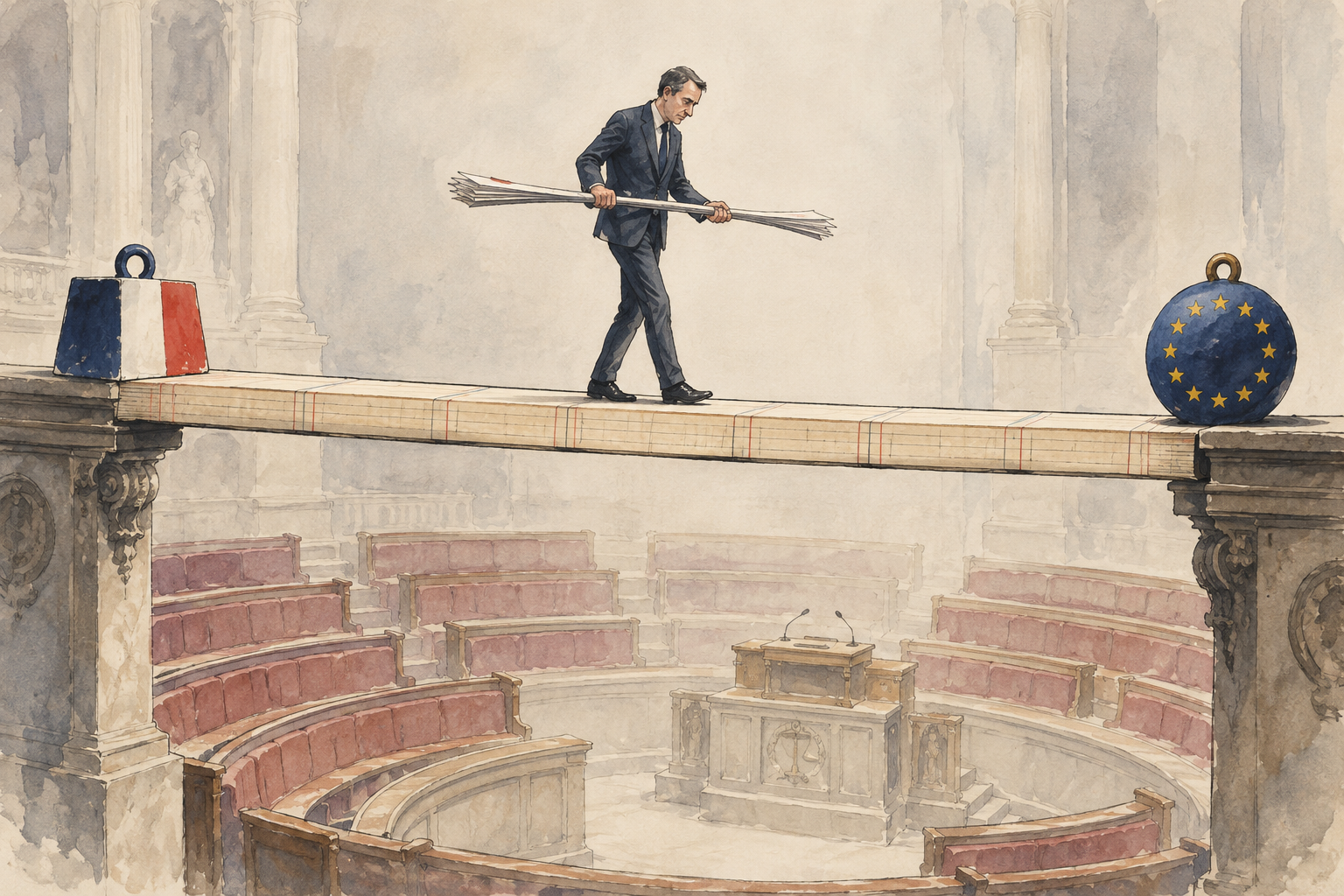
France’s National Assembly has begun examining the revenue section of the 2027 budget after a Socialist motion to reject the bill failed, exposing the narrow parliamentary arithmetic facing Prime Minister Sébastien Lecornu. The next flashpoint is France’s contribution to the European Union budget, putting fiscal consolidation and Europe at the center of pre-election positioning.

The 2028-2034 EU budget has moved from ministerial stocktaking to leaders-level bargaining after the Irish presidency tabled a revised negotiating box. The next phase will test whether member states can turn technical budget headings into a unanimous political deal before the end of 2026.
Moharebeh
A capital offense in Iran often translated as “enmity against God,” commonly used in serious national-security and armed-violence cases.
Reza Pahlavi
The exiled son of Iran’s last shah and a prominent opposition figure who advocates replacing the Islamic Republic.
Mizan News Agency
A news outlet linked to Iran’s judiciary that frequently publishes official court and prosecution announcements.
National-security prosecutions
Cases framed by the state as threats to public order, territorial integrity or wartime security, often involving severe penalties and limited transparency.




Comments