Rubio pledge on Okinawa killing tests Takaichi’s alliance push
Ministry of Foreign Affairs of Japan
government
Japan-U.S. Foreign Ministers’ Telephone Meeting
Reuters via Investing.com
news
Rubio pledges US cooperation in Okinawa murder case
Mirage News / U.S. Department of State
government
Rubio Speaks With Japanese Foreign Minister Motegi
Untracked bias
100% of tracked sources are High factuality
The Straits Times
Rubio offers Japan FM condolences over murder of woman linked to US Marine
The Straits Times
Japan PM protests to US after Marine arrested on murder suspicion in Okinawa
Free Malaysia Today
Japan’s Takaichi protests to US after Marine accused of murder in Okinawa
ABC News Australia
US marine arrested on suspicion of murder and robbery in Japan's Okinawa
Stars and Stripes
Okinawa police arrest US Marine on suspicion of killing Japanese woman at hotel
FNN Prime Online
米海兵隊員を強盗殺人の容疑で緊急逮捕
Bias and factuality ratings from Media Bias Fact Check. Outlets without a rating are marked “Untracked.”
U.S. pledge
Secretary of State Marco Rubio said Washington would cooperate with Japanese and local authorities in the Okinawa case.
Tokyo demands
Foreign Minister Toshimitsu Motegi pressed Japan’s position and agreed to consult with the United States on effective prevention measures.
Alliance strain
The case complicates Prime Minister Sanae Takaichi’s effort to deepen U.S.-Japan security coordination in Japan’s southwest.
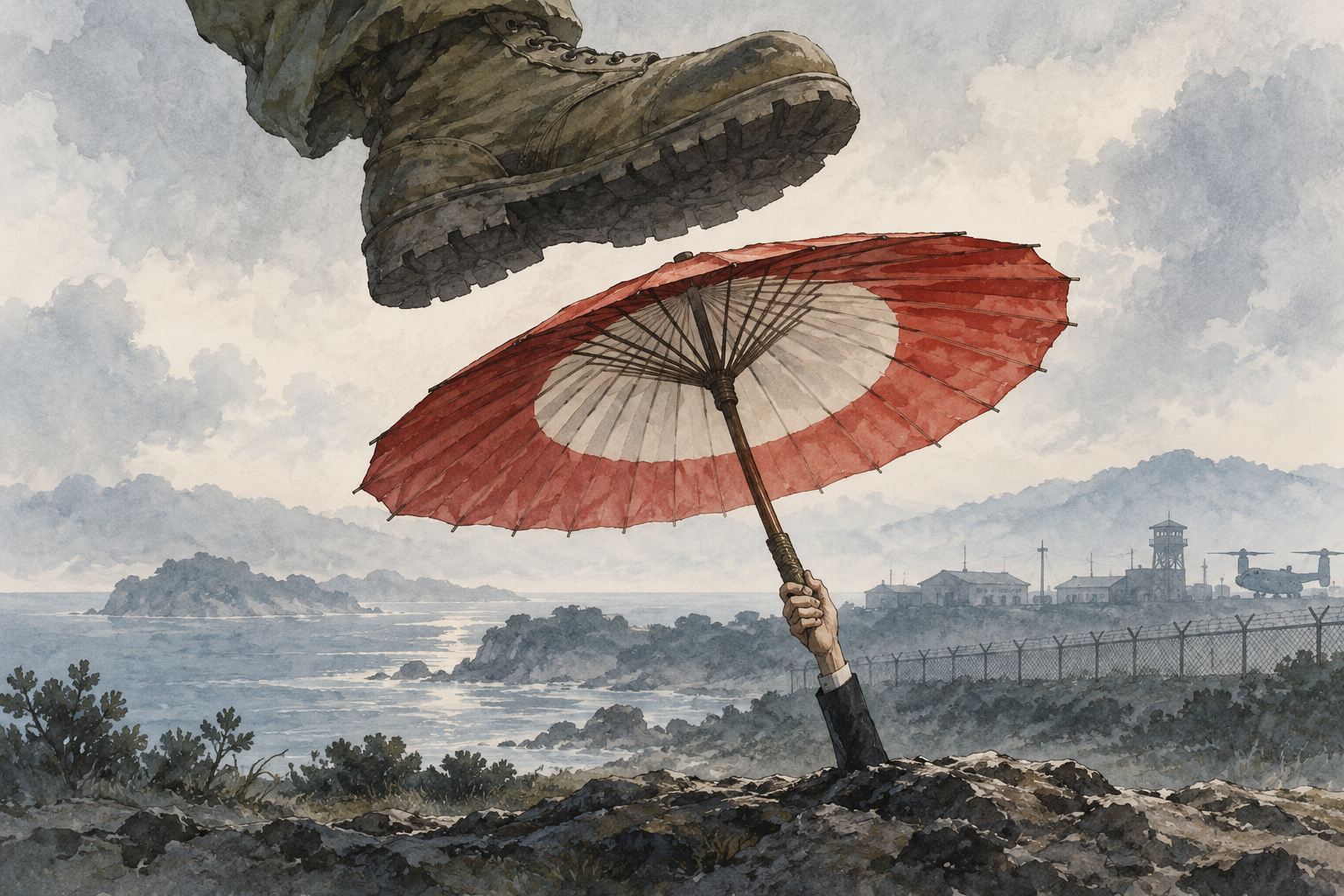
U.S. Secretary of State Marco Rubio pledged Washington’s cooperation with Japanese and local authorities investigating allegations that a U.S. Marine robbed and killed a woman in Okinawa, as Tokyo pressed for steps to prevent a recurrence and local leaders renewed calls for tighter accountability under the U.S.-Japan forces framework.2
Rubio offered condolences in an October 10 call with Japanese Foreign Minister Toshimitsu Motegi and said the United States would fully cooperate with the investigation, according to U.S. and Japanese readouts.13 The case has triggered protests in Okinawa, a U.S. military curfew and additional discipline measures, sharpening one of the alliance’s most sensitive political fault lines as Prime Minister Sanae Takaichi seeks deeper security coordination with Washington.24
Motegi told Rubio that Japan’s position on the case had been conveyed and that the two governments would consult on effective prevention measures while continuing to strengthen the alliance, Japan’s Foreign Ministry said.1 The phrasing underscored Tokyo’s effort to secure operational changes from Washington without allowing the incident to derail broader defense planning.
The call came at a delicate moment for Takaichi, whose government is expected to emphasize a stronger U.S.-Japan posture in response to regional security pressures. Rubio’s readout framed the alliance as central to peace and security in the Indo-Pacific, while also acknowledging the need to address the Okinawa case through cooperation with Japanese and local authorities.3
That dual message reflects the balance Tokyo is trying to maintain. The government wants visible U.S. action after a serious crime allegation involving an American service member. At the same time, it is working to advance security cooperation with Washington, including in Japan’s southwest island chain, where Okinawa is central to logistics, deterrence and contingency planning.
Regional coverage of the Rubio-Motegi call emphasized that the United States promised cooperation in the investigation as the incident fed anti-U.S. military sentiment in Okinawa, where base-related crime allegations have long carried political weight beyond the individual cases themselves.5
Okinawa’s prefectural assembly passed a protest resolution and opinion statement after the arrest, according to local reporting, adding to demands that Tokyo and Washington strengthen accountability and prevention mechanisms tied to the U.S. military presence.6
The local response points to a recurring grievance: Okinawa hosts a disproportionate share of the U.S. military footprint in Japan, while many residents say local communities bear risks without sufficient authority over investigations, custody and discipline. Fresh protests after the case drew on that history of resentment over the base burden and the handling of service-member misconduct allegations.7
The immediate U.S. response included a 30-day curfew and discipline measures, according to reports on the case.24 But for Okinawan officials and activists, temporary restrictions are unlikely to settle the broader issue. The latest case has again raised questions over whether the Status of Forces Agreement, the framework governing U.S. forces in Japan, gives local authorities enough control when serious crimes are alleged.
The controversy lands squarely on Japan’s southwest defense agenda. Okinawa’s geography makes it central to Japanese and U.S. planning in the East China Sea and around the Nansei island chain. But that same strategic importance deepens local frustration when residents see Tokyo and Washington prioritizing deterrence over community concerns.
For Takaichi, the risk is that an agenda built around closer U.S.-Japan coordination could be weakened domestically if Okinawa concludes that stronger defense integration means heavier local burdens and limited accountability. That tension is not new, but the alleged robbery and killing have brought it back to the center of alliance politics at the start of her security push.
Tokyo’s immediate challenge is to turn the Rubio-Motegi assurances into concrete prevention steps that Okinawa can see and assess. Those could include more transparent discipline measures, closer information-sharing with local authorities and renewed talks on procedures after serious incidents. Without visible follow-through, the case could become another marker in Okinawa’s long-running argument that the alliance’s costs are unevenly distributed.
For Washington, cooperation in the investigation is now a test of alliance management as much as law enforcement. The United States must show it can respond to local outrage while preserving the operational flexibility of its forces in Japan. For Tokyo, the case tests whether a government committed to a stronger alliance can also persuade Okinawa that accountability will improve alongside deterrence.

The release of three “Cockroach” movement leaders has not defused a confrontation over India’s voter-list revision, which has removed more than 130 million names since last year. What began as an administrative exercise is now a midterm institutional challenge for Prime Minister Narendra Modi’s government.

Taiwan President Lai Ching-te said Taiwan would not give up its freedom and urged Indo-Pacific democracies to protect regional stability, drawing swift condemnation from Beijing. Initial military tracking showed continued Chinese activity around Taiwan, but not an immediate surge above the previous day’s baseline.

Explosive drones near Erbil suggest Tehran may be folding Iranian Kurdish opposition groups in Iraq into the wider battlefield opened by the Iran war. The timing, days after the U.S.-led coalition ended its Iraq mission, raises questions about deterrence, air-defense gaps and Baghdad-Erbil coordination.

One year after a U.S.-brokered ceasefire halted major fighting in Gaza and secured the return of remaining Israeli hostages, the agreement’s next phase remains stalled. Disputes over sequencing — Hamas disarmament, Israeli withdrawal, governance, security forces and reconstruction — have left Gaza in limbo as strikes, casualties and aid restrictions continue.
Status of Forces Agreement
The legal framework that sets rules for U.S. military personnel in Japan, including issues such as jurisdiction, custody and operations.
Okinawa base burden
Okinawa hosts a large concentration of U.S. military facilities in Japan, making crime, noise, accidents and land use recurring political issues.
Southwest island chain
Japan’s island arc stretching toward Taiwan and the East China Sea; it is central to Tokyo’s defense planning and U.S.-Japan deterrence strategy.
Curfew and discipline measures
Temporary restrictions and internal rules imposed by the U.S. military after serious incidents involving service members.


Comments