Trump’s $90 Medicare payments test executive power ahead of midterms
Medicare Part B
The part of Medicare that covers physician services, outpatient care, ambulance services, lab tests and other medical services.
Medicare Improvement Fund
A fund created by Congress in 2008 for improvements under Original Medicare Parts A and B; it has also been used in congressional budget offsets.
IRMAA
The Income-Related Monthly Adjustment Amount is an extra Medicare premium charge paid by higher-income beneficiaries.
Medicare Advantage
Private Medicare plans that serve as an alternative to Original Medicare; CMS says enrollees in those plans are not eligible for this rebate.
Centers for Medicare & Medicaid Services
government
Medicare Improvement Fund Premium Rebate Frequently Asked Questions
The White House
government
President Donald J. Trump Announces Medicare Improvement Fund Payments for Seniors
Associated Press
news
Trump announces $90 payments for seniors on Medicare ahead of midterm elections for premium costs
Untracked bias
83% of tracked sources are High factuality
Investing.com
Trump says US to send one-time $90 payment to 20 million seniors enrolled in Medicare
Fox Business
Trump says he will send $100 Medicare Part B checks to over 20 million seniors
The Washington Sun
Trump Announces a Plan to Send $90 Checks to Millions of Medicare Recipients
Breitbart
Trump Sending Nearly $100 to More than 20 Million Seniors on Medicare to Offset Healthcare Costs
Bias and factuality ratings from Media Bias Fact Check. Outlets without a rating are marked “Untracked.”
$90 rebate
CMS says eligible Original Medicare Part B beneficiaries will receive a one-time $90 payment in October.
20.8 million
The administration says 20.8 million Medicare beneficiaries qualify under its eligibility rules.
2008 fund
The payments will come from the Medicare Improvement Fund, which Congress created in 2008.
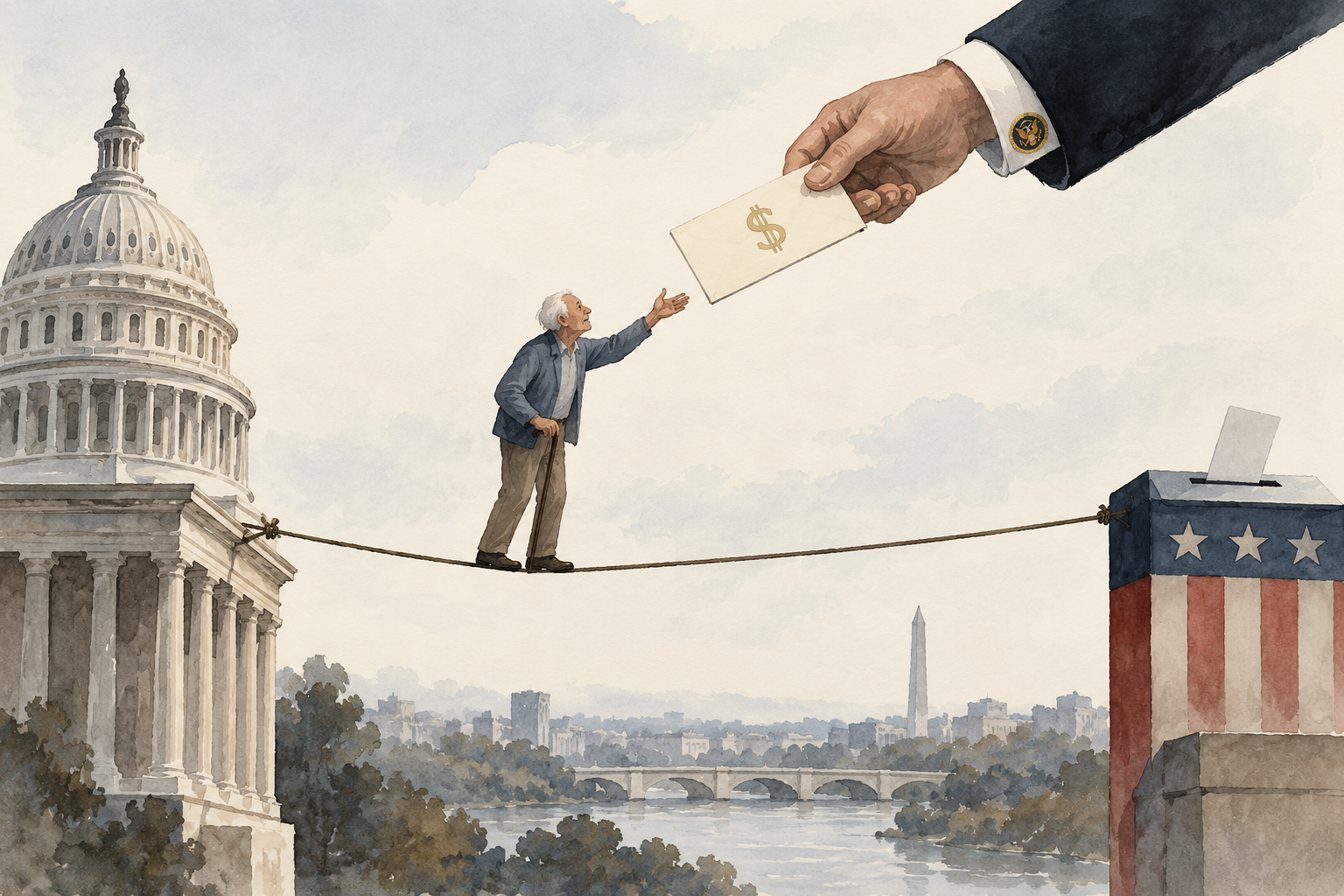
President Donald Trump’s administration plans to send one-time $90 payments this month to 20.8 million people enrolled in Original Medicare Part B, using money from the Medicare Improvement Fund in a move that puts a little-used health care account at the center of election-season fiscal politics.1
The Centers for Medicare & Medicaid Services said most eligible beneficiaries will receive direct deposits around Oct. 8, followed by a presidential email or letter in mid-October. Others will receive Treasury checks later in October with a notation describing the payment as an offset for the October premium.1
The White House framed the move as using the Medicare Improvement Fund to provide direct help to seniors rather than leaving the money for future budget negotiations.2
The announcement comes one month before the Nov. 3 midterm elections and follows other Trump pledges to send rebates or dividends to selected groups of Americans. The Associated Press reported that the plan would deliver $90 to more than 20 million seniors to help with Medicare premium costs, while the White House said the money would come from a fund Congress established in 2008.3
CMS said the rebate is limited to beneficiaries in Original Medicare Part B who live in the United States, are not receiving Medicaid premium assistance and do not pay an Income-Related Monthly Adjustment Amount, known as IRMAA.1 Beneficiaries enrolled in Medicare Advantage are not eligible.1
That excludes several large groups: lower-income beneficiaries whose Part B premiums are already paid through Medicaid, higher-income beneficiaries subject to IRMAA and people enrolled in private Medicare Advantage plans.
CMS directed beneficiaries seeking eligibility information to call Medicare. It said payment-status questions should go to the Social Security Administration beginning Oct. 15.1
Axios reported that the standard Part B premium is $202.90 a month in 2026, meaning the $90 payment would cover less than half of one month’s standard premium for many beneficiaries.7
The administration’s statutory rationale rests on the Medicare Improvement Fund. CMS says Congress created the fund through Section 7002 of the Supplemental Appropriations Act of 2008 to make improvements under the original fee-for-service Medicare program under Parts A and B.1
Bloomberg Law reported that Trump’s late-Friday social media announcement and White House materials tied the payments to that fund, describing it as a 2008 creation intended to enhance Original Medicare.5
The question is whether a direct, one-time premium rebate counts as an “improvement” to Medicare under the fund’s statutory language. AP reported that Larry Levitt, KFF’s executive vice president for health policy, said the language is broad and gives the administration substantial discretion.3
That interpretation supports the White House argument that the fund can be used administratively. It does not end the political fight over whether the money should be deployed this way.
Although the White House is drawing on an existing fund, Congress created that fund and has repeatedly shaped its balance and purpose through later budget laws. CMS said Congress has withdrawn from the fund roughly 20 times to offset other spending, including $20.7 billion connected to the Affordable Care Act in 2010.1
AP similarly reported that Congress has periodically taken money out of the fund to pay for other priorities.3
The Washington Post reported that the fund held roughly $2 billion set aside to improve Medicare’s hospital and medical insurance programs, and that congressional offices in both parties were caught off guard by the administration’s move.4
A Republican congressional aide told the Post that lawmakers had expected to use the money to offset health extenders, including funding for community health centers, the National Health Service Corps, teaching health centers and diabetes programs.4
That reaction underscores the institutional tension: The White House says it is using money Congress already made available for Medicare improvements, while lawmakers expected the same account to remain available for year-end negotiations.
Democrats cast the announcement as a political use of federal funds in the final weeks before the midterms. Sen. Ron Wyden of Oregon, the top Democrat on the Senate Finance Committee, said Trump had “drained the Medicare Improvement Fund” to send what Wyden called a nominal payment to seniors with Medicare Part B.6
Wyden also tied the move to broader Democratic criticism of Medicare premium levels and payments to private Medicare plans.6
The Post reported that Democrats questioned the legality of using government accounts to send payments ahead of the election. The same story cited Republican concern that the decision could complicate negotiations over expiring health programs.4
AP placed the Medicare payments alongside Trump’s other election-season promises, including Affordable Care Act premium rebates and a proposed $5,000 dividend if Republicans keep control of Congress.3
Axios described the Medicare rebate as part of a broader set of promised refunds, rebates and dividends as Trump seeks to respond to voter concerns about costs.7
The policy impact for eligible beneficiaries is modest: a one-time $90 payment against a monthly Part B premium that starts around $200 for standard enrollees and rises with income.3 But the governing question is larger than the check amount.
If the administration’s reading holds, the Medicare Improvement Fund gives the executive branch enough flexibility to convert an account created for Medicare improvements into direct premium assistance without a new vote by Congress.
If lawmakers object, the dispute could sharpen Congress’s incentive to more tightly prescribe how similar funds may be used in future appropriations bills.
For now, the administration is moving ahead on a schedule that puts payments in beneficiaries’ bank accounts or mailboxes in early to mid-October, just weeks before voters decide control of Congress on Nov. 3.1








Comments