Airline fee ban tests Civil Aviation Bill as CAA powers face scrutiny
ITV News
news
Airlines to be banned from charging parents to sit next to their children
Condé Nast Traveller
news
UK government plans to ban airlines from charging parents to sit with their children
Reuters Connect / Cover Media
news
UNCAPTIONED: Government Moves To End Charges For Parents To Sit By Children On Flights
Untracked bias
100% of tracked sources are High factuality
Sky News
Good news for holidaymakers as government scraps 'rip-off' extra charges when flying
Which?
How we took on airlines charging parents seat fees to sit next to children as young as three
Bias and factuality ratings from Media Bias Fact Check. Outlets without a rating are marked “Untracked.”
Fee ban
Airlines operating in the UK are set to be barred from charging parents to sit with children under 14.
Bill route
The Civil Aviation Bill has cleared the Lords, had Commons second reading on 9 September and is due in Public Bill Committee from 20 October.
Passenger data
Ministers also want an information-sharing system for persistently disruptive passengers after more than 1,000 serious incidents were logged in 2025.
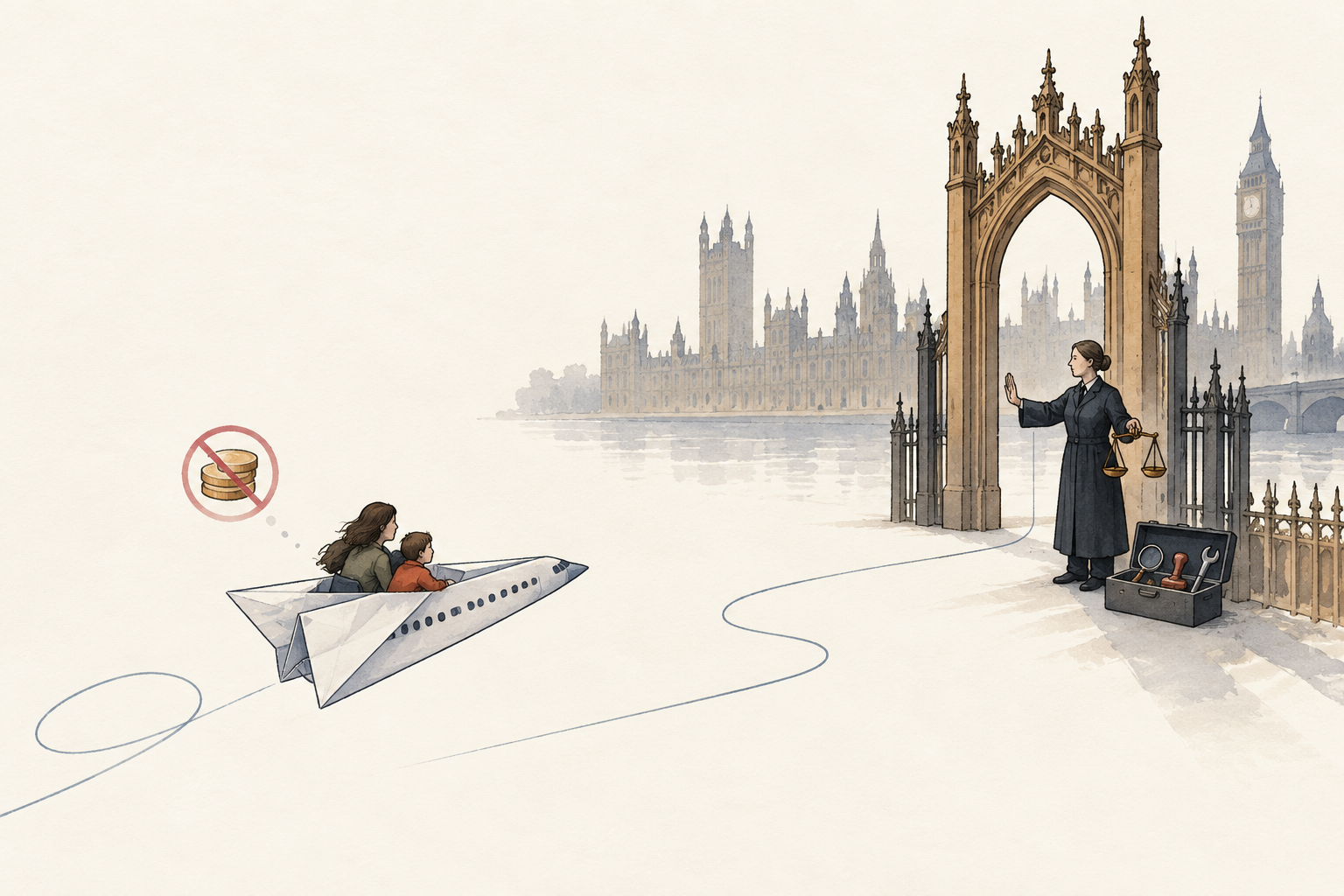
The government’s plan to stop airlines charging parents to sit with children under 14 will now be tested through the Civil Aviation Bill. Ministers are expected to rely on the legislation to create later passenger-rights rules, rather than put the family-seating ban directly on the face of the bill.2
The Department for Transport announced on 2 October that airlines operating in the UK would be required to seat children under 14 with a parent or accompanying adult at no extra charge. Passengers would also be able to correct simple booking-name errors free of charge.1 The measures are to be delivered after the Civil Aviation Bill receives Royal Assent. The key Westminster question is whether ministers will use Commons committee scrutiny to clarify the enforcement architecture or preserve broad regulation-making powers for secondary legislation.4
The bill has completed its Lords stages, entered the Commons and received second reading on 9 September. It is due to begin Public Bill Committee scrutiny on 20 October, creating the first formal opportunity for MPs to examine how the government intends to turn the 2 October announcement into binding obligations on carriers.2
The measures announced by ministers cover three related areas: free seating for children under 14 next to an accompanying adult, free correction of simple name mistakes, and a new system for sharing information on persistently disruptive passengers.7 The government has framed the package as a cost-of-living measure. Reports cite Department for Transport estimates that a parent and child can currently face charges of up to £104 on a return journey to sit together, while minor name amendments can cost as much as £40.5
For policy readers, the important point is legislative sequencing. Reporting on the bill indicates that it is designed to enable later passenger-rights regulations, not to impose the newly announced seating-fee ban by itself.2 That means the practical effect will depend on how ministers draft the regulations after Royal Assent, what parliamentary procedure applies to them, and what enforcement tools are available to the Civil Aviation Authority.
The government has said implementation will follow Royal Assent and industry engagement, with ministers seeking delivery in time for the next summer holiday season.5 That timetable gives the Commons committee stage added significance. If the bill remains enabling legislation, MPs may press for commitments on the content of future regulations, including definitions of “simple” name corrections and what counts as seating a child “with” an adult.
The policy will only be as strong as the enforcement regime attached to it. The Civil Aviation Bill’s wider purpose is to update aviation consumer protection and regulatory powers, including the role of the Civil Aviation Authority.2 The government’s announcement therefore raises a specific question: will the CAA be able to police family-seating and name-correction rules through direct administrative action, or will enforcement depend on slower consumer-law routes and complaints evidence?
The issue matters because the family-seating rule is operational as well as commercial. Airlines may need to change booking flows, paid-seat prompts, seat-allocation algorithms and check-in procedures. Regulators will need evidence that families are not being separated unless unavoidable, and that carriers are not replacing explicit seating fees with equivalent charges elsewhere in the booking process.
Name corrections pose a different drafting challenge. A narrow rule could cover typographical errors, transposed letters or title changes while excluding full passenger substitutions. But if the regulations do not define the boundary clearly, airlines and passengers may dispute which amendments are genuinely “simple”.1
Industry response already points to the enforcement debate ahead. Airlines UK has criticised the proposals as unnecessary intervention, while some carriers have denied routinely separating families or imposing unfair charges.3 Ryanair’s response and wider industry criticism suggest ministers may face lobbying for exemptions where families book late, choose basic fares or do not provide enough information at booking.6
Because the bill is already past Lords third reading, the Commons Public Bill Committee is the next point at which ministers can be asked whether the new policy requires amendments or can be delivered under powers already in the bill. The distinction matters for parliamentary control.
If ministers table amendments, MPs would be able to scrutinise the core rule in primary legislation. If ministers instead rely on delegated powers, scrutiny will shift to later regulations, where Parliament may have less scope to amend the detail. Condé Nast Traveller’s account of the bill underlines that it enables later passenger-rights regulations rather than directly imposing the seating-fee ban.2
That approach gives ministers flexibility, but it also increases the importance of safeguards around consultation, impact assessment and parliamentary procedure. For carriers, it affects compliance planning. For consumers, it affects whether the new rights arrive as clear entitlements or as principles whose strength depends on regulator interpretation.
The third limb of the package — sharing information on persistently disruptive passengers — is likely to attract a different set of questions. Ministers and airlines are working on a system intended to make it easier to identify repeat offenders and support decisions on extending bans across carriers.5
Trade reporting says a new information-sharing system is being created alongside the fee measures.6 The Sussex Guardian and Travel Gossip reported that more than 1,000 serious disruptive-passenger incidents were logged by airlines in 2025, a figure ministers are using to justify the safety element of the package.47
But a cross-airline system would need a clear legal basis, governance model and appeals process. MPs may ask who controls the database, how long records are retained, what threshold qualifies a passenger as persistently disruptive, and how the scheme avoids capturing disputed or unproven incidents. The policy also raises data-protection questions that are distinct from the CAA’s consumer-enforcement remit.
The immediate legislative marker is Public Bill Committee scrutiny from 20 October.4 Ministers may use that stage to explain whether the announced aviation consumer measures will be added to the bill, delivered through existing clauses, or reserved for regulations after Royal Assent.
Three tests are likely to determine whether the package satisfies MPs and consumer groups. First, the regulations must state clearly when an airline has met its duty to seat an under-14 with an adult. Second, the name-correction rule must distinguish genuine administrative corrections from ticket transfers. Third, the CAA must have fast, credible enforcement powers, including access to data on seating outcomes, fees charged and complaints.
Which? has welcomed the direction of travel, arguing that families should not have to pay extra to sit together and that passengers should not face unnecessary charges for minor booking errors.1 Travel-industry coverage, however, shows airlines warning against regulation where they say protections already exist or operational constraints may make guarantees difficult.6
For Westminster, the core question is no longer whether ministers want to ban the charges. It is whether the Civil Aviation Bill will leave the CAA with enough authority, information and penalty powers to make the ban real across every airline operating in the UK.

The justices begin a new term Monday with major disputes over Arizona voter-registration rules, Trump immigration policies and assault-weapons restrictions, but the most immediate election risk may come through emergency litigation before November 3.

A federal judge temporarily barred the Trump administration from building border barriers and related infrastructure across Texas’ Big Bend Sector while a lawsuit challenging environmental-law waivers proceeds. The order raises a midterm-season test of how far the White House can push a signature immigration project through executive authority when local governments, landowners and conservationists object.

North Korea’s latest projectile launch toward eastern waters is reinforcing Japan-U.S.-South Korea security coordination after a September ballistic missile test. The pattern is complicating Seoul’s simultaneous effort to preserve dialogue with Pyongyang and keep a China-Japan-South Korea cooperation track alive.

New Delhi’s decision to send senior diplomat Alok Dimri to an SCO coordinators’ meeting in Islamabad signals that India is preserving its multilateral role in Eurasia while keeping political distance from Pakistan. The visit may set a procedural precedent for Pakistan-hosted SCO meetings, but it does not resolve the question of whether Prime Minister Narendra Modi will attend the 2027 leaders’ summit in Islamabad.
Royal Assent
The final formal step by which a bill becomes an Act of Parliament and can be brought into force.
Public Bill Committee
A Commons committee that examines a bill line by line and can consider amendments after second reading.
Secondary legislation
Regulations made under powers granted by an Act of Parliament, often used to fill in detailed policy rules.
Civil Aviation Authority
The UK aviation regulator, responsible for safety and certain consumer-protection functions in the aviation sector.
Comments