Funding gaps squeeze liberal voter-contact groups as midterm voting begins

Associated Press
news
Voting groups sound alarm on funding shortfalls that they say could affect midterm turnout
ABC News / Associated Press
news
Voting groups sound alarm on funding shortfalls that they say could affect midterm turnout
Ground News
news
Progressive Voter Groups Face Funding Shortfalls as Midterm Voting Begins
Untracked bias
ABC News
Voting groups sound alarm on funding shortfalls that they say could affect midterm turnout
SFGate
Voting groups sound alarm on funding shortfalls that they say could affect midterm turnout
Bias and factuality ratings from Media Bias Fact Check. Outlets without a rating are marked “Untracked.”
40% Lag
A July donor memo said key voter mobilization groups had raised nearly 40% less than at the same point in the 2018 and 2022 midterm cycles.
$5.4M Gap
Vamos a Votar said it still needed $5.4 million for turnout work across 10 states and 17 House districts.
Field Cuts
Groups are substituting AI tools, social media, content creators and ride-share partnerships for some in-person organizing and transportation programs.
WASHINGTON — Major left-leaning voter engagement and racial justice organizations say funding gaps and staff cuts are limiting their ability to contact, register and protect voters as midterm voting begins in elections that will determine control of Congress.1
The shortfalls are affecting core voter-mobilization work: door-knocking, registration drives, rides to polling places, voter-protection programs, multilingual voter information and monitoring for misinformation or election problems.2 The result could be a smaller outside organizing presence in competitive House districts as Democrats rely on turnout and legal-protection efforts to offset a difficult political environment.
America Votes, a coordinating hub for more than 400 progressive organizations, has fallen “well below” its 2022 midterm funding level, its executive director, Daria Dawson, told The Associated Press.1 The network has long helped align field programs for groups including the NAACP, Planned Parenthood, the League of Conservation Voters, labor unions and local organizations focused on racial justice, climate and civil liberties.2
A July memo circulated among major Democratic fundraisers said organizations that helped register and persuade voters in the 2018 and 2022 midterms had raised nearly 40% less than they had at the same point in those cycles.2 Ground News, summarizing the AP report and its syndication, also highlighted that figure and noted that America Votes was below its 2022 funding level.5
The reductions are concentrated in work typically done outside candidate campaigns: identifying low-propensity voters, registering new voters, providing voter education, organizing turnout programs and staffing local operations in communities where national campaigns often have limited reach.1
AP reported that groups focused on lower-propensity voters, voters of color, rural voters and younger voters have cut operations and staff over the past year.1 That means fewer paid organizers and fewer in-person contacts as vote-by-mail, early voting and registration deadlines compress campaign calendars.
Voter protection is also a concern. Democratic strategists cited by AP said they were counting on robust voter-protection programs, while organizers worried that fewer resources would limit their ability to respond to election-administration problems or potential interference.1 The Democratic National Committee said it is making “historic investments” in organizing and expanding voter-protection infrastructure, but AP noted the statement did not directly address weaknesses among allied outside groups.2
Transportation programs are also being reworked. Some organizations are replacing more expensive bus shuttles with partnerships with ride-sharing companies to provide free rides to polling places.7 Others are relying more heavily on artificial intelligence, multilingual voter guides, social media and liberal content creators to offset having fewer organizers in the field.2
The clearest district-level shortfall disclosed in the AP report involved Vamos a Votar, a coalition initiative focused on Latino communities. In a September donor pitch, the coalition said it aimed to invest $27.5 million in voter engagement and persuasion this year but still needed $5.4 million for turnout work across 10 states and 17 House districts.1
That gap matters operationally because House races can turn on repeated contact with voters who are less likely to participate in midterms. Field programs often begin with registration and education, then move to turnout reminders, ballot-curing assistance, transportation and election-day problem-solving. Cuts at any point in that chain can reduce the number of voters reached before ballots are cast.
Juan Proaño, CEO of the League of United Latin American Citizens, a member of Vamos a Votar, said investment had not flowed to Black and brown communities that he said would help decide the election.1 Héctor Sánchez Barba, CEO of Mi Familia Vota, another affiliated organization, said progressive donors were not “meeting the moment,” while adding that groups were continuing their work despite the shortfall.2
Organizers and fundraisers described several causes for the funding gap, including donor disappointment after the 2024 presidential election, shifting strategic priorities and concern among some philanthropic institutions that funding racial justice or political work could draw scrutiny from the Trump administration.2
AP reported that some large liberal donors have continued funding progressive causes but have favored legal organizations challenging the administration in court over voter engagement or political organizing groups.2 Tameka Ramsey-Brown, founding director of the Michigan Coalition on Black Civic Participation, said some donors asked whether her group could remove the word “Black” from its name or route funding through intermediaries to obscure the source of donations.7
The pullback has been especially acute for groups that engage communities of color. Esosa Osa, founder of Onyx Impact, a research group focused on combating misinformation in Black communities, said reduced support was limiting the ability to persuade voters at a time when voting-rights protections are weaker.2
The DNC says it is building its own organizing and legal-protection infrastructure, including efforts to register and mobilize voters nationwide.2 But outside groups traditionally do work that party committees and campaigns may not fully replicate: long-term community organizing, nonpartisan registration, issue-based trust-building, multilingual education and rapid response to misinformation in specific communities.
The shortfall is therefore an operational midterm issue, not a direct forecast of partisan outcomes. Reduced funding does not determine which party will win control of Congress. But it does shrink the outside voter-contact machinery available in the closing phase of the election, especially in competitive districts where small changes in registration, turnout assistance or ballot-protection capacity can matter.

John Swinney is asking MSPs to back a motion asserting Scotland’s right to decide its constitutional future, intensifying pressure on Westminster after the Cardiff Agreement with Welsh and Northern Irish leaders. The vote will test whether Andy Burnham can advance a devolution agenda while holding the line against another independence referendum.
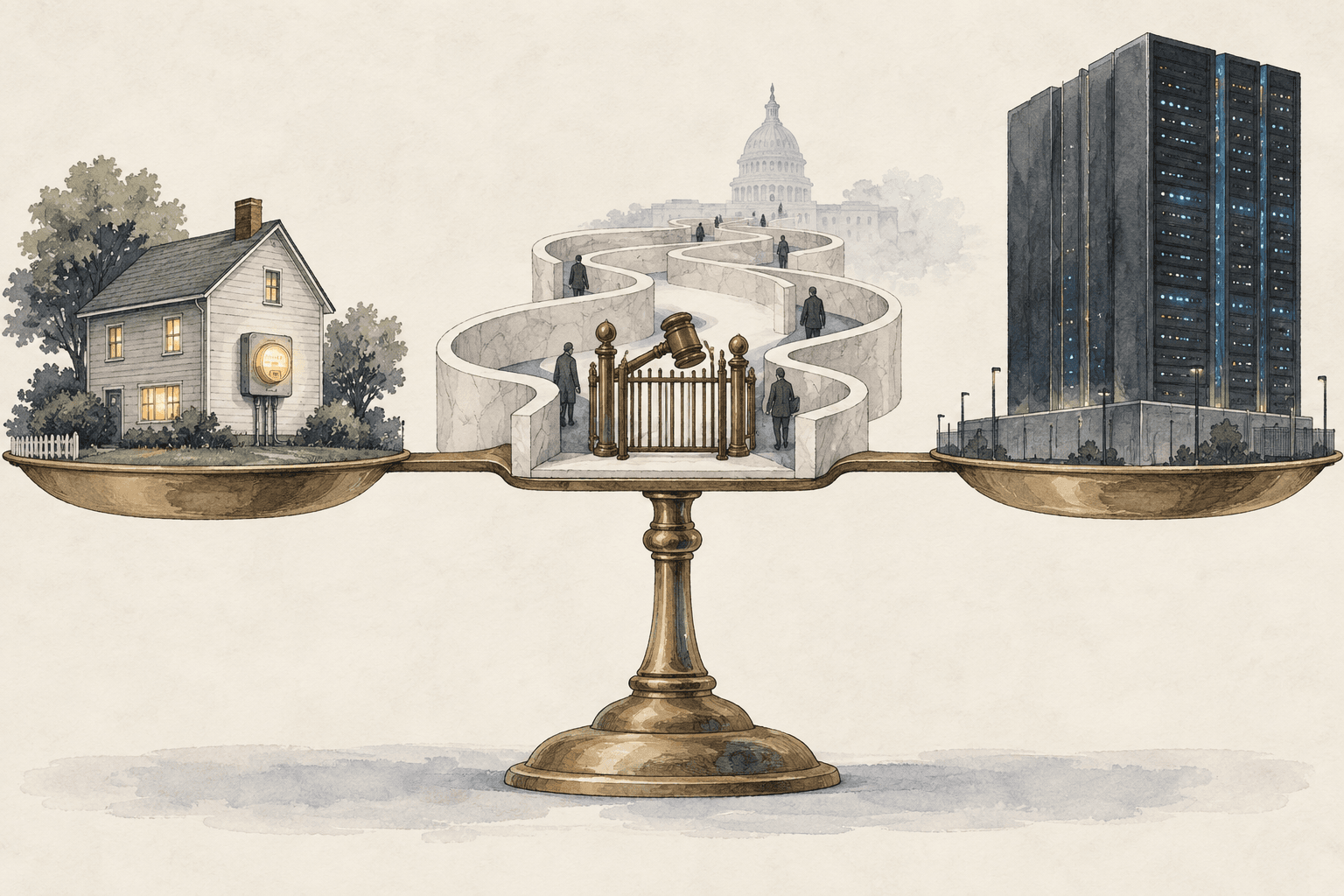
After a 417-3 House vote, Republicans are pressing the Senate to quickly move the Ratepayer Protection Act, a bill aimed at preventing AI data center grid costs from being shifted to household ratepayers. Sen. Martin Heinrich’s objection to a unanimous-consent request has turned the measure’s next procedural step into a test for Senate Majority Leader John Thune.

Tokyo framed the first Bangsamoro Parliamentary Election as a historic step toward self-government in the southern Philippines, even as observers noted violence and transition risks. Japan’s role as an election observer underscores a broader strategy: reinforcing its partnership with Manila through peace-process support, not only South China Sea security cooperation.

Russia formally protested Japan’s hosting of U.S. Typhon medium-range missile systems on Kyushu, warning that the deployment threatens Russian security and regional stability. The demarche turns a Japan-U.S. exercise deployment into a three-way pressure point involving Moscow, Beijing and Tokyo’s island-defense posture.
Outside organizing
Voter-contact work done by advocacy groups, unions, nonprofits or political organizations outside a candidate’s own campaign.
Voter protection
Legal and field programs that help voters resolve problems such as registration issues, polling-place confusion, ballot curing or alleged intimidation.
Low-propensity voters
Eligible voters who do not vote consistently and often require more reminders, education or assistance to participate.
GOTV
Short for “get out the vote,” the final-stage campaign work focused on turning identified supporters or target voters into actual ballots.




Comments