Houthi Advance Opens New Yemen Front at Red Sea Chokepoint
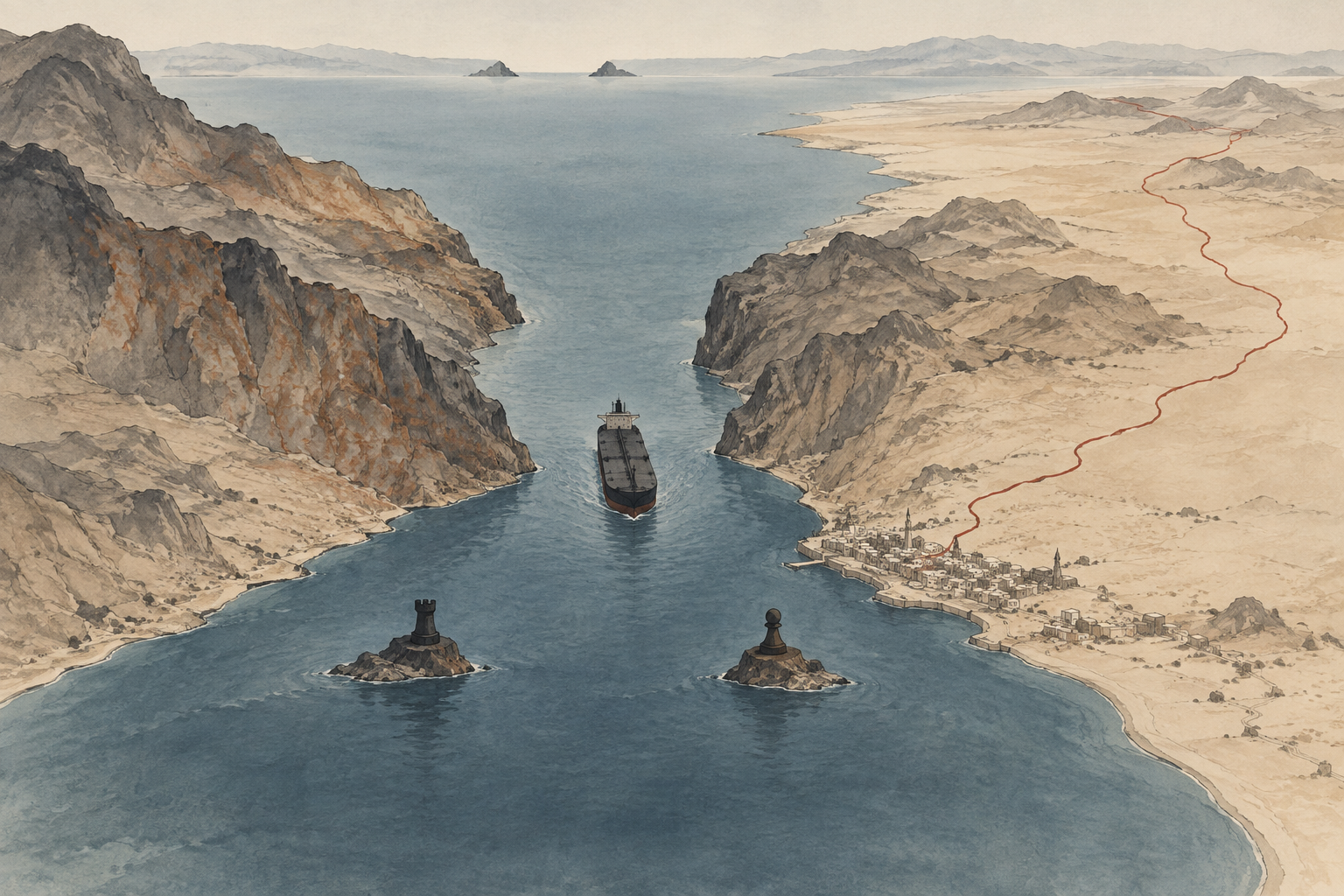
Bab el-Mandeb
A narrow strait between Yemen and the Horn of Africa that connects the Red Sea with the Gulf of Aden and is critical for Suez Canal traffic.
Mokha
A port city on Yemen’s Red Sea coast whose location gives military significance to forces seeking influence over the Bab el-Mandeb approaches.
Marib
A strategic Yemeni governorate important for energy resources, transport routes and anti-Houthi forces.
Hormuz
The strait at the mouth of the Persian Gulf, through which large volumes of global oil and gas shipments pass.
Associated Press
news
A week of Houthi attacks has threatened Saudi oil and rattled markets
Associated Press
news
Tens of thousands flee as Iran-backed rebels draw Yemen into the wider war
Associated Press
news
Houthi drone debris kills 1, injures 2 in Saudi's Taif province, officials say
Untracked bias
100% of tracked sources are High factuality
Bias and factuality ratings from Media Bias Fact Check. Outlets without a rating are marked “Untracked.”
New front
The Houthi advance links Mokha, Taiz and Marib into a renewed Yemeni warfront near the Bab el-Mandeb.
125,000 displaced
AP reported that about 125,000 Yemenis have been displaced by the latest escalation.
Two chokepoints
Pressure near Bab el-Mandeb and Hormuz gives Iran and its partners leverage over key maritime energy routes.
Yemen’s Houthis have shifted the war’s center of gravity from missile and drone attacks at sea to a renewed land campaign along one of the world’s most important maritime chokepoints.
Their reported seizure of Mokha and islands near the Bab el-Mandeb gives the Iran-backed movement a stronger position over Red Sea traffic, threatens Saudi-linked shipping and oil infrastructure, and deepens Yemen’s displacement crisis.12
The shift links three fronts often treated separately: Yemen’s internal war, attacks on commercial shipping in the Red Sea, and the wider confrontation involving Iran, the United States and Gulf Arab states. With Iran also claiming action near the Strait of Hormuz, Houthi pressure around Bab el-Mandeb raises the prospect that Tehran and its partners could gain leverage at both ends of the Arabian Peninsula’s maritime energy corridor.4
The most important change is around Mokha, the Red Sea port on Yemen’s western coast near the Bab el-Mandeb. Control of Mokha and nearby islands, including positions that help observe or threaten approaches to the strait, gives the Houthis a geographic advantage over shipping between the Red Sea and the Gulf of Aden.17
That does not mean the Houthis can fully close the waterway. But it does mean they can expand the danger zone for commercial vessels, especially ships seen as linked to Saudi Arabia, Israel, the United States or their partners. Maritime-risk reporting cited changes in vessel behavior, transit risk and freight costs after Houthi advances around Mokha, Perim and nearby islands.7
Inland, Marib remains a strategic prize because of its energy infrastructure, road connections and symbolic value as a major anti-Houthi stronghold. Fighting around Marib also matters for Saudi Arabia: Houthi claims and cross-border drone activity show that pressure in central Yemen can quickly become a threat to Saudi territory and oil-linked assets.35
Taiz is the third key point on the map. The city and surrounding governorate sit between the Red Sea coast and Yemen’s interior, making them vital to any effort to connect Houthi-held areas with newly contested western approaches. Renewed fighting has pushed civilians from front-line areas, with AP reporting an estimated 125,000 people displaced during the latest escalation.2
Together, the front line now looks less like a single battlefield and more like a chain: coastal pressure at Mokha and Bab el-Mandeb, inland pressure around Taiz, and strategic pressure on Marib. That chain lets the Houthis threaten shipping, stretch rival Yemeni forces and raise the cost for Saudi Arabia of remaining indirectly involved.
Bab el-Mandeb is the narrow passage linking the Red Sea to the Gulf of Aden. It is essential for traffic moving between Europe and Asia through the Suez Canal, and important for energy shipments and naval access. Even limited insecurity there can force ships to reroute around southern Africa, increase insurance costs and delay cargo.
The Houthis had already shown they could disrupt shipping with missiles, drones and boat attacks. The land grab adds another layer: territory from which the group can surveil, launch, conceal or support operations closer to the strait.17
The United Kingdom Maritime Trade Operations assessment that the southern Red Sea threat level remains substantial underscores that shipping companies are facing a persistent risk environment, not a short-term scare.4 That risk now extends beyond isolated attacks at sea to questions about who controls the coastline and islands near the route.
For Saudi Arabia, the Houthi advance revives an old vulnerability: the kingdom’s long border and energy infrastructure remain exposed to drones, missiles and indirect pressure from Yemen. AP reported a Houthi drone debris incident in Taif province that killed one person and injured two, a reminder that even intercepted or failed attacks can have lethal consequences inside Saudi territory.3
The Houthis have also claimed attacks linked to Khamis Mushait and Yanbu, while Saudi and regional accounts have framed alleged drone threats against holy sites and civilian areas as part of a broader escalation.58 Those claims and counterclaims serve a political purpose as well as a military one: they pressure Riyadh to respond while raising the cost of escalation.
Saudi Arabia’s dilemma is that a major military response could pull it deeper into Yemen’s renewed war, while restraint may signal that Houthi advances and cross-border strikes can shift the balance without triggering decisive retaliation. That is why the diplomatic track has widened. Reuters reported that Riyadh appealed to Beijing and that China pressed Iran to help rein in the Houthis, reflecting concern over Saudi oil exports and shipping exposure near Bab el-Mandeb.6
The advance also tests U.S. deterrence. Washington has naval assets, regional bases and a long record of striking Houthi military capabilities, but current reporting indicates the United States is trying to avoid direct military involvement in the renewed Yemeni front.5
That restraint may be intended to prevent a wider regional war. But it creates a gap between the threat level and the visible response. If Houthi territorial gains near Bab el-Mandeb endure, maritime security operations alone may not be enough to restore confidence among shipping companies or reassure Gulf partners.
The U.S. challenge is compounded by the Hormuz crisis. Iran’s claimed action against an oil tanker near the Strait of Hormuz, combined with Houthi pressure near Bab el-Mandeb, creates a two-chokepoint problem: one at the mouth of the Persian Gulf, the other at the southern entrance to the Red Sea.4 Even if Iran does not directly command every Houthi move, the alignment of pressure points gives Tehran strategic leverage in any confrontation with Washington and its partners.
The renewed front is not only a maritime or geopolitical problem. AP reported that about 125,000 Yemenis have been displaced as fighting spread, with civilians fleeing front-line areas and communities around Taiz among those affected.2
That displacement comes on top of years of war, economic collapse and fragmented governance. Movement along the Mokha-Taiz-Marib axis threatens routes used by civilians, aid groups and local commerce. It also increases the risk that front-line communities become bargaining chips in a broader regional contest.
For Yemenis, the immediate question is not whether shipping insurance rises or freight diverts. It is whether renewed fighting locks more families out of homes, schools, hospitals and livelihoods.
The first indicator is whether the Houthis consolidate control around Mokha and nearby islands or face a counteroffensive by Yemeni forces. A stable Houthi position near Bab el-Mandeb would make maritime disruption more durable; a contested front could produce a prolonged battle along the coast.
The second is Marib. If the Houthis intensify pressure there, Saudi Arabia will face a deeper strategic challenge because Marib connects Yemen’s internal war to the kingdom’s border security and energy concerns.
The third is shipping behavior. Continued diversions, higher freight rates or narrower insurance coverage would show that markets view the Houthi advance as more than a temporary battlefield change.7
The fourth is diplomacy. Saudi outreach to China and China’s reported pressure on Iran suggest that Riyadh is looking beyond Washington for tools to contain the crisis.6 If Beijing, Tehran and Gulf capitals become more active, the conflict around Bab el-Mandeb could become a test of regional crisis management as much as a Yemeni battlefield.
The Houthi land grab marks a turning point. It transforms the Red Sea crisis from a problem of ship defense into a territorial war over the coastline beside a global trade artery — and gives Iran-aligned forces a way to pressure rivals from Bab el-Mandeb and Hormuz at once.






Comments