Israeli strike highlights fragility of Gaza ceasefire as disarmament talks stall
Al-Monitor / Reuters
news
Four killed in Gaza in strikes, Israel says it killed a Hamas finance chief
Axios
news
Scoop: Trump's Board of Peace to unveil $2.45 billion Gaza recovery plan
Ahram Online
news
Egypt, 7 Arab and Islamic nations urge Israel to fulfil Gaza plan commitments
Untracked bias
Bias and factuality ratings from Media Bias Fact Check. Outlets without a rating are marked “Untracked.”
Khan Younis strike
A September 23 Israeli strike in Khan Younis killed Mohammad Abu Elwan and Osama Abu Khater, with Israel identifying Abu Elwan as a Hamas finance official.
Talks stalled
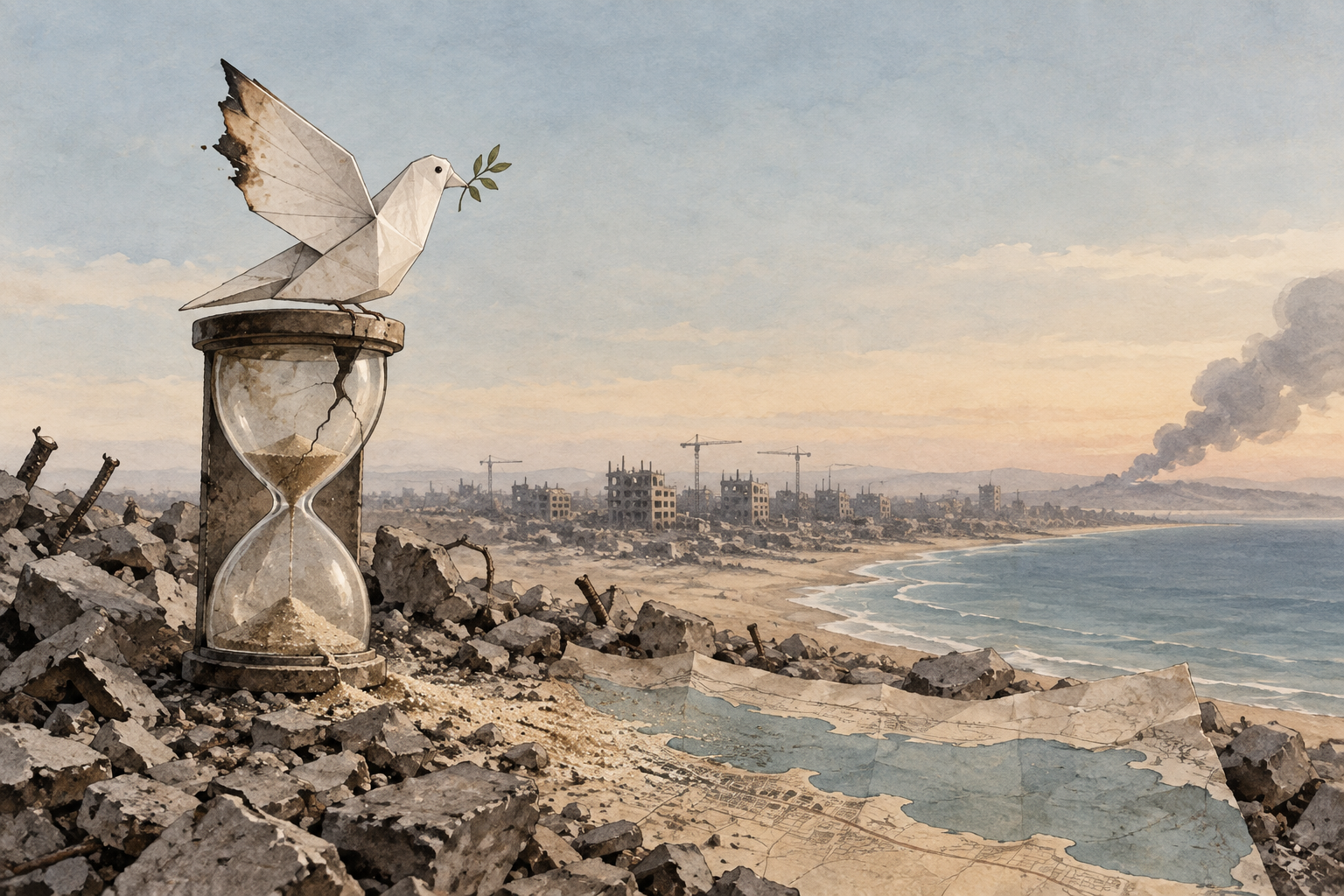
The ceasefire framework remains blocked by disputes over Hamas disarmament, Israeli withdrawals, stabilization arrangements and Gaza governance.
Recovery delayed
A proposed $2.45 billion Gaza recovery plan depends on security cooperation and a more durable political framework.
An Israeli strike in Khan Younis killed two Palestinians on September 23, including a man Israel identified as a senior Hamas finance official, underscoring the fragility of Gaza’s ceasefire even without a return to full-scale war.1
Reuters, citing Gaza health authorities, reported that Mohammad Abu Elwan and Osama Abu Khater were killed in the strike. Israel said Abu Elwan was involved in financing Hamas activity, describing the attack as a targeted operation rather than a broader resumption of combat.1
The strike came as the U.S.-brokered ceasefire framework remains stuck on the central questions that have shadowed it from the start: whether and how Hamas will disarm, how far Israel will withdraw, who will govern Gaza, and when large-scale reconstruction can begin.36
For Middle East policy watchers, the incident points to the ceasefire’s core weakness. The truce has reduced the intensity of fighting, but it has not resolved the security and governance disputes that give both sides reasons to delay implementation. Israel has said it will not move ahead with deeper withdrawals while Hamas remains armed, while regional governments are pressing Israel to fulfill commitments tied to withdrawal, stabilization and recovery.34
The Khan Younis strike fits a pattern of lower-intensity Israeli military action during the ceasefire period, including targeted strikes Israel says are aimed at militants or operational figures. Gaza officials and ceasefire monitors have described such incidents as violations that deepen mistrust and make implementation harder.15
The September 23 attack was not an isolated flashpoint. Antiwar.com, citing Gaza Health Ministry figures, reported continued Palestinian casualties from Israeli strikes after the October 2025 ceasefire, highlighting the gap between the formal truce and conditions on the ground.5
Israel’s position is that Hamas cannot retain military capacity while the ceasefire framework advances. Defense Minister Israel Katz said Israel would not withdraw from the Yellow Line while Hamas remains in Gaza and is not disarmed, according to The Times of Israel’s September 22 live coverage.4
That stance leaves targeted operations in a gray zone: short of renewed war, but still capable of derailing talks, provoking retaliation or reinforcing Hamas’s argument that Israel is not honoring the ceasefire.
The most difficult issue remains sequencing. Israel wants Hamas’s weapons removed or placed beyond operational use before any further withdrawal. Hamas and mediators have sought guarantees that Israeli withdrawal, governance arrangements and reconstruction will not be indefinitely delayed once weapons are addressed.6
A September 23 analysis by the Middle East Institute at the National University of Singapore described the Board of Peace process as caught in this unresolved sequencing problem: whether weapons decommissioning or Israeli withdrawal comes first, and who verifies compliance.6
Regional governments are trying to keep the framework alive. Egypt, Qatar, Jordan, the United Arab Emirates, Indonesia, Pakistan, Türkiye and Saudi Arabia urged Israel to fulfill its commitments under the Gaza plan, including steps related to withdrawal, stabilization, reconstruction and the deployment of an international stabilization force.3
Egyptian Foreign Minister Badr Abdelatty also met Arab and Muslim counterparts on the sidelines of the U.N. General Assembly to discuss preserving the fragile ceasefire, avoiding further violations, accelerating early recovery and ensuring aid access.7
The recovery track is advancing on paper but remains constrained by the same political and security impasse. Axios reported on September 23 that Trump’s Board of Peace is preparing to unveil a $2.45 billion Gaza recovery plan covering temporary housing, rubble removal, hospital repairs, a security-force deployment and funding for weapons buy-backs.2
The plan’s scope reflects Gaza’s immediate needs, but it also shows why recovery cannot be separated from the ceasefire’s security provisions. Temporary housing, debris clearance and hospital restoration require predictable access, stable local administration and assurances that reconstruction materials and funding will not become another battlefield over control of Gaza.2
Without agreement on who secures Gaza, who governs it and how Hamas’s military wing is dismantled or contained, donors are likely to remain cautious. Israel is unlikely to permit unfettered reconstruction while Hamas retains weapons, while regional states are reluctant to fund a process that could be halted by renewed strikes or political deadlock.236
The September 23 strike illustrates the difference between a ceasefire and a political settlement. The former can reduce battlefield activity; the latter would require enforceable answers on disarmament, withdrawal, governance and reconstruction.
For now, Gaza is caught between those two stages. Targeted Israeli killings may remain limited in scope, but they reinforce instability and complicate mediation. Each strike adds pressure to an already fragile framework, while every delay in reconstruction deepens the humanitarian and political cost of the unresolved deal.
Unless the parties and mediators settle the sequencing dispute, the ceasefire may function less as a bridge to recovery than as a managed pause punctuated by lethal operations.

U.S. and Iranian officials used Qatari-led shuttle diplomacy around the UN General Assembly to reopen a channel after months without contact. The talks appear aimed less at a settlement than at containing spillover risks across the Gulf, Red Sea and Iraq-Syria theaters.

Russian drones hit fuel, rail and warehouse infrastructure in Kyiv hours after Volodymyr Zelenskyy met Donald Trump at the UN, sharpening doubts over Moscow’s willingness to accept a mutual halt on energy-infrastructure attacks. The strikes make Ukraine’s air defenses and logistics grid the first practical test of any ceasefire opening before winter.

John Swinney is asking MSPs to back a motion asserting Scotland’s right to decide its constitutional future, intensifying pressure on Westminster after the Cardiff Agreement with Welsh and Northern Irish leaders. The vote will test whether Andy Burnham can advance a devolution agenda while holding the line against another independence referendum.
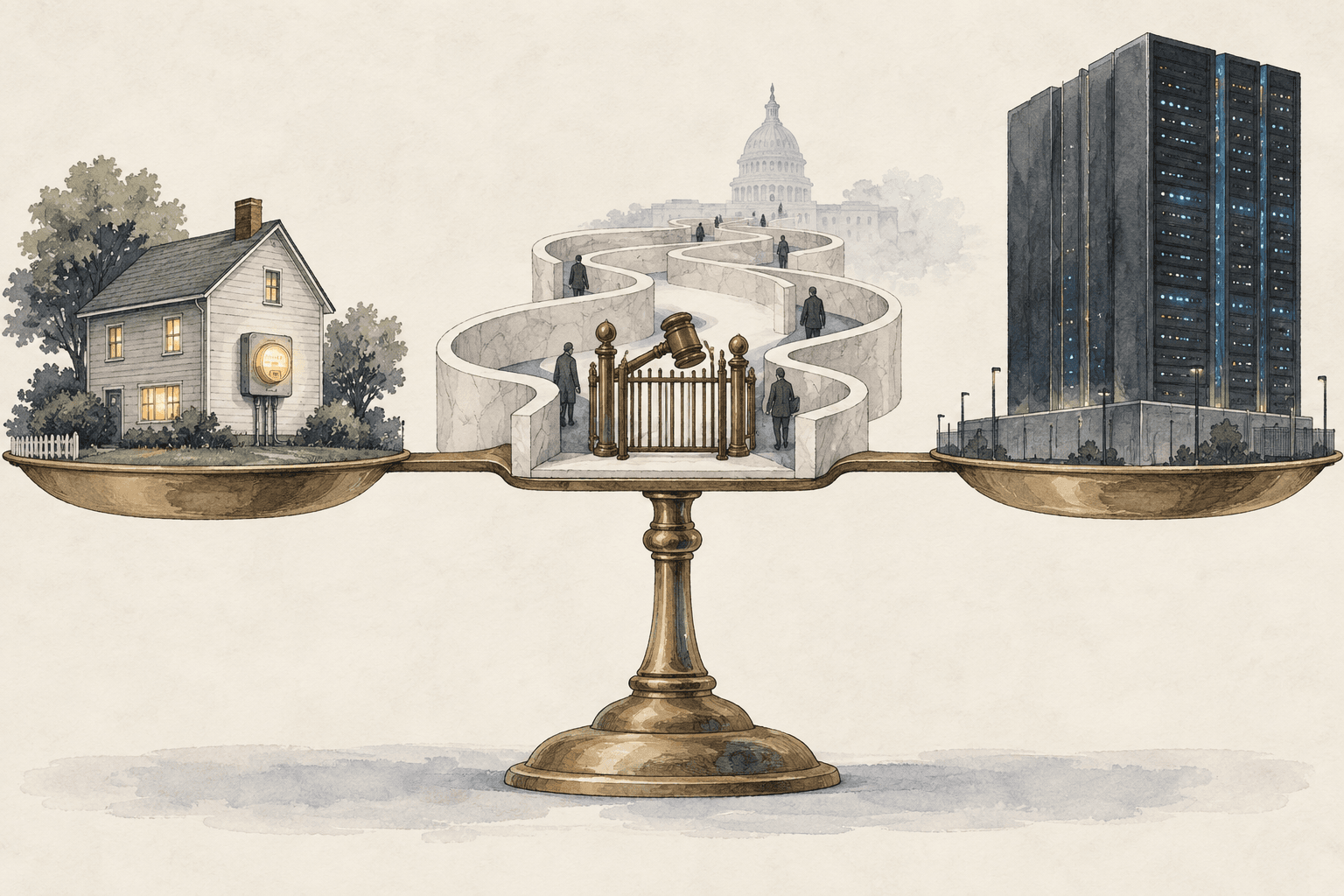
After a 417-3 House vote, Republicans are pressing the Senate to quickly move the Ratepayer Protection Act, a bill aimed at preventing AI data center grid costs from being shifted to household ratepayers. Sen. Martin Heinrich’s objection to a unanimous-consent request has turned the measure’s next procedural step into a test for Senate Majority Leader John Thune.
Yellow Line
A referenced Israeli military withdrawal line in Gaza; Israeli officials have linked movement from it to Hamas disarmament.
Board of Peace
The U.S.-backed body associated with the postwar Gaza framework and proposed recovery planning.
Sequencing dispute
The disagreement over whether Hamas disarmament, Israeli withdrawal, stabilization forces and reconstruction should happen first or in parallel.
Targeted killing
A military strike aimed at a specific individual, often justified by the attacking state as a security operation rather than a broader escalation.
Comments