Palestinian election delay widens legitimacy gap in Gaza ceasefire planning

Reuters via Investing.com
news
Palestinians set to delay legislative elections due to worsening conditions, letter says
Associated Press
news
Palestinian factions move to delay the first legislative elections in 20 years
Sada News Agency
news
Sources to SadaNews: Preliminary Agreement to Delay Upcoming Legislative Elections
Vote delayed
The planned November 28 Palestinian legislative elections are set to be postponed for several months, according to Reuters.
Ceasefire stakes
The delay complicates efforts to build a durable Gaza ceasefire framework involving reconstruction, security forces, disarmament and Israeli withdrawal.
Donor dilemma
Foreign donors are pressing for Palestinian Authority reform while facing uncertainty over who has a renewed mandate to administer reconstruction.
Palestinian leaders are moving to delay the first legislative elections in two decades, a setback that could deepen the Palestinian Authority’s legitimacy crisis as foreign governments press for a credible Palestinian role in Gaza reconstruction, ceasefire enforcement and postwar security.
Palestinian Vice President Hussein Al Sheikh told France in an October 8 letter that the November 28 vote would be postponed for several months because political, security and economic conditions had deteriorated, Reuters reported on October 9. The delay could push the election as far as September 2027, according to the report.1
If formalized, the decision would come at a sensitive moment for U.S., European, Arab and United Nations efforts to turn a fragile Gaza ceasefire concept into a durable political and security framework. Reuters reported that Al Sheikh linked the postponement to the security situation in Gaza, the Palestinian Authority’s political standing, the Trump peace initiative, a United Nations resolution, proposed international forces, Hamas disarmament, Israeli withdrawal and Israel’s withholding of Palestinian funds.1
That makes the delay more than an internal Palestinian procedural issue. It turns the question of who can legitimately speak for Palestinians into a live security problem for outside powers seeking a governing partner for Gaza, a channel for reconstruction money and a Palestinian address for long-term ceasefire commitments.
The planned election was billed as the first Palestinian legislative vote in 20 years. Its postponement would extend a long institutional freeze: the Palestinian Legislative Council has not been renewed by voters since the 2006 elections, and President Mahmoud Abbas has governed for years amid criticism over rule by decree, weak accountability and the absence of a functioning elected legislature.4
Associated Press reported on October 8 that Palestinian factions were already discussing a delay because of the war’s impact on Gaza, obstacles to voting in East Jerusalem and unresolved divisions among Fatah, Hamas and Islamic Jihad.2
Those barriers are practical as well as political. Gaza’s devastation has made election administration difficult, while Israel’s position on Palestinian voting activity in East Jerusalem remains a recurring flashpoint. Sada News Agency, citing sources, reported that factions meeting in Cairo had reached a preliminary agreement to postpone the vote, citing Israel’s refusal to allow preparations in Jerusalem and conditions in Gaza. It said the European Union would be informed of a new date.3
Ahram Online, carrying AFP, reported that Palestinian factions agreed to hold a national dialogue before elections. Fatah figure Jibril Rajoub and a meeting source pointed to a recommendation that Abbas and the Palestine Liberation Organization Executive Committee postpone the vote to build consensus.5
For international mediators, the delay narrows an already difficult path. Donor governments have pressed the Palestinian Authority to reform and reassert a role in Gaza, but they have also treated renewed Palestinian political legitimacy as essential to any credible postwar order.24
Without elections, diplomats face a familiar dilemma. Relying on the Palestinian Authority may be the most practical option for reconstruction coordination and security planning. But doing so without a fresh mandate risks reinforcing the perception that Palestinian governance is being rebuilt from the outside rather than authorized by voters.
That perception matters for any ceasefire architecture. A durable arrangement would likely require decisions on border crossings, policing, weapons, reconstruction oversight, aid distribution and the relationship between Gaza and the West Bank. Each would be politically sensitive even for a newly elected leadership. For an unelected or weakly mandated authority, each could become a trigger for factional rejection or public backlash.
Reuters said the postponement was tied to broader diplomatic questions, including international forces, Hamas disarmament and Israeli withdrawal.1 Those are among the hardest issues in any Gaza settlement. If Palestinian elections are delayed into 2027, outside powers may have to negotiate them with leaders whose formal democratic mandate predates the current war and much of the Palestinian electorate’s present political experience.
The talks over postponement also show that Palestinian unity remains unresolved. AP reported that factions were discussing a delay against the backdrop of divisions among Fatah, Hamas and Islamic Jihad, as well as disagreements over the conditions under which elections could be held.2
The positions of Islamic Jihad and Hamas are especially important because any postwar Gaza formula that excludes or confronts armed factions would require either broad Palestinian political cover or external enforcement. Conversely, any formula that accommodates factions without elections could face resistance from Israel, the United States and some donors.
The Times of Israel, citing Reuters, reported that the Palestinian Authority had confirmed the postponement of the first legislative elections in 20 years, underscoring how quickly the issue entered regional political debate.6
For Israel-facing audiences, the delay is likely to reinforce doubts about whether the Palestinian Authority can be a viable Gaza partner. For Palestinian and Arab audiences, it is likely to intensify questions about whether international diplomacy is prioritizing administrative stability over representative politics.
The postponement also complicates Gaza reconstruction. Donors are expected to demand safeguards on how funds are spent, who administers projects and how aid is insulated from armed groups. The National reported that the expected delay comes amid European funding leverage, pressure for Palestinian Authority reform and unresolved logistics in Gaza and East Jerusalem.4
Those issues are interlinked. A reformed Palestinian Authority may be more acceptable to donors, but reform without elections may not answer Palestinian demands for representation. Elections could renew institutions, but holding them amid displacement, destruction and Israeli restrictions may be logistically and politically impossible.
That leaves mediators with an uncomfortable sequencing problem. Reconstruction cannot wait indefinitely, but reconstruction without a legitimate political framework may strengthen local rivals, deepen public mistrust or create a governance vacuum in which security arrangements fail.
The immediate effect of postponement may be to buy time for Palestinian factions to reach consensus on voting conditions. The broader effect may be to remove the clearest near-term mechanism for renewing Palestinian institutions while outside actors are trying to assign those same institutions a central role in Gaza’s future.
If the election is delayed only briefly and tied to a credible timetable, it may preserve space for a more inclusive vote. If it slips toward late 2027, as Reuters reported was possible, the legitimacy gap could become a core obstacle to ceasefire implementation, not merely a symptom of Palestinian political dysfunction.1
For diplomats, that means governance can no longer be treated as a secondary track after security. In Gaza, the authority to govern, rebuild and enforce a ceasefire may depend as much on Palestinian consent as on international plans.
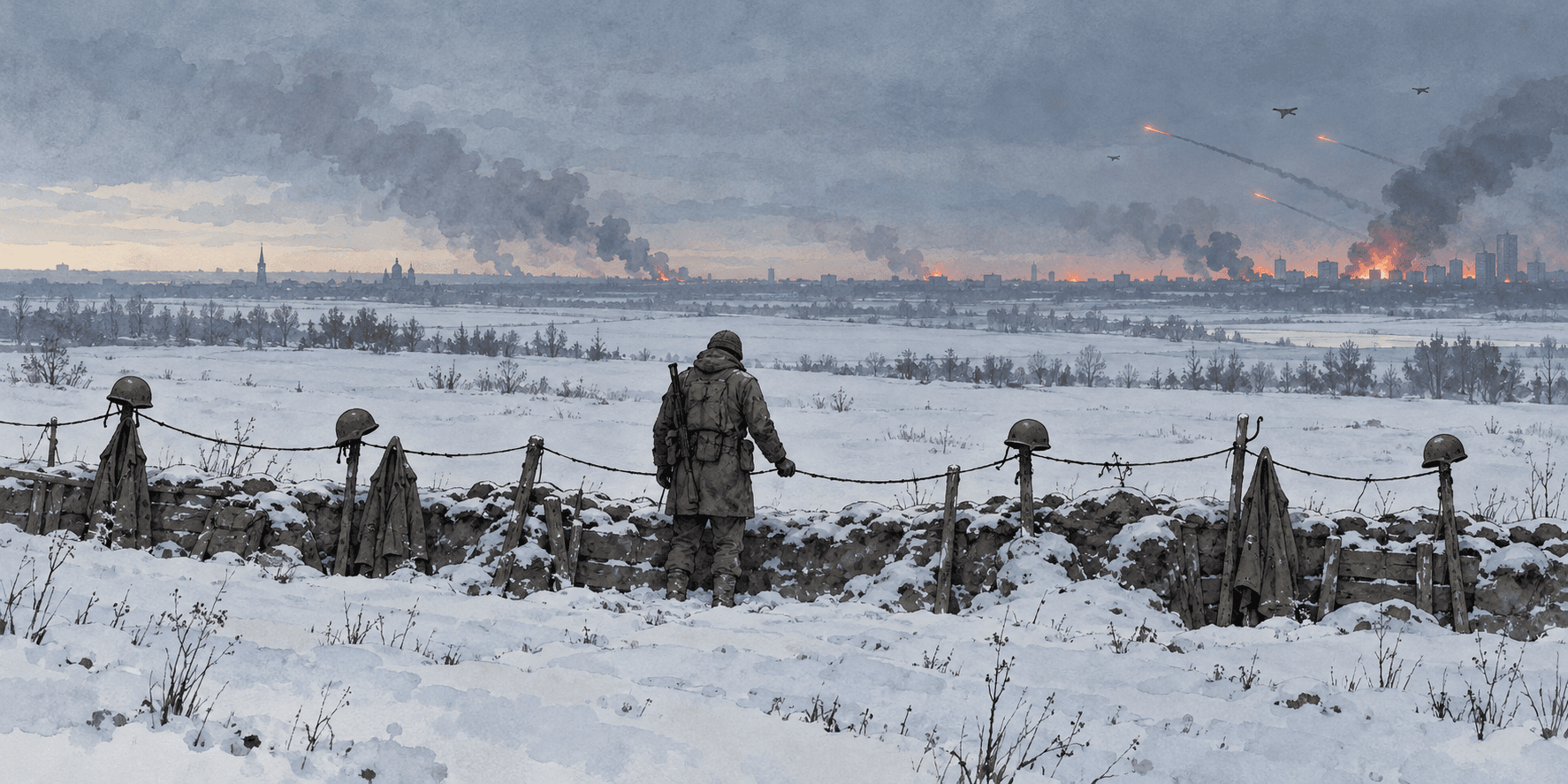
Ukrainian commanders say some units are operating at roughly half strength, leaving exhausted infantry with fewer rotations as Russian pressure rises across the front. The strain is converging with intensified missile and drone attacks on cities and infrastructure, testing Kyiv’s ability to hold lines through winter.
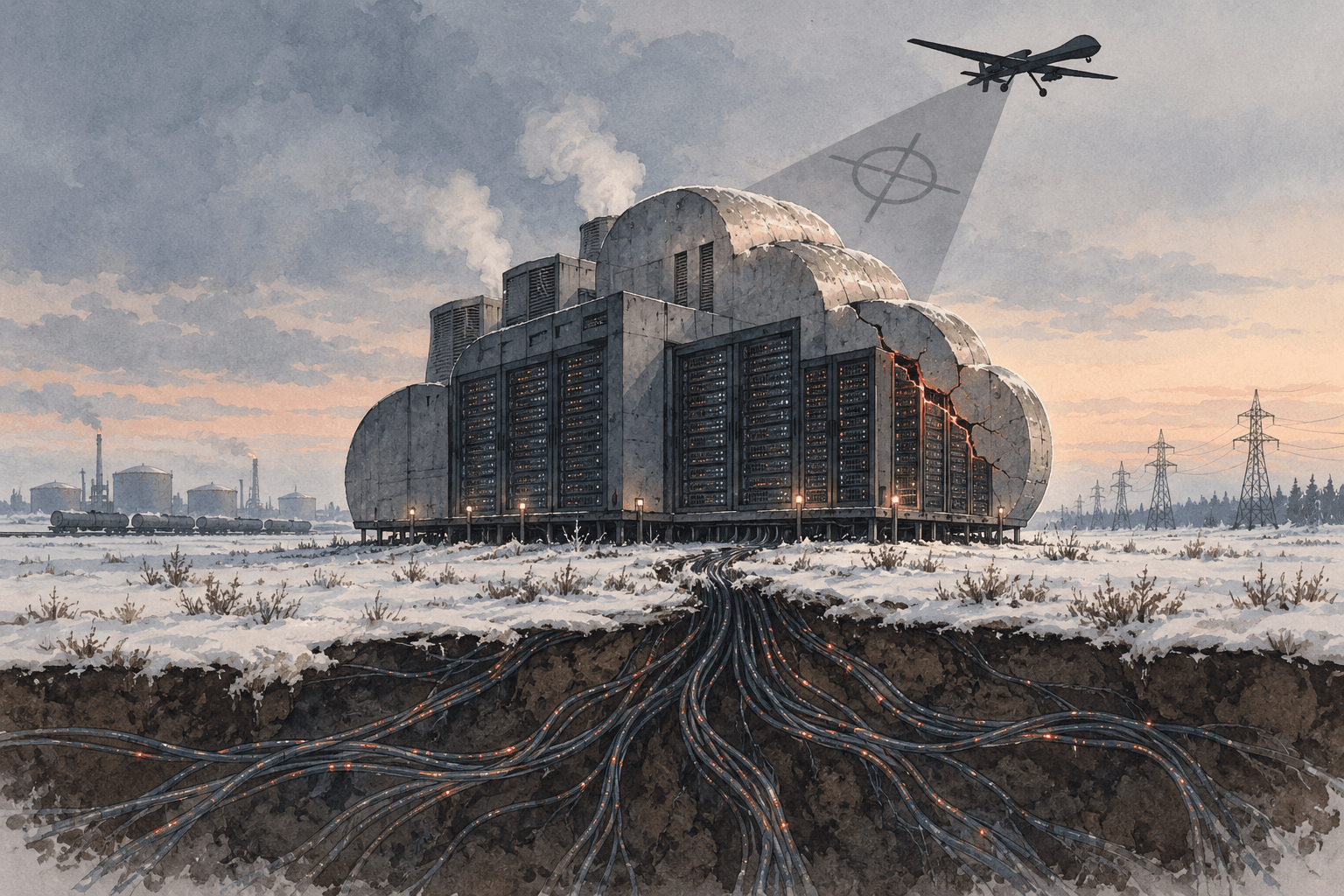
Drone attacks on Yandex data-center infrastructure in Ryazan and Kaluga suggest Ukraine’s retaliatory campaign may be moving beyond oil, rail and power assets toward the cloud systems that support Russia’s economy and state capacity. The strikes highlight how data centers now sit between civilian digital life, military communications resilience and escalation risk.

The European Commission wants to extend two temporary VAT anti-fraud tools — the optional reverse charge mechanism and the Quick Reaction Mechanism — until 30 June 2030. The proposal now moves to the Council, where member states will test whether they can preserve national emergency powers while ViDA’s digital reporting regime is phased in.

The Council of the European Union has prolonged its Russia hybrid-activities sanctions regime until 9 October 2027, keeping restrictive measures on 80 individuals and 20 entities. The rollover comes one week before EU leaders discuss Russia’s hybrid attacks, defence readiness and critical capability gaps at the 15-16 October European Council.
Palestinian Authority
The self-governing Palestinian body that administers parts of the occupied West Bank and is often proposed by diplomats as a possible administrative actor in postwar Gaza.
Palestinian Legislative Council
The Palestinian parliament, last elected in 2006, whose long-delayed renewal is central to debates over political legitimacy.
East Jerusalem voting
Palestinian participation in elections in East Jerusalem is politically sensitive and depends on Israeli restrictions, making it a recurring obstacle to Palestinian votes.
Ceasefire framework
A proposed set of political, security and humanitarian arrangements intended to make a halt in fighting durable rather than temporary.
Comments