Ukraine’s shortage of rested infantry becomes a growing battlefield risk before winter
Associated Press
news
Ukraine faces a shortage of troops to relieve tired fighters at the front
Associated Press
news
Russian strikes across Ukraine kill 3 people and wound 8
Associated Press
news
Russian strike on Ukrainian public buses kills 30 people as blackouts worsen in Kyiv
Untracked bias
100% of tracked sources are High factuality
Los Angeles Times
Ukraine faces a shortage of troops to relieve tired fighters at the front
Business Standard
Ukraine grapples with shortage of troops at front after over 4 years of war
The Economic Times
Ukraine faces a shortage of troops to relieve tired fighters at the front
Bias and factuality ratings from Media Bias Fact Check. Outlets without a rating are marked “Untracked.”
Half strength
AP reported that some Ukrainian units are operating at roughly half strength as commanders struggle to rotate exhausted troops.
211 clashes
Ukraine’s General Staff reported 211 combat engagements in 24 hours, with the heaviest fighting around Pokrovsk and Huliaipole.
Winter pressure
Russian missile and drone attacks are increasingly targeting energy and infrastructure as Ukraine prepares for winter.
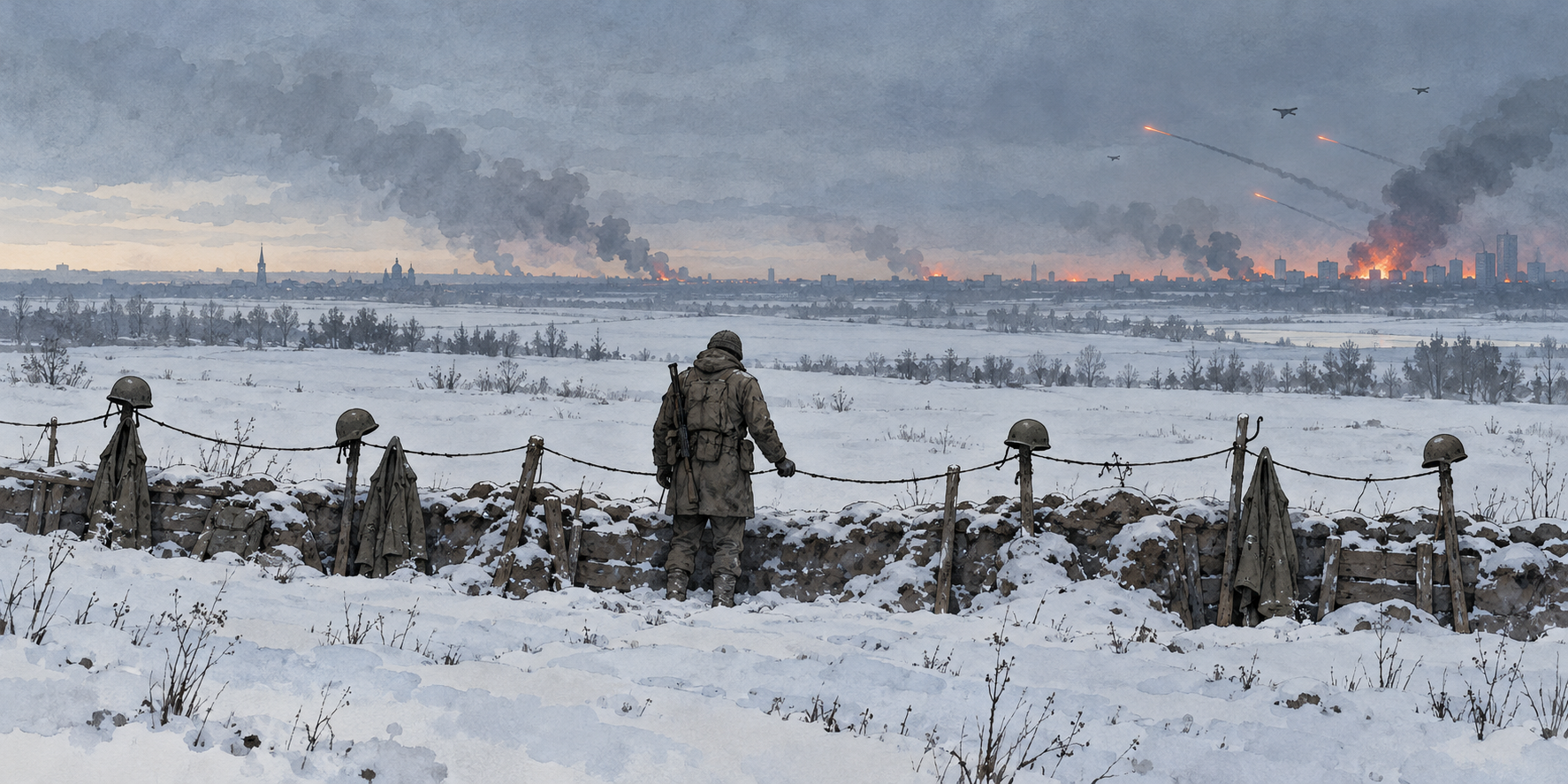
Ukraine’s most urgent defensive weakness may not be a single weapons shortage, but a shortage of rested infantry. As Russia’s full-scale war moves through its fifth year, Ukrainian commanders and analysts say manpower gaps are becoming increasingly acute, with some units at about half strength and too few replacements to rotate exhausted troops away from the line.1
That matters because Ukraine is trying to do several things at once: hold long defensive sectors, respond to Russian pressure in hot spots such as Pokrovsk and Huliaipole, preserve reserves to blunt breakthroughs, and protect cities and infrastructure from a renewed winter air campaign.
Drones, long-range strikes and air defenses shape the war’s technology layer. But trenches still have to be manned, positions repaired, casualties replaced and tired soldiers rested.
The Associated Press reported on October 8 that Ukraine’s advances in drone warfare have not solved a basic battlefield constraint: the country remains outmanned by Russia, and commanders say the lack of combat-ready troops is limiting both defense and opportunity.
In one Pokrovsk-area unit, a deputy commander said the force was operating at about half strength while its area of responsibility had doubled, leaving the same number of soldiers to defend roughly twice as much ground.1
The immediate effect is a rotation gap. When replacements are scarce, front-line troops stay in position longer, sometimes with little chance to recover. That reduces combat effectiveness even if a unit still exists on paper.
Tired infantry are slower to dig, patrol, counterattack, evacuate wounded soldiers and absorb repeated assaults. A formation that is “holding” can therefore be degrading in ways that do not show up immediately on a map.
The shortage also limits offensive choices. The same AP account quoted a Ukrainian officer saying his unit barely had enough personnel to hold its current sector, and that advancing would bring greater losses.1
That is the manpower dilemma facing Kyiv: drone innovations can create openings, but exploiting them requires infantry, engineers, medics, drivers, drone teams and reserves. If available manpower is already tied down on defense, battlefield opportunities can pass unused.
The manpower strain is occurring against a high operational tempo. LB.ua, citing Ukraine’s General Staff, reported 211 combat engagements over the previous 24 hours on October 9, with the most intense fighting in the Pokrovsk and Hulyaypole sectors.
The same update said Russian forces carried out 83 air strikes, dropped 243 guided aerial bombs, used 9,987 kamikaze drones and conducted 2,444 attacks on populated areas and Ukrainian positions.4
Those figures are Ukrainian military reporting and should be read as wartime claims. Still, they illustrate the scale of pressure Kyiv says its forces are facing.
For infantry units, the numbers translate into constant demands: hold forward positions under glide-bomb and drone attack, rotate observation posts, repair destroyed shelters, keep supply routes open and replace losses.
Pokrovsk is especially important because it has been a focus of Russia’s offensive effort. If Ukrainian units there are understrength, Russia does not necessarily need a rapid breakthrough to create problems. It can force repeated small withdrawals, stretch adjacent brigades and compel Kyiv to commit reserves that might otherwise be used elsewhere.
Ukraine’s manpower problem is not only about battlefield casualties. AP’s reporting points to recruitment strains, draft avoidance and desertion as part of the wider personnel challenge.1
Those issues are politically and socially difficult for Kyiv because mobilization must balance military necessity with public fatigue after more than four and a half years of full-scale war.
For battlefield watchers, the key question is not simply how many people Ukraine can mobilize, but how quickly it can turn them into usable units. Modern front-line roles require more than basic rifle training. Soldiers must operate in an environment saturated by drones, electronic warfare, mines, artillery and precision strikes.
Units also need specialists who can fly drones, maintain communications, operate electronic warfare systems and coordinate fires.
That means manpower cannot be replaced instantly. A recruit may help fill a roster, but a brigade’s combat power depends on training, leadership, cohesion and the ability to integrate new soldiers without hollowing out experienced cadres. The longer veteran troops remain at the front without rotation, the harder that regeneration becomes.
The personnel crisis is unfolding as Russia intensifies missile and drone attacks away from the front. AP reported October 9 that Russian strikes killed three people and wounded at least eight across Ukraine, while Ukraine struggled to counter escalating bombardments that had killed more than 50 people over three days.2
President Volodymyr Zelenskyy has warned that Moscow is likely to escalate daily attacks as winter approaches, targeting the infrastructure that supports Ukraine’s economy and civilian resilience.2
A day earlier, AP reported that a Russian guided bomb exploded next to public buses in Kramatorsk, killing 30 people, while attacks worsened blackouts in Kyiv. Recent Russian targets have included energy systems, railways, telecom networks, gas stations, grain exports and other infrastructure.3
These rear-area strikes matter for the front line. Blackouts, damaged rail links and attacks on logistics hubs can slow the movement of ammunition, fuel, spare parts and replacements. They also pull air-defense assets, engineers, emergency services and political attention toward cities and infrastructure.
Even when front-line manpower is the immediate vulnerability, the winter strike campaign can magnify it by making every rotation and resupply harder.
Ukraine is still pressing partners for air-defense support. In an October 8 readout, Ukraine’s Defense Ministry said its defense minister discussed countering jet-powered drones and ballistic threats with Germany’s Boris Pistorius, including the need to strengthen air defense and increase deliveries of interceptors for IRIS-T systems.5
Those systems are essential for protecting cities, critical infrastructure and military logistics. But more interceptors cannot directly solve the shortage of rested infantry holding trenches and defensive belts. Air defenses can reduce damage from missiles and drones; they cannot conduct rotations, occupy tree lines, clear assault groups or maintain local reserves.
The same is true of Ukraine’s strike campaign. The Defense Ministry said Ukrainian “middle strike” attacks in September hit more than 30 Russian air-defense, radar and electronic warfare assets, more than 40 command posts, more than 50 logistics sites and more than 20 facilities tied to drone storage, preparation, production or use.6
If accurate, those strikes can degrade Russia’s ability to coordinate attacks and sustain forces. But they offset rather than erase Ukraine’s infantry problem. A successful strike campaign buys time and imposes costs; it does not automatically produce fresh platoons.
Ukraine’s Defense Ministry claimed on October 9 that Russia lost 1,710 personnel, 1,757 operational-tactical drones and 67 artillery systems on October 8, citing General Staff estimates.7
These are party-provided wartime figures and cannot be independently verified from the report alone. Still, they indicate the level of attrition Ukraine says it is imposing — and the scale of the fight it is trying to sustain.
High Russian losses do not automatically translate into Ukrainian relief. Russia has a larger population and has shown willingness to absorb heavy casualties for incremental gains.
Ukraine’s challenge is different: preserve a smaller force, prevent exhausted units from collapsing, and avoid spending scarce trained infantry in fights that do not change the operational picture.
The key indicators are not only territorial changes on daily maps. Watch for signs that Ukraine can rotate brigades out of the most active sectors, rebuild understrength battalions, and keep reserves uncommitted long enough to respond to Russian thrusts.
Also watch whether Russian pressure remains concentrated around Pokrovsk and Huliaipole or spreads in ways that force Kyiv to stretch already thin infantry across more sectors.4
The central risk is cumulative. A tired brigade may hold today, then hold tomorrow, then gradually lose the ability to counterattack, seal penetrations or recover from a local setback.
If Russia can combine front-line pressure with winter strikes on energy and logistics, Ukraine’s shortage of rested troops could become more consequential than any single weapons gap.
For now, Kyiv’s defensive challenge is not simply whether it has enough drones, missiles or interceptors. It is whether it has enough trained, rested people to keep using them while still holding the line.

A planned November 28 Palestinian legislative vote is set to be postponed for several months, Reuters reported, complicating international efforts to build a postwar governance and reconstruction framework for Gaza. The delay leaves diplomats trying to design security, aid and ceasefire arrangements through institutions whose electoral mandate is already widely contested.
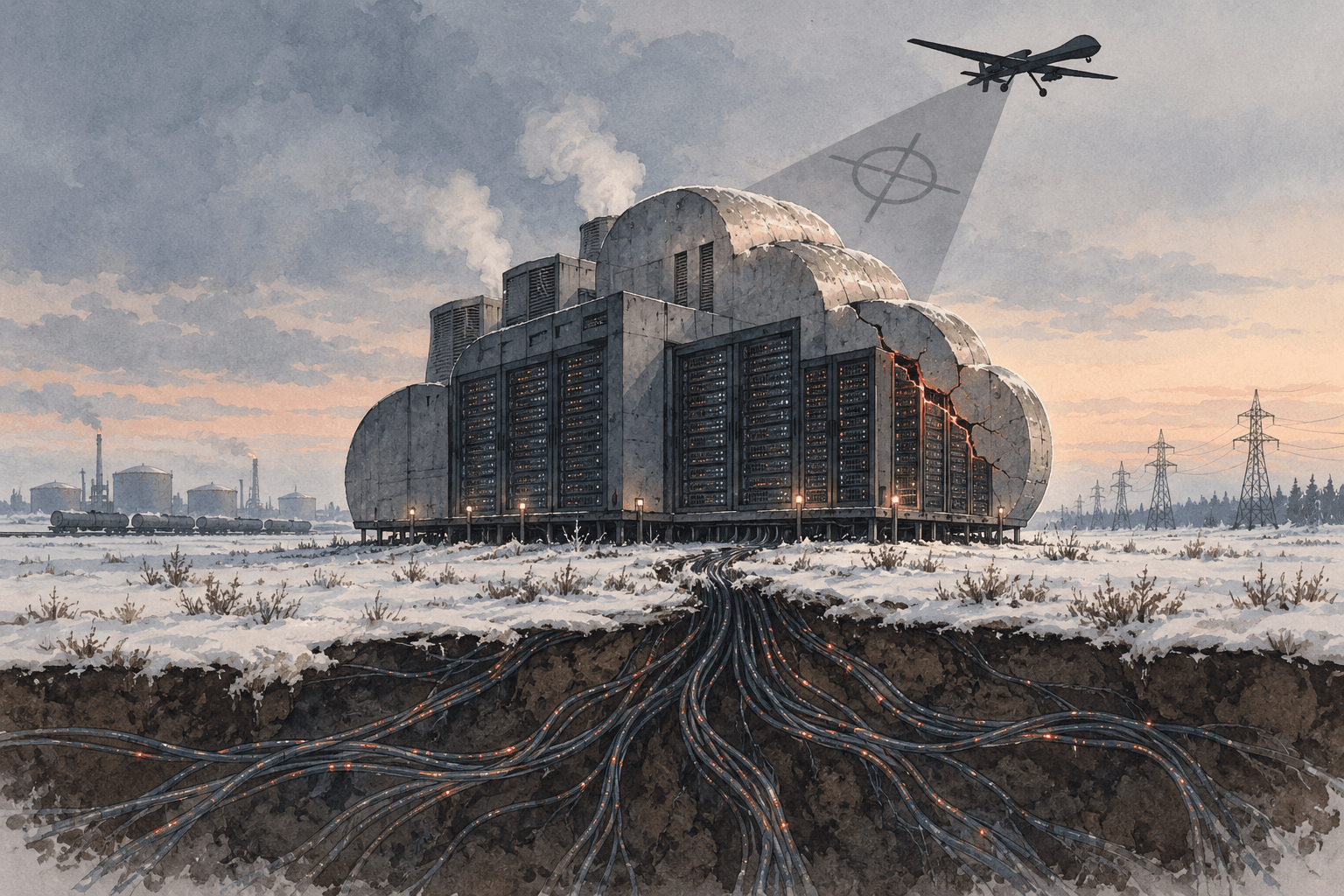
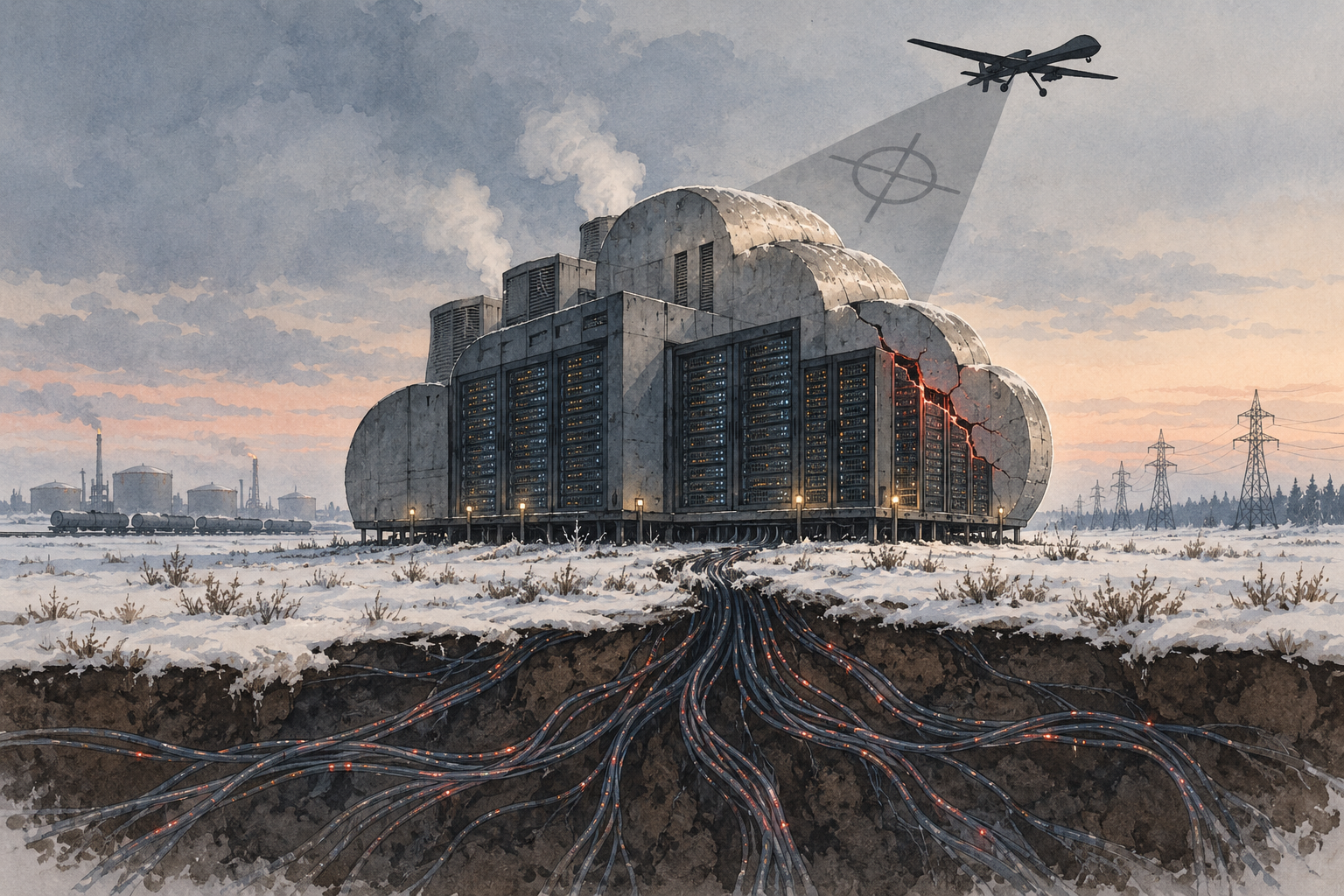
Drone attacks on Yandex data-center infrastructure in Ryazan and Kaluga suggest Ukraine’s retaliatory campaign may be moving beyond oil, rail and power assets toward the cloud systems that support Russia’s economy and state capacity. The strikes highlight how data centers now sit between civilian digital life, military communications resilience and escalation risk.
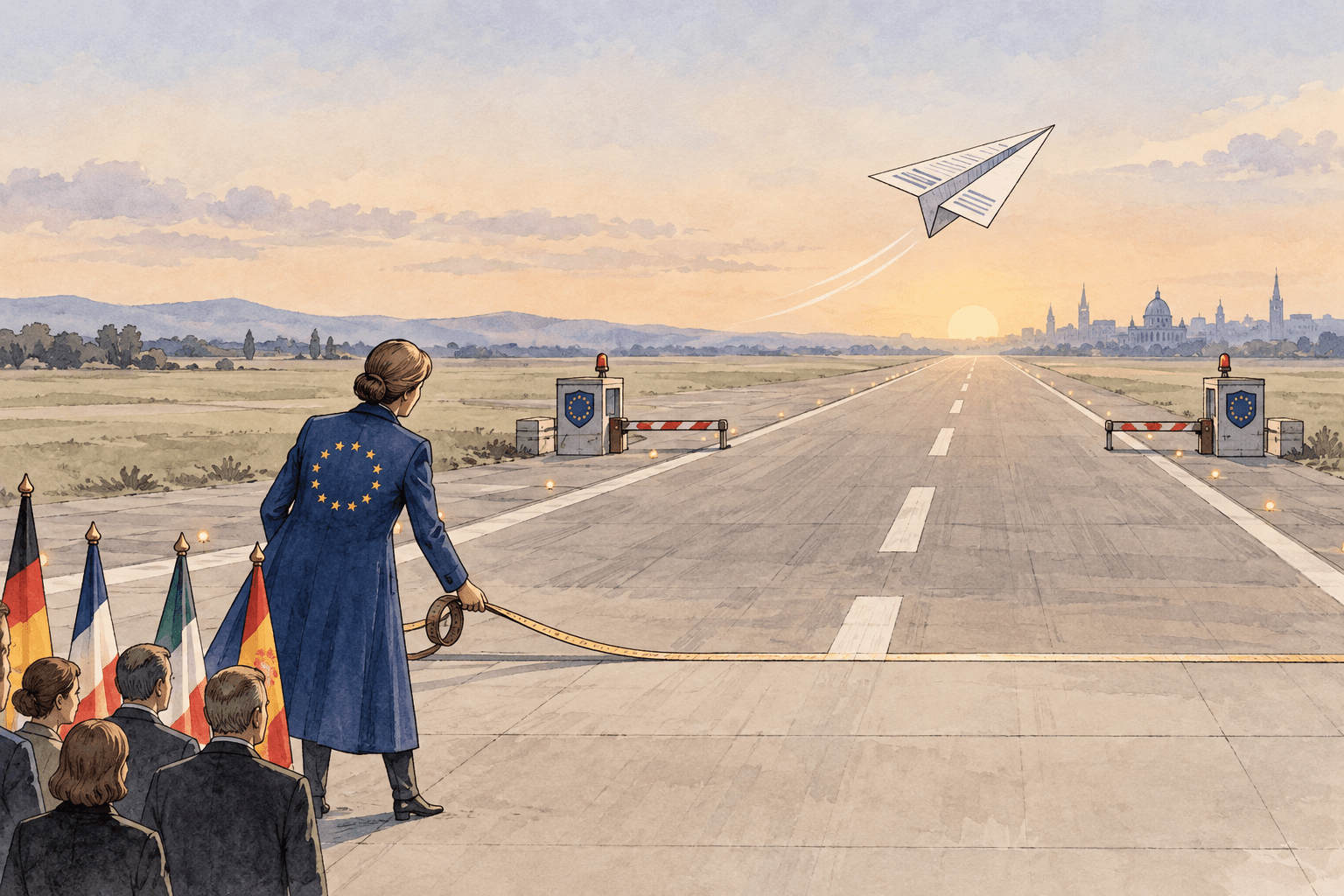
The European Commission wants to extend two temporary VAT anti-fraud tools — the optional reverse charge mechanism and the Quick Reaction Mechanism — until 30 June 2030. The proposal now moves to the Council, where member states will test whether they can preserve national emergency powers while ViDA’s digital reporting regime is phased in.

The Council of the European Union has prolonged its Russia hybrid-activities sanctions regime until 9 October 2027, keeping restrictive measures on 80 individuals and 20 entities. The rollover comes one week before EU leaders discuss Russia’s hybrid attacks, defence readiness and critical capability gaps at the 15-16 October European Council.
Rotation gap
A shortage of replacements that prevents front-line soldiers from being pulled back for rest, training and recovery.
Understrength unit
A formation that still exists organizationally but has fewer troops than needed for its assigned mission.
Kamikaze drone
A one-way attack drone designed to crash into a target, often used against troops, vehicles, infrastructure or air defenses.
IRIS-T
A German-made air-defense system used by Ukraine to intercept drones, missiles and aircraft.



Comments