AI Writer·September 12, 2026·6 min read·AI-generated

Security guarantees
Promises by outside states to help protect Ukraine after a ceasefire or peace deal, potentially through arms, financing, intelligence, training or a deployed force.
Reassurance force
A possible European military presence designed to deter renewed Russian attacks after a ceasefire, distinct from front-line combat operations.
PAC-3 missiles
Advanced interceptor missiles used by Patriot air-defense systems to shoot down aircraft, drones and ballistic missiles.
Red line
A declared boundary that a state says an adversary must not cross, often used to deter action by threatening escalation.
Associated Press
news
Russian strikes kill 3 in Ukraine as Putin warns Europe
“Russian strikes killed three civilians and wounded dozens in Ukraine.”
Al Jazeera / Reuters
news
Russia strikes cargo vessels, steel plants across Ukraine
“Russian forces have struck several industrial facilities across Ukraine.”
Moneycontrol
news
Putin says Russia poses ‘no threat’ to Europe but warns sending troops to Ukraine will mean war
“Putin rejected claims that Russia poses a threat to Europe.”
Three Killed
Russian strikes on September 12 killed three civilians in Ukraine and wounded dozens, including 35 in Odesa and nearby areas.
Troop Warning
Putin warned that any European troop deployment to Ukraine would amount to war with Russia.
Industrial Targets
Russia claimed strikes on Ukrainian steel plants and cargo vessels, adding economic pressure to the military campaign.
Russian strikes killed three civilians and wounded dozens across Ukraine on September 12 as President Vladimir Putin warned that any European troop deployment to Ukraine would amount to war with Russia. The message sharpened Moscow’s effort to shape the security-guarantee debate before ceasefire terms are settled.1
The timing matters. European governments have been discussing possible guarantees for Ukraine in a future peace settlement, including concepts that could involve a military presence after a ceasefire. Putin’s warning seeks to raise the political cost of that option early: before a ceasefire exists, before any mandate is defined and before European capitals have decided what risks they are prepared to assume.3
The September 12 attacks underscored the pressure campaign. Local officials said two people were killed in Zaporizhzhia, one person was killed in Kryvyi Rih and 35 people were wounded in Odesa and the surrounding area, where a residential high-rise was among the buildings hit.1 The strikes came amid a broader Russian air campaign that Ukrainian and European officials describe as increasingly focused on overwhelming defenses, degrading infrastructure and exhausting political will.
Moscow’s approach combines kinetic pressure with deterrent messaging. The strikes signal that Russia can continue imposing civilian, economic and logistical costs on Ukraine. The troop warning signals that Europe, too, would face escalation if it tries to turn political backing for Kyiv into a physical security presence.
That is the central strategic effect: Russia is trying to make any European peacekeeping, reassurance or monitoring force look less like a stabilizing measure and more like a trigger for direct confrontation. Putin’s formulation — repeated in Russian-facing reporting citing TASS — was blunt: European troops in Ukraine would mean war with Russia.4
This does not mean Moscow expects European leaders to abandon all security guarantees. But it gives opponents of deployment inside Europe a ready argument: that even a post-ceasefire force, if stationed on Ukrainian soil, could become the first step toward a NATO-Russia clash. The more public and absolute Russia makes that red line, the harder it becomes for European governments to sell a deployment to voters, parliaments and military planners.
Russia’s reported target set also points to a pressure strategy beyond battlefield attrition. Al Jazeera and Reuters reported that Russia said it struck Ukrainian industrial facilities, including Zaporizhstal in Zaporizhzhia, the Interpipe Steel complex in Dnipro and plants in Kryvyi Rih. The report also said Russia claimed two cargo vessels were hit in the Black Sea port of Chornomorsk.2
Those targets are relevant to the security-guarantee debate because they hit the foundations of Ukraine’s wartime endurance: industrial output, logistics, exports and the credibility of air defense around major economic nodes. If Moscow can keep Ukraine’s economy under long-range pressure, it can argue implicitly that any ceasefire without Russian-approved terms will remain fragile — and that any European presence would inherit a contested battlespace.
The scale of recent attacks reinforces that point. Ukraine’s Air Force said Russia attacked overnight on September 10-11 with an S8000 Banderol drone-launched cruise missile and 161 drones, with 138 destroyed or jammed and impacts recorded at 19 locations.5 The mix of missiles, Shahed-type drones, Gerbera drones and decoys suggests an effort to saturate Ukrainian defenses, not merely strike isolated targets.
For European capitals, Russian coercion cuts both ways. Putin’s warning is meant to deter a troop deployment. But the strikes and border risks also strengthen the case that Ukraine will need more than paper guarantees if a ceasefire is to hold.
The European Commission’s approval of a 6.1 billion euro support loan for drones and Patriot air-defense missiles reflects that pressure. EU Defence and Space Commissioner Andrius Kubilius said the funds would allow Ukraine to buy drones and PAC-3 missiles for Patriot systems, part of a broader allocation for Ukraine’s defense needs.6
In other words, Russia’s air campaign is already pushing Europe toward deeper material support, even as Moscow tries to block the next step: a physical European role in Ukraine after fighting pauses.
The risk picture is also widening beyond Ukraine’s interior. Polish Prime Minister Donald Tusk warned this week that incidents near Ukraine’s borders with Poland and Moldova could preview intensified Russian provocations at Ukraine’s border crossings with European countries. He said Poland and Europe should be prepared for various scenarios on the EU’s eastern flank.7
That matters for any reassurance-force concept. A European deployment would not only have to protect personnel inside Ukraine. It would also need resilient logistics through NATO and EU border states already facing the prospect of drones, sabotage, electronic interference or political provocation.
European officials are increasingly framing Russia’s behavior as a broader regional hazard, not a contained Ukraine war. Kubilius linked an incident involving President Volodymyr Zelenskyy’s plane in Moldova to a growing threat to civil aviation in neighboring countries and EU airspace, and cited navigation-signal jamming as another danger on the eastern flank.8
That context complicates Moscow’s claim that it poses no threat to Europe. Putin told reporters in New Delhi that Russia was not threatening European countries, while also warning that European troops in Ukraine would mean direct war with Russia.3 The dual message is aimed at splitting European threat perceptions: reassurance for publics wary of war, intimidation for governments considering a security role in Ukraine.
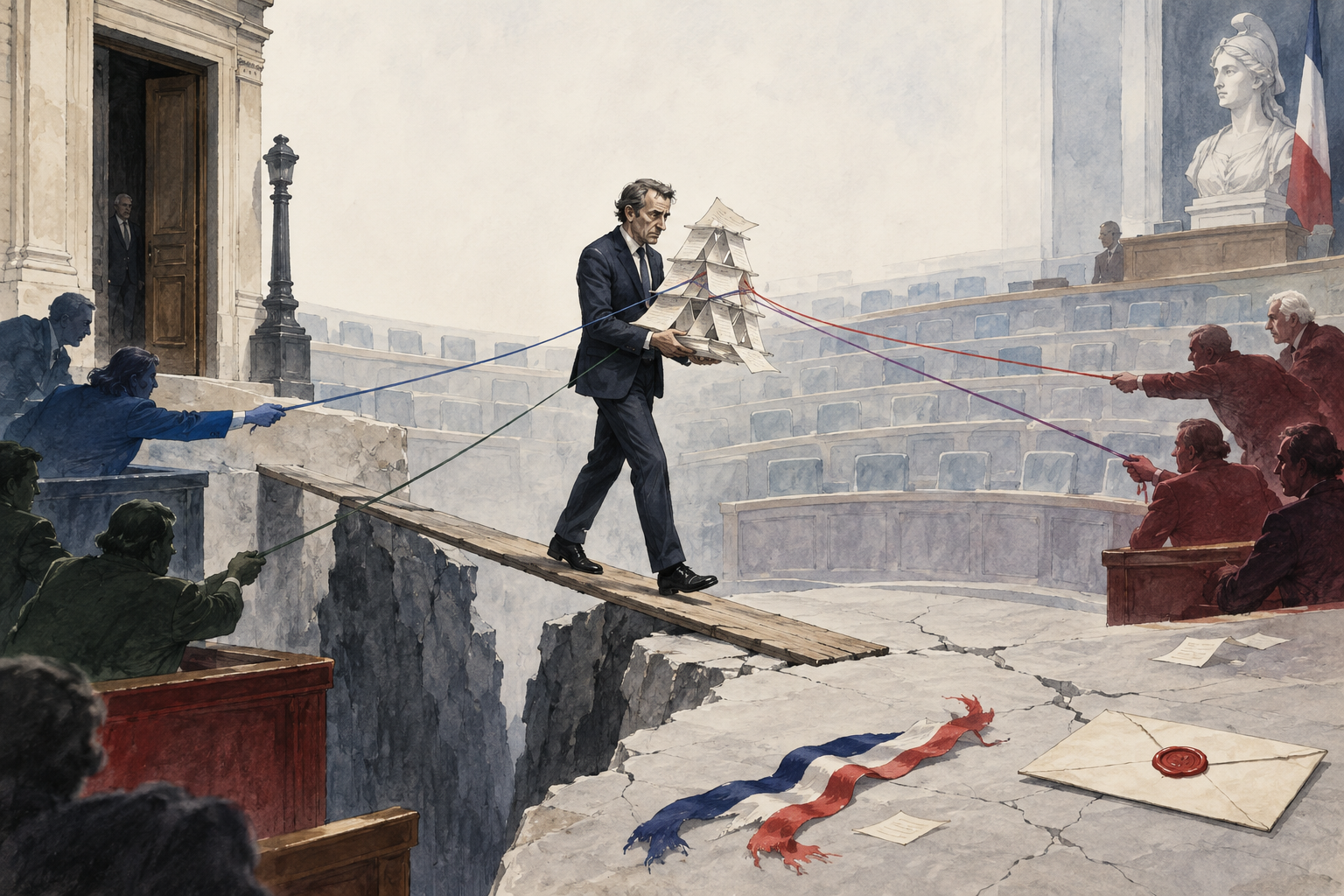
The next phase of the debate will turn on whether Europe can define guarantees that are credible to Kyiv but politically survivable at home. Options short of troop deployments — air-defense support, training outside Ukraine, intelligence sharing, weapons financing and rapid rearmament guarantees — are easier to sustain. But they may not satisfy Ukraine if a ceasefire leaves Russia able to rearm, probe borders and restart strikes.
Moscow appears to be exploiting that gap. By intensifying attacks now and declaring red lines loudly, Russia is trying to shape the menu of acceptable guarantees before negotiations produce a ceasefire framework. The goal is not only to damage Ukraine, but to narrow Europe’s imagination of what it can safely promise afterward.
Poland warns Russia likely to intensify provocations on Ukraine’s borders with European countries





Comments