Canada ‘associate member’ offer tests EU partnership machinery

Associate membership
A proposed label for Canada’s closer relationship with the EU; it is not currently a defined status in EU treaties.
Association agreement
A formal EU treaty with a third country that can create reciprocal rights, obligations, common action and special procedures.
CETA
The Comprehensive Economic and Trade Agreement between Canada and the EU, provisionally applied since 2017 but not fully ratified by all EU member states.
Article 217
A Treaty on the Functioning of the European Union provision that allows the EU to conclude association agreements with third countries or international organisations.
Associated Press
news
The EU's 'associate member' offer to Canada and what it might mean
Prime Minister of Canada
government
Prime Minister Carney delivers an address to the European Parliament
Prime Minister of Canada
government
Prime Minister Carney deepens ties with trusted allies in visit to France and the United Kingdom
Untracked bias
100% of tracked sources are High factuality
Bias and factuality ratings from Media Bias Fact Check. Outlets without a rating are marked “Untracked.”
Undefined status
“Associate membership” is not currently an established EU legal category, making the Canada offer a political proposal before it is a legal instrument.
Beyond CETA
Carney’s agenda would move Canada-EU ties beyond trade into critical minerals, AI, defence, energy, research, payments and financial services.
Member-state test
Any formal association-style agreement would require buy-in from EU member states, making national capitals central to the proposal’s fate.
The European Union’s proposal to make Canada its first “associate member” is, for now, more political signal than legal status. Ursula von der Leyen used her September 16 State of the Union address to open the door to the idea. Prime Minister Mark Carney used his September 17 address to the European Parliament to welcome it as an “alliance for the future,” while stressing that Canada is not seeking full EU membership and that the contours still need to be defined.12
That ambiguity is both the point and the problem. EU law already offers templates for accession, association agreements, trade deals, neighbourhood policy and sectoral partnerships. None fits neatly with a G7 democracy across the Atlantic that wants deeper alignment on defence, critical minerals, energy, artificial intelligence, research, financial services and youth mobility — but not a path to joining the Union.23
For EU institutions watchers, the Canada proposal is a test case: can the EU formalise a strategic relationship with a like-minded democracy without forcing it into legal categories designed for candidates, neighbours or market-access partners?
The immediate institutional issue is that “associate membership” is not an established EU category. Associated Press put it bluntly: associate membership “simply does not exist” as a current route into or alongside the Union, even though association agreements with third countries do exist.1 Euronews likewise reported that there is no precedent for the status and that the concept does not appear in the EU treaties.5
That means the Commission president’s invitation cannot, by itself, create a new status for Canada. At most, it starts a process. If the label is to become more than a diplomatic phrase, EU institutions will have to decide whether to anchor it in existing treaty tools — most plausibly an association agreement — or build a looser political framework around existing sectoral agreements.
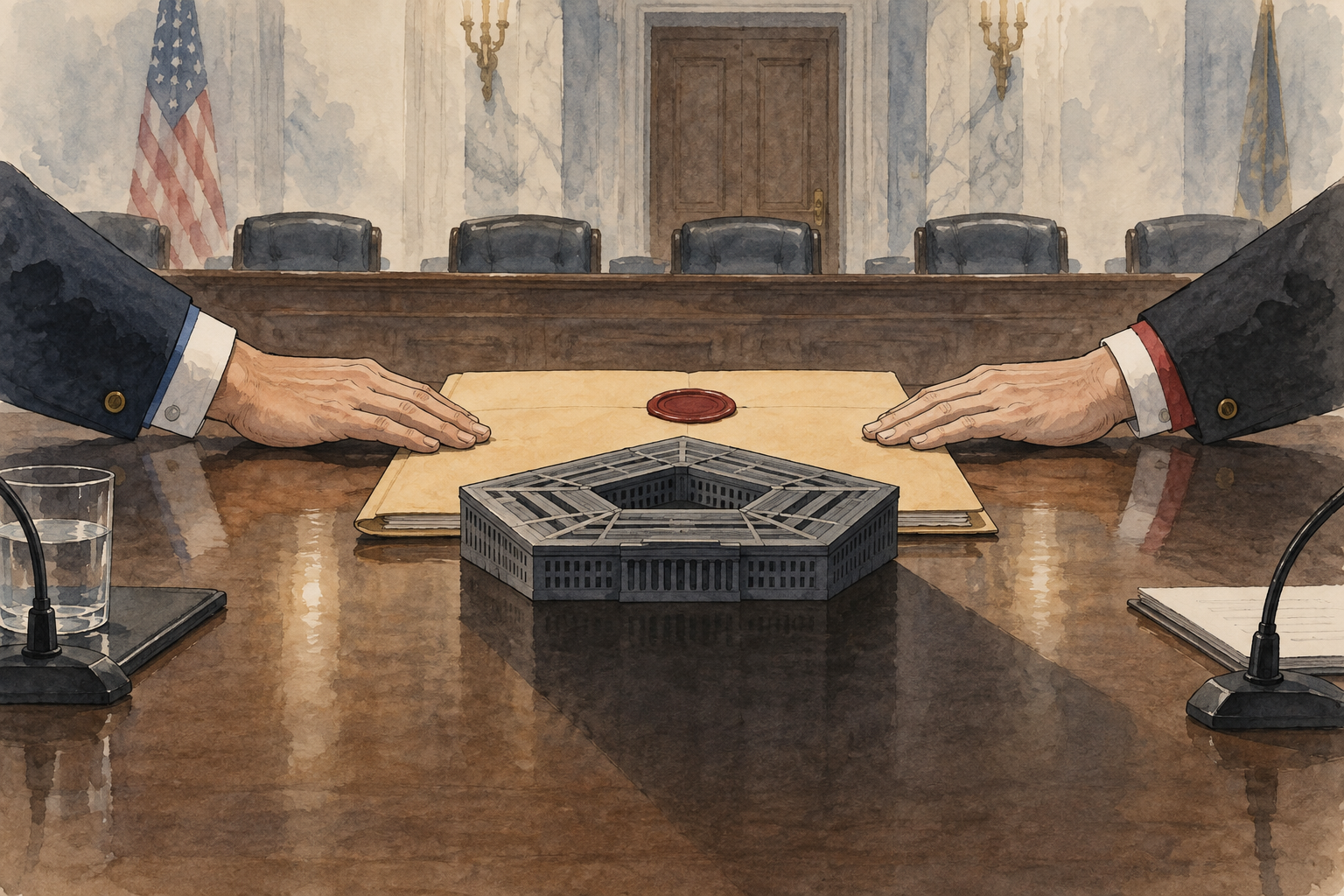
Article 217 of the EU treaties is the most obvious legal hook under discussion in Brussels. It allows the Union to conclude agreements with third countries involving reciprocal rights and obligations, common action and special procedures, and has underpinned forms of deep association short of EU membership.5 But using Article 217 would also push the Canada idea into the EU’s formal external-relations machinery, where the Council and member states become decisive.
The Commission can set the agenda and negotiate, but it cannot unilaterally define Canada’s place in the EU’s legal order. Association agreements and other formal decisions on the Union’s external relations require approval by the EU’s 27 member states, and AP reported that von der Leyen had not consulted widely before making the proposal.1
That matters because the phrase “associate member” carries political baggage. For some capitals, it could sound like a backdoor enlargement category. For others, it could be useful precisely because it avoids the accession track while signalling strategic alignment. German officials welcomed discussion of new partnership models but raised concerns about the title attached to the idea.1 The Guardian reported EU-side unease that the term has no clear legal definition and could distract from the substantive goal of building a distinctive Canada-EU partnership.6
France also signalled that the idea would need examination before a national position could be fixed. Euronews reported that French Foreign Minister Jean-Noël Barrot said the status would need to be debated and analysed, while reaffirming France’s interest in closer ties with Canada.5
The political question, then, is not only whether member states support closer relations with Ottawa. Many do. The harder question is whether they are prepared to create a named status that could later be requested by other partners — or invoked in debates over Ukraine, the United Kingdom, Norway, Switzerland or other democracies seeking structured proximity to the EU without membership.
Carney’s reception in Strasbourg showed broad political appetite for closer Canada-EU ties. European Parliament President Roberta Metsola framed the visit as a chance to “break new and exciting ground,” citing potential cooperation in defence, trade, energy, education and research.4 The Canadian government said Carney met von der Leyen, Metsola and members of the European Parliament to advance a deeper partnership built around complementary capabilities.3
But Parliament’s enthusiasm does not solve the legal design. If the proposal becomes a formal association agreement, Parliament would be drawn into the approval process. If it remains a political declaration or umbrella framework, Parliament’s role may be more about scrutiny, budgetary pressure and sectoral legislation than treaty consent.
That distinction will shape the institutional balance. A treaty-based approach would be heavier, slower and more durable. A political framework would be faster and more flexible, but easier to dilute.
The substance Carney put on the table is more developed than the label. In his European Parliament address, he proposed cooperation on critical minerals, defence industrial capacity, AI and compute, energy security, space, payments, digital trade, youth mobility, Erasmus+, Horizon and financial services integration.2 Reuters summarized the speech as a call for a sweeping strategic alliance covering critical minerals, AI, defence and trade.8
Ottawa’s readout added that the EU brings market power, research depth and manufacturing strength, while Canada brings energy, critical minerals, space, AI, quantum capabilities and a strong banking system.3 It also noted that the EU was Canada’s second-largest global trading partner in goods and services, worth approximately $178 billion in 2025.3
That agenda goes well beyond CETA, the existing Canada-EU trade agreement. JURIST reported that von der Leyen proposed upgrading CETA into an “Alliance for the Future,” while noting that CETA itself has still not been ratified by 10 EU member states.9 That unfinished ratification is a warning sign for any more ambitious Canada-EU instrument: even broadly friendly partnerships can become trapped in national procedures when legal competences are mixed or politically sensitive.
The cleanest outcome may be a structured foreign-policy instrument that avoids the constitutional overtones of “membership.” Such a model could package Canada’s participation in EU programmes, defence-industrial cooperation, critical raw materials planning, energy security projects, research funding and regulatory dialogues under a single political architecture.
That would give the EU a replicable tool for trusted democracies: deeper than a strategic partnership communiqué, narrower than the European Economic Area, and separate from enlargement. It would also fit the geopolitical framing used by both sides. Carney argued that Canada and Europe should build resilience so that no outside actor can dictate their choices, while the Commission said the proposed strengthening of ties was “not against anyone else” but for common strength.27
The alternative is that “associate member” remains a label attached to incremental cooperation already under way. Canada has recently deepened its defence and security links with Europe, including through the EU’s Security Action for Europe initiative and other arrangements cited by Ottawa.3 If member states resist a formal category, the Union could still expand practical cooperation without naming a new status.
The next phase will be procedural. The Commission must clarify what it means; the Council must decide whether to entertain a mandate or steer the idea into existing frameworks; Parliament will press for visibility and substance; and national governments will test whether the label creates precedents they can accept.
Carney pointed to the October 29-30 EU-Canada summit in Montreal as a possible venue to begin defining the “broad lines” of the alliance.1 By then, the EU will need at least a working answer to the central question raised in Strasbourg: is associate membership a new instrument of EU foreign policy, or a politically useful name for a partnership that remains legally ordinary?
For Brussels, the stakes are larger than Canada. If the EU can design a credible category for close democratic partners outside enlargement, it gains strategic flexibility at a time when security, supply chains and technology governance are increasingly geopolitical. If it cannot, the Canada offer may be remembered as an ambitious phrase that exposed the limits of the Union’s external-relations toolbox.





Comments