FCC petition puts cellphone robocall consent rules in play before Election Day

Associated Press
news
FCC considers allowing more political robocalls before midterms, including those created with AI
Reuters via CNA
news
Conservative anti-tax group seeks FCC approval for AI robocalls ahead of US midterms
Common Cause
other
Fighting AI Robocalls Ahead of the Midterms
Untracked bias
100% of tracked sources are High factuality
Devdiscourse / Reuters
US agency considers allowing new AI political robocalls before election
MarketScreener / Reuters
US agency considers allowing new AI political robocalls before election
Techdirt
Brendan Carr Is Making It Easier For Republicans To Harass You With Midterm AI Robocalls
Fast Company
FCC considers loosening rules on political robocalls with AI voices before midterms
Hyperlocal Loop
FCC weighs Club for Growth request to permit AI-generated political robocalls
KCTV5 / Gray News
AI-generated robocalls? Why you could be seeing even more unwanted phone calls
WCTV / Gray News
AI-generated robocalls? Why you could be seeing even more unwanted phone calls
WWNY / Gray News
AI-generated robocalls? Why you could be seeing even more unwanted phone calls
WVLT / Gray News
AI-generated robocalls? Why you could be seeing even more unwanted phone calls
WBAY / Gray News
AI-generated robocalls? Why you could be seeing even more unwanted phone calls
WALB / Gray News
AI-generated robocalls? Why you could be seeing even more unwanted phone calls
WBKO / Gray News
AI-generated robocalls? Why you could be seeing even more unwanted phone calls
WDAM / Gray News
AI-generated robocalls? Why you could be seeing even more unwanted phone calls
KPTV / Gray News
AI-generated robocalls? Why you could be seeing even more unwanted phone calls
WHSV / Gray News
AI-generated robocalls? Why you could be seeing even more unwanted phone calls
WABI / Gray News
AI-generated robocalls? Why you could be seeing even more unwanted phone calls
Bias and factuality ratings from Media Bias Fact Check. Outlets without a rating are marked “Untracked.”
October deadline
Reply comments on the FCC petition are due October 19, leaving room for a possible late-October decision.
AI voices covered
The FCC ruled in 2024 that AI-generated and voice-cloned calls count as artificial voices under the TCPA.
Three-call cap
The proposed waiver would include conditions such as opt-out rights and a limit of three calls within 30 days.
The Federal Communications Commission is weighing whether to loosen a core consent rule for political robocalls to cellphones weeks before the November midterm elections, a decision that could reshape how campaigns and outside groups contact voters in the race’s closing days.1
At issue is a Club for Growth request to allow noncommercial political calls to wireless numbers using an artificial or prerecorded voice — including an AI-generated voice — without first obtaining the recipient’s prior express consent.6 Reply comments are due October 19, after which the FCC could move toward a decision before Election Day.1
The petition has become less a debate over artificial intelligence as a campaign tool than a test of election governance: whether regulators should change voter-contact rules during the most sensitive period of the election calendar, and whether existing safeguards against deceptive calls are enough if consent barriers are lowered.
Federal law generally bars most robocalls to cellphones unless the caller has obtained consent beforehand. The Club for Growth petition asks the FCC to waive or exempt political callers from that restriction for certain noncommercial political calls using artificial or prerecorded voices.1
The FCC’s September 4 public notice described the request as a limited waiver of section 64.1200(a)(1)(iii) of the agency’s rules and an exemption from section 227(b)(1)(A)(iii) of the Communications Act — provisions tied to the Telephone Consumer Protection Act’s restrictions on automated or artificial-voice calls to wireless numbers.6
If granted, the waiver would not legalize every deceptive election call. State and federal laws against voter intimidation, fraud and deception would still apply.1 But it could remove one of the broadest front-end deterrents: the requirement that callers obtain consent before placing artificial-voice political calls to cellphones.
Club for Growth argues that current rules treat political speech less favorably than other categories of calls, such as package, banking or medical notifications. Club for Growth President David McIntosh framed the request as a First Amendment issue, saying political conversations with voters deserve at least the same treatment as delivery updates.2
The group also says the waiver could help political organizations communicate with voters in more languages and improve polling by reaching more people.1 It has emphasized that the request is not intended to promote robocalls, though critics say the practical effect would be to expand automated political calling.1
The process is compressed. The FCC opened the petition for comment in early September, set an October 5 initial comment deadline and an October 19 reply-comment deadline, creating a narrow window for a late-October ruling.6
That timing matters because the final days before Election Day are when misleading voting information can be hardest to correct. Election officials, campaigns and civil-rights groups are already managing turnout operations, ballot deadlines and misinformation monitoring. A late regulatory shift could force campaigns and watchdogs to adjust with little time to prepare.
Consumer and voting-rights advocates warn that the waiver could increase unwanted political calls just as voters are making decisions and election administrators are trying to keep information channels clear.1 Common Cause said the petition would expose voters to more prerecorded and AI-generated calls without consent and create a direct route for manipulated audio before the midterms.3
FCC Commissioner Anna Gomez, the commission’s lone Democrat among its three active commissioners, has opposed the request, warning that it could bring a surge of AI-generated political calls close to Election Day.2 Public-interest groups including Common Cause, Public Citizen and the Consumer Federation of America also urged the FCC to reject the petition, arguing that political AI calls to cellphones would reach a medium used by nearly all voters.2
The Telephone Consumer Protection Act, or TCPA, is the main federal law governing many robocalls and automated calls. For cellphones, the rule is stricter than for landlines: calls using an artificial or prerecorded voice generally require prior express consent unless an exemption applies.1
That distinction is central to Club for Growth’s argument. The group says unsolicited automated calls to landlines are already allowed in this context, and that a waiver would create a more consistent regulatory framework.1
The proposed conditions also matter. Under the request as summarized in reporting and process notices, callers would still have to provide opt-out mechanisms and would be limited to no more than three calls within 30 days to a recipient.1 Supporters may present those limits as guardrails; opponents argue that even capped calls could scale quickly across campaigns, super PACs and nonprofits in the same election cycle.
Reuters reported that Club for Growth plans to spend $175 million in the midterm congressional elections, underscoring why a technical waiver request has significant campaign-finance and voter-contact implications.2
The FCC has already addressed AI-generated voices under the TCPA. In February 2024, the commission unanimously declared that AI-generated voices, including voice-cloning tools, qualify as “artificial” voices under the TCPA’s artificial-or-prerecorded-voice restrictions.9
That ruling followed concern over an AI-generated robocall in New Hampshire that mimicked then-President Joe Biden and told voters to skip the state’s 2024 presidential primary.1 The FCC later treated AI voice cloning as part of the same legal category as other artificial-voice calls, meaning consent requirements and enforcement tools could apply even when the voice sounded human or conversational.9
The pending petition does not ask the FCC to say AI voice cloning falls outside the TCPA. Instead, it asks the agency to allow a category of political calls that would otherwise need consent. That makes the proceeding a policy choice about exemptions and waivers, not simply a question of whether AI voices are covered by existing law.
For election administrators and voting-rights groups, the main concern is not just call volume. It is the risk that automated or AI-driven calls could deliver misleading information about voting rules, polling places, mail ballots or candidates when corrections may arrive too late.
The AP reported that Brennan Center counsel Mekela Panditharatne warned AI systems could make false promises about candidates or provide inaccurate or incomplete information in conversations with voters.1 Other advocates have raised privacy concerns, including whether voters would understand how data from AI-driven calls is collected or reused.1
The 2020 election cycle remains a warning sign. Tens of thousands of voters in majority-Black areas received deceptive robocalls falsely warning that voting by mail could lead to arrest or debt collection; the callers were later criminally charged and fined for TCPA violations.1
Those precedents are why critics see the consent rule as more than a consumer-protection measure. In the election context, it also functions as a barrier against rapid, low-cost voter suppression or misinformation campaigns.
The immediate deadline is October 19, when reply comments close. After that, the FCC could deny the petition, grant it as requested, narrow it with additional conditions, or take no action before Election Day.
A decision before the midterms would have immediate operational consequences. Campaigns and outside groups would need to assess whether the ruling permits new calling programs; carriers and compliance lawyers would need to interpret the scope of any waiver; and election officials and watchdogs would need to monitor whether automated calls are misleading voters.
The larger question is whether the FCC should alter national robocall consent rules in the closing weeks of an election. The answer will determine not only how many political calls voters may receive on their cellphones this fall, but also how the agency balances political speech, consumer consent and election integrity as new communications tools make voter contact easier to scale.

The UK-Germany counter-hybrid threat partnership gives ministers an international security frame for fast-tracked domestic powers to designate state-backed organisations and proxy groups. When Parliament returns on 12 October, scrutiny is likely to centre on evidence thresholds, oversight and whether the Home Secretary’s new powers are being normalised before safeguards have been fully tested.
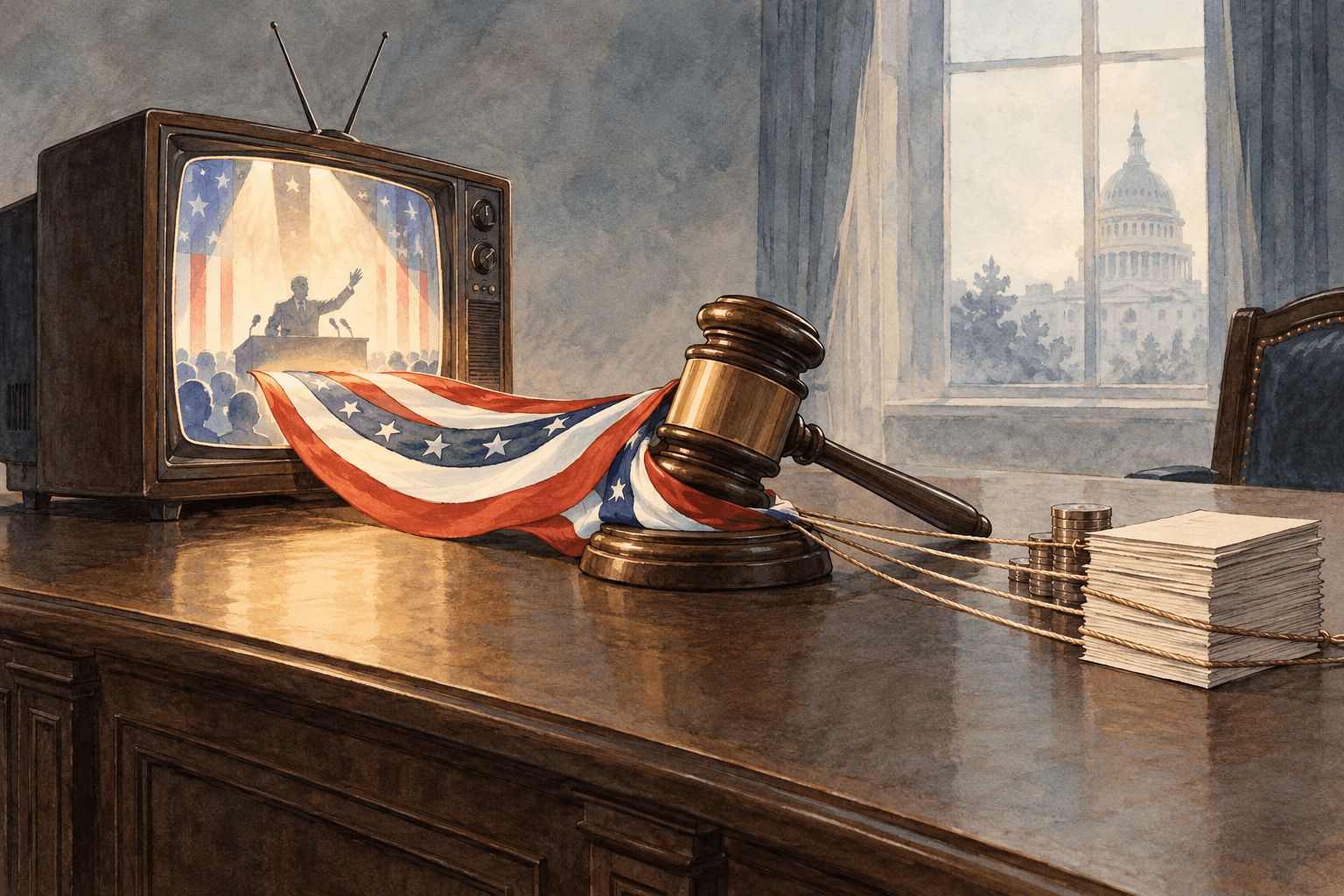
Two lawsuits filed October 7 seek to stop the Trump administration from using federal funds for television ads that plaintiffs say promote the president and Republican candidates weeks before the November 3 midterms. The cases test where courts may draw the line between government public information campaigns and campaign advocacy.

Beijing said its military and coast guard acted lawfully after Manila accused Chinese forces of unsafe actions near disputed South China Sea features. The exchange followed a reported October 3 encounter in which the Philippine military said a Chinese J-16 fighter flew dangerously close to a Philippine C-208 patrol aircraft near Bajo de Masinloc.

Japan hosted an ASEAN-Japan AI focus session on October 6, framing artificial intelligence governance as a diplomatic and capacity-building agenda for Southeast Asia. The initiative positions Tokyo as a trusted standards partner for ASEAN as China, the United States and regional governments compete to shape AI rules and infrastructure.
Telephone Consumer Protection Act
A federal law that restricts many robocalls, autodialed calls and artificial-voice calls, especially to cellphones.
Prior express consent
Permission from a call recipient before certain automated or artificial-voice calls can legally be placed.
Artificial or prerecorded voice
A legal category that includes recorded messages and, under the FCC’s 2024 ruling, AI-generated or cloned voices.
Waiver
An agency decision allowing a party or category of callers to operate outside an otherwise applicable rule, usually with conditions.




Comments