Houthi island seizures intensify fight over Red Sea chokepoint
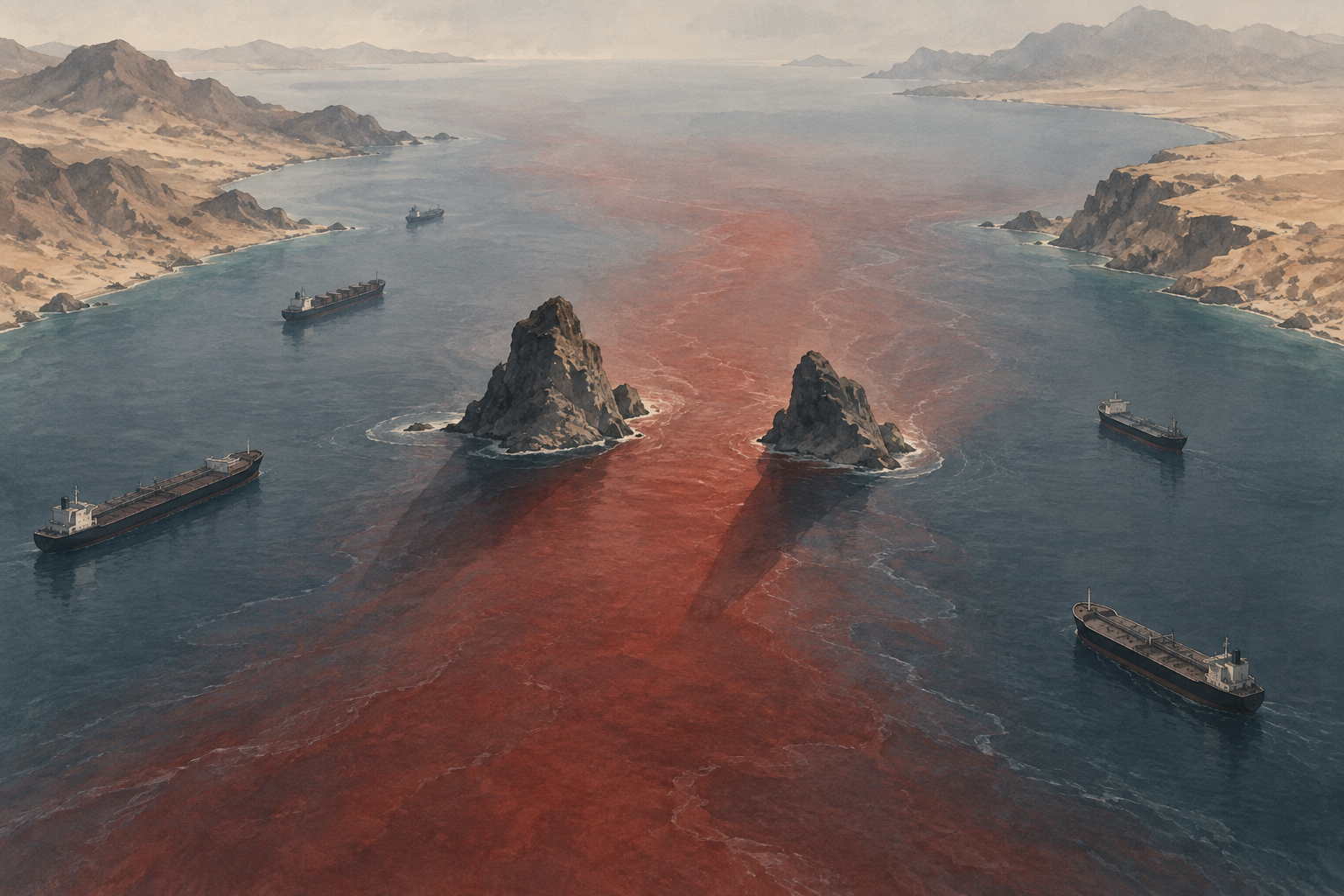
Bab el-Mandeb
A narrow strait between Yemen and the Horn of Africa that links the Red Sea to the Gulf of Aden and the wider Indian Ocean.
Greater and Lesser Hanish
Strategic Red Sea islands off Yemen whose control can affect surveillance and perceived risk along nearby shipping lanes.
Strait of Hormuz
The Gulf chokepoint through which a major share of traded oil and gas normally passes; disruption there makes Red Sea routes more important.
East-West Pipeline
A Saudi pipeline that moves crude from eastern oil fields to Red Sea terminals, helping exports avoid the Strait of Hormuz.
Associated Press
news
Yemen's Houthi rebels seize more key Red Sea islands in grip on shipping
Associated Press
news
Houthis seize 2 strategic Red Sea islands, and other Mideast developments
Associated Press
news
Fighting in Yemen intensifies, and Houthis launch more attacks on Saudi Arabia
Untracked bias
100% of tracked sources are High factuality
Agence France-Presse
Les Houthis du Yémen s'emparent du stratégique détroit de Bab el-Mandeb
ThePrint / Reuters
Houthis advance along Yemeni coast, threaten Saudi oil exports in the Red Sea
Bias and factuality ratings from Media Bias Fact Check. Outlets without a rating are marked “Untracked.”
Island foothold
Houthi forces have seized Greater and Lesser Hanish islands, extending their presence north of Bab el-Mandeb.
Saudi squeeze
Saudi Arabia’s Red Sea export route is under greater pressure while Hormuz remains disrupted and a key pipeline is damaged.
Market shock
Oil prices rose more than 2% as traders weighed the Houthi advance and risks to Saudi energy flows.
Yemen’s Houthi rebels have seized Greater and Lesser Hanish islands in the southern Red Sea, government and Houthi officials said Monday, marking a shift in the regional crisis from episodic attacks on ships and energy infrastructure to territorial control near one of the world’s most sensitive maritime chokepoints.12
The islands sit about 160 kilometers north of the Bab el-Mandeb Strait, the narrow passage linking the Red Sea with the Gulf of Aden and the open ocean. Their capture follows Houthi gains last week around the mainland port of Mokha and the island of Mayun, inside the strait itself. Together, the moves give the Iran-backed movement a broader foothold along maritime approaches that Saudi Arabia has increasingly relied on as an alternative to the disrupted Strait of Hormuz.12
The immediate military picture remains contested. Saudi-backed Yemeni government forces have launched airstrikes and counterattacks around Mokha, Dhubab and other areas in Taiz province. Senior Yemeni officials have described the loss of west coast positions as a setback and said their forces are regrouping.13 But the Hanish deployment suggests the Houthis are not only raiding shipping lanes. They are trying to anchor their campaign in territory that could support surveillance, interdiction threats and political leverage.
Greater and Lesser Hanish do not, by themselves, close Bab el-Mandeb. But they alter the operating environment for commercial ships, naval patrols and Saudi energy exports by extending Houthi presence along the southern Red Sea corridor. Control of, or presence on, islands can create positions for coastal surveillance, small-boat operations, drones, anti-ship weapons or the perception of those threats. That can force shipowners and insurers to price in higher risk even without a full blockade.
That is the central significance of the latest advance. Since the escalation began, the Houthis have used missiles, drones and threats against shipping and Saudi oil infrastructure to raise the cost of transit. Holding islands near the route changes the threat from mobile or deniable attacks to a more durable position on the map. It gives the group more ways to watch, intimidate or potentially disrupt traffic moving between the Red Sea, Djibouti, Eritrea and Yemen’s west coast.1
The geography is also close to outside military interests. AP reported that the Houthi advance puts the group about 32 kilometers from the U.S. military base in Djibouti, across Bab el-Mandeb, in a country that also hosts several foreign military facilities.3 That proximity does not imply an imminent attack on Djibouti, but it widens the security problem from Yemen’s coast to the Red Sea’s western approaches.
The timing is especially damaging for Riyadh. Iran effectively closed the Strait of Hormuz in the opening days of the current war, AP reported, disrupting the passage through which a fifth of the world’s traded oil and gas normally moves in peacetime.2 Saudi Arabia has leaned more heavily on its East-West Pipeline, which carries crude across the kingdom from Gulf fields to Red Sea export terminals, allowing cargoes to avoid Hormuz.1
That workaround is now under pressure from two directions. AP reported Monday that a Saudi oil pipeline struck in an attack last week is expected to be mostly out of service for three to five weeks while damage is repaired. The line has capacity of up to 7 million barrels per day, according to officials briefed on the matter.1 At the same time, the Houthi capture of islands north of Bab el-Mandeb puts new pressure on the Red Sea end of the same export route.
Markets have reflected that vulnerability. Oil prices rose more than 2% Monday, with Brent crude up to $107.37 per barrel and benchmark U.S. crude above $102, as investors weighed Saudi pipeline damage, Houthi advances and uncertainty around Hormuz.5 Le Monde, citing Kpler, reported that Bab al-Mandab alone carried 7% of world oil production in June, most of it heading to Asia. That helps explain why territorial change around the strait is being treated as an economic threat, not just a local battlefield development.6
The island seizures are part of a broader Houthi campaign against Saudi Arabia and its Yemeni allies. The group has claimed missile and drone attacks on Saudi targets, including King Khalid Air Base in Khamis Mushait. Saudi authorities have reported projectiles near the border that injured civilians and damaged buildings.13 Saudi Arabia has not announced a new direct campaign against Houthi targets, a sign that Riyadh is still weighing the costs of re-entering a large-scale Yemen war after years of seeking to contain it.1
For Yemen, the renewed fighting threatens to unravel the relative calm that followed the 2022 truce. The United Nations migration agency estimated that more than 80,000 people have been displaced since the beginning of September. AP reported that thousands have fled fighting in Taiz and nearby provinces, including more than 2,000 people who reached Djibouti by boat.13 The humanitarian cost adds pressure on the internationally recognized government, whose forces have acknowledged heavy losses on the west coast.3
The commercial impact is not confined to Saudi oil. Somalia’s business community is already seeking alternative routes because of security concerns around both Bab al-Mandab and Hormuz, AP reported from Mogadishu. Port officials said some importers are bypassing traditional Gulf routing and seeking more direct shipments from Asia, including a sugar shipment from Sri Lanka.4
Those route changes show how perceived risk can ripple beyond the war zone. Even if the Houthis say they do not intend to threaten all commercial traffic, shipping companies must account for crew safety, insurance costs, rerouting delays and the possibility that vessels could be misidentified or drawn into a regional confrontation.34 Le Monde reported that some container ships crossed the strait in early September with transponders switched off, a sign that operators were trying to reduce visibility while accepting the navigational and safety tradeoffs that come with going dark.6
For Iran, the Houthi advance strengthens an indirect pressure point. Tehran’s partners in Yemen can threaten Saudi Arabia’s Red Sea outlet while Hormuz remains disrupted, complicating U.S. and Gulf efforts to stabilize energy flows. AP described the Houthi gains around Bab el-Mandeb as potentially boosting Iran’s strategy of driving up oil and gas prices to pressure Washington.13
The diplomatic reverberations are widening. China, a major importer of Middle Eastern oil, called for restraint Monday and said attacks on Saudi energy infrastructure and other civilian facilities were unacceptable, according to Saudi Gazette and AP.27 Beijing’s reaction reflects a broader stakeholder concern: The crisis now affects not just Yemeni sovereignty and Saudi security, but also the reliability of maritime corridors linking Asian consumers, Gulf producers and Red Sea ports.
The next phase will depend on whether Saudi-backed forces can retake ground around Mokha and the islands, whether the Houthis can consolidate positions with deployable maritime capabilities, and whether outside powers move to reinforce shipping protection near Bab el-Mandeb. For now, the Hanish seizures have turned the Red Sea crisis into a contest over terrain — and made the geography of Yemen’s war a direct factor in global energy security.






Comments