Ukraine’s refinery strikes test allied tolerance before winter
Long-range sanctions
Kyiv’s term for drone and missile strikes on Russian energy and military infrastructure intended to impose economic costs and pressure Moscow to negotiate.
Refinery processing unit
A core part of a refinery that converts crude oil into usable fuels; damaging it can be harder to fix than destroying stored fuel.
Diesel market sensitivity
Diesel powers freight, farming, shipping and military logistics, so shortages can quickly raise prices across the broader economy.
Winter energy campaign
Russia’s recurring strategy of striking Ukraine’s power and heating infrastructure before cold weather to strain civilians, industry and air defenses.
Associated Press
news
Trump calls on Ukraine to halt strikes on Russian diesel fuel, citing a global shortage
Radio Free Europe/Radio Liberty
news
Trump Tells Kyiv To Stop Attacks On Russian Diesel As Moscow's Drones Strike Near Polish Border
The Kyiv Independent
news
Trump tells Zelensky to stop striking Russian diesel infrastructure
Untracked bias
50% of tracked sources are Low factuality
Bias and factuality ratings from Media Bias Fact Check. Outlets without a rating are marked “Untracked.”
Diesel pressure
Trump asked Zelenskyy to stop strikes on Russian diesel infrastructure after U.S. diesel prices rose above $6 a gallon.
Deep strikes
Ukraine says recent attacks hit the Slavyansky and Taneco refineries and a Russian attack-drone site.
Winter calculus
Russia’s intensified strikes on Ukraine’s power grid and border logistics make Kyiv less likely to see refinery restraint as reciprocal.
President Donald Trump’s demand that Volodymyr Zelenskyy halt Ukrainian strikes on Russian diesel and refining infrastructure has pushed a long-running military dispute into public view: Kyiv’s most effective strategic strike campaign is colliding with U.S. concerns over global fuel supply, inflation and allied economic stability.1
Trump said on Sunday, September 13, that Ukraine should stop “knocking out diesel fuel” in Russia, arguing that the attacks are contributing to a shortage as U.S. diesel prices climb above $6 a gallon and global energy markets face strains from the Iran war and shipping risks around the Strait of Hormuz.1910 He did not call for Ukraine to stop all long-range strikes. Instead, he pointed to a narrower target set, telling Kyiv to find “other targets” while sparing diesel production and distribution.13
For Ukraine, that carveout would hit the core logic of its deep-strike campaign. Kyiv has spent months attacking Russian refineries, fuel depots, export infrastructure and other energy assets because they serve two linked purposes: they help finance Moscow’s invasion through oil and fuel revenue, and they supply the military logistics chain sustaining Russian forces in Ukraine.13 Ukrainian officials and aligned reporting have described the campaign as “long-range sanctions” — a way to impose costs directly on Russia’s war economy when conventional sanctions and battlefield attrition have not forced Moscow to negotiate.2
The immediate military logic is straightforward. Refineries turn crude into usable fuels: diesel for trucks, rail and generators; aviation kerosene for aircraft; and gasoline and other products for civilian and military transport. Damaging processing units, tank farms or pipelines can create bottlenecks that are harder to repair than a single storage tank and more disruptive than symbolic strikes on prestige targets.
That is why recent Ukrainian claims have focused not only on striking Russian refineries, but also on specific refinery components. Ukraine’s General Staff said its forces struck the Slavyansky refinery in Krasnodar Krai and the Taneco refinery in Tatarstan overnight into September 13, as well as a Russian attack-drone storage, preparation and launch site in Rostov Oblast.4 Ukraine’s military intelligence service separately said the Slavyansk-EKO operation hit a key oil-processing unit and tank farm, causing a large fire.5
Those details matter. A refinery’s critical units can be harder to replace than above-ground fuel stocks, especially under sanctions that complicate access to specialized equipment. Even partial outages can force Russia to reroute supply, draw down reserves, prioritize military users over civilian consumers or limit exports. AP reported that Ukrainian strikes have helped prompt fuel rationing inside Russia and contributed to Moscow’s July ban on diesel exports, removing supply from an already tight market.1
The effect is not only economic. Russia’s army relies on fuel-intensive operations: moving ammunition, rotating units, powering command posts, sustaining drones and missiles, and keeping vehicles and rail logistics moving across a large theater. Ukraine cannot easily match Russia’s missile inventory or industrial depth, but long-range drones allow Kyiv to reach nodes Russia once treated as rear-area sanctuaries. In that sense, the refinery campaign is one of Ukraine’s few tools for shifting pressure from the trenches to Russia’s strategic depth.
The timing also explains Kyiv’s reluctance to narrow its targets. Russia has intensified strikes on Ukraine’s civilian, logistics and energy infrastructure as cold weather approaches, using drones, ballistic missiles and other weapons to pierce Ukrainian defenses.12 Ukrainian officials say Moscow is again targeting the power grid ahead of winter, a tactic intended to exhaust air defenses, disrupt the economy and demoralize civilians through outages and heating insecurity.1
Kremlin rhetoric has reinforced Kyiv’s view that restraint is unlikely to be reciprocal. Kremlin spokesperson Dmitry Peskov said Moscow had broadened its strikes after Ukrainian attacks on Russian economic and strategic infrastructure, while Russian President Vladimir Putin earlier warned of responses against Ukraine’s “sensitive economic sectors.”6 In Ukrainian strategic terms, Russia is not merely retaliating against military targets; it is using energy, transport and civilian infrastructure as coercive instruments before winter.
Recent Russian strikes near the Polish border sharpen that perception. A Russian drone hit the locomotive of a Kyiv-Warsaw passenger train near the Dorohusk-Yahodyn crossing on September 13, while another struck a nearby gas station. All 206 passengers were reported unharmed.8 AP reported that NATO Secretary-General Mark Rutte called the strikes near NATO territory a sign of Russian recklessness and pledged more support for Ukraine, while Polish officials warned of possible intensified Russian action along European borders.7
For Kyiv, the battlefield message is that Russia is expanding pressure on Ukraine’s logistics, energy and cross-border lifelines. That makes Russian fuel infrastructure an especially attractive target: it is both a source of Russian state revenue and a physical enabler of the campaign against Ukraine’s power grid and cities.
The U.S. concern is also real. Diesel is not just another fuel price. It underpins freight transport, agriculture, shipping, construction and military logistics. When diesel spikes, costs can move quickly through consumer goods and food prices. AP reported that U.S. diesel prices had hit a record, while the International Energy Agency said Gulf and Russian diesel and gasoil exports had represented a large share of global seaborne trade before the current disruptions.1
But the market picture is not reducible to Ukraine. Saudi Gazette, citing analysts, reported that Russian diesel export disruptions accounted for an estimated 800,000 barrels a day of lost supply, compared with roughly 1.2 million barrels a day from disruption around the Strait of Hormuz. Crude flows through the strait have fallen sharply from prewar levels.9 SBS similarly noted that Middle East escalation has raised oil prices, U.S. fuel costs and inflation fears, even as Trump blamed Ukraine’s refinery campaign for diesel shortages.10
That creates the policy tension. Washington wants Ukraine to keep pressuring Russia, but not in ways that worsen fuel prices before winter and before U.S. midterm elections. Kyiv wants to raise the cost of Russia’s invasion precisely when Moscow is trying to raise the cost of Ukrainian resistance. The dispute is not over whether Ukraine may strike Russia, but over which Russian systems are acceptable targets when those systems are also embedded in global commodity markets.
Trump’s comments suggest Washington is trying to narrow Ukraine’s target set before winter, not end Ukraine’s long-range campaign outright. The distinction is important. U.S. officials can more easily tolerate strikes on ammunition sites, drone bases, military airfields or command infrastructure than repeated hits on diesel production if those attacks worsen inflation and allied fuel shortages. Interfax-Ukraine’s report that the September 13 operation also hit a Russian attack-drone site shows the kind of target that may be less politically sensitive in Washington than refinery units.4
For Ukraine, however, separating “military” from “economic” infrastructure is increasingly difficult. Russia’s war effort is funded by energy revenue and sustained by fuel. Its winter campaign against Ukraine depends on drones, missiles, trucks, rail, electricity and refined products. If Washington asks Kyiv to spare refineries, it is asking Ukraine to give up part of a campaign that has produced measurable pressure inside Russia while Moscow continues to strike Ukraine’s grid and border logistics.
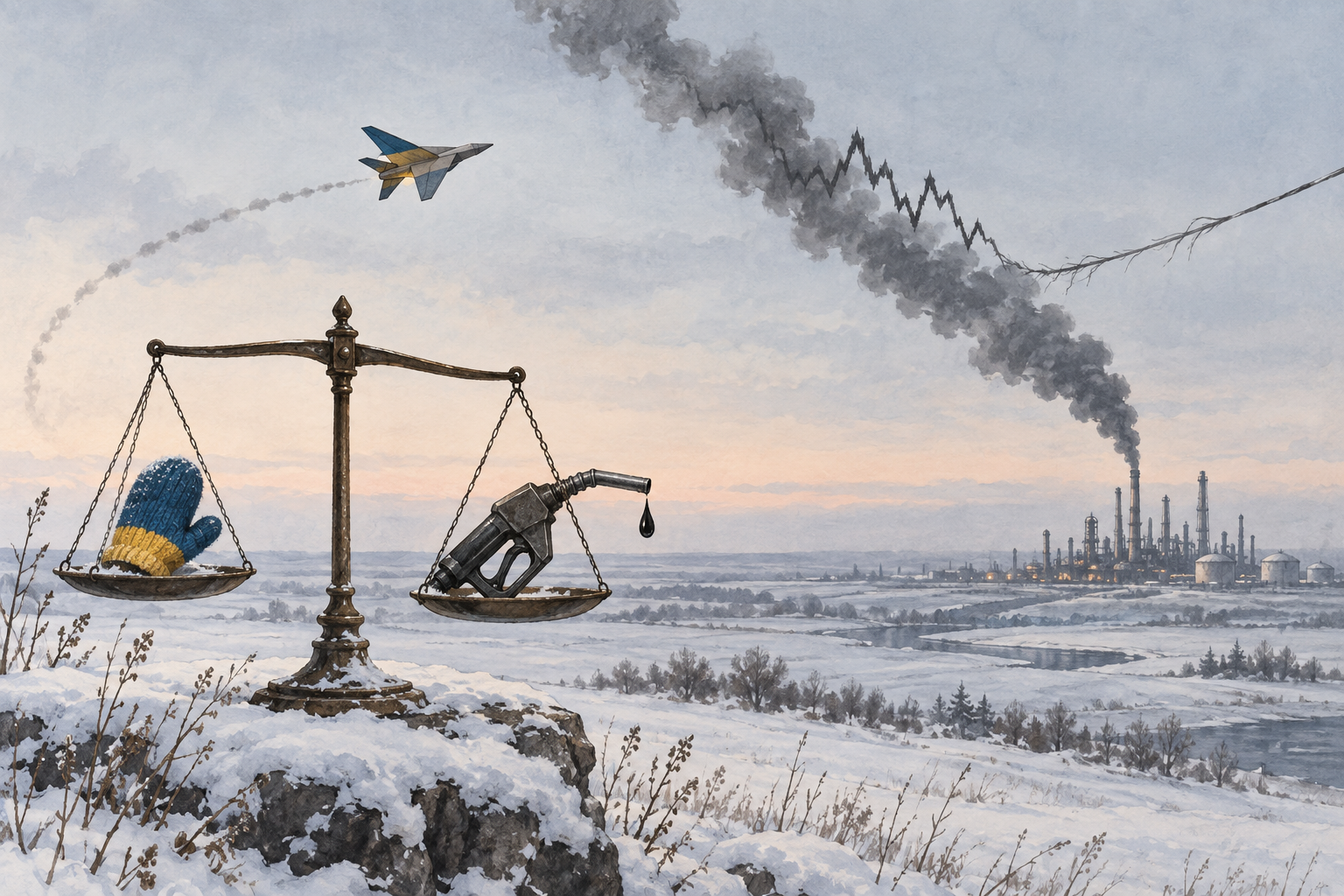
The emerging tradeoff is strategic rather than technical. Ukraine’s long-range campaign may be one of its strongest levers against Russia’s war economy. But the more effective it becomes, the more it risks colliding with allied interests in stable fuel markets. Before winter, that collision is likely to define an uncomfortable question for Kyiv and Washington alike: how much economic pain can allies absorb to impose greater military and political costs on Moscow?






Comments