Immigration bill evidence opens with modern-slavery safeguards under scrutiny

UK Parliament
government
Public Bill Committee Amendments as at 15 September 2026: Immigration and Asylum Bill
UK Parliament
government
Notices of Amendments as at 14 September 2026: Immigration and Asylum Bill
House of Commons Committees
government
15 September 2026 - Immigration and Asylum Bill - Formal meeting - Oral evidence
Untracked bias
Bias and factuality ratings from Media Bias Fact Check. Outlets without a rating are marked “Untracked.”
Evidence begins
The Public Bill Committee began oral evidence on 15 September with UNHCR, the Independent Anti-Slavery Commissioner, the National Crime Agency and refugee-policy witnesses.
Slavery safeguards
The most contested provisions are likely to be modern-slavery credibility rules, bad-faith disqualification and protections for people facing removal.
Deadline set
The committee is programmed to finish its work by 5pm on Tuesday, 3 November 2026.
The Commons Public Bill Committee opened oral evidence on the Immigration and Asylum Bill on Tuesday, 15 September, beginning the first public test of whether ministers can defend a package that combines asylum-system restructuring, immigration enforcement and major changes to modern-slavery protections before line-by-line scrutiny resumes after recess.1
The committee’s first morning panel brought together UNHCR’s UK representative, the Independent Anti-Slavery Commissioner and Bright Blue. They were followed by the National Crime Agency, legal academics and the Refugee Council.3 Afternoon witnesses include the Migration Observatory, Migration Watch UK, the International Rescue Committee, refugee-law and immigration-law specialists, HM Courts and Tribunals Service, the Ministry of Justice, the Home Office and ministers.4
The committee is scheduled to report by 5pm on Tuesday, 3 November. The 15 September sittings are the only oral-evidence day listed in the programme motion.1 That gives today’s evidence record particular weight. MPs will use it to decide where to press amendments when the committee moves through the bill’s clauses, including the modern-slavery provisions, the new appeals authority and asylum-support payment powers.1
The sharpest scrutiny is likely to fall on the bill’s modern-slavery provisions, especially the proposed rules on victim identification, credibility and disqualification from protection. The bill would make the Secretary of State the competent authority for adult victim-identification decisions. It would also allow the Secretary of State, or another nominated public authority, to act as the competent authority for children.7
A key flashpoint is the proposed credibility test for trafficking and slavery claims. The bill provides that decision-makers must treat delays in making a claim, delays in providing relevant status information, material inconsistencies or omissions, and similarities with information supplied by others as damaging to credibility unless there are “good reasons”.7
For witnesses concerned with trafficking identification, that creates an obvious line of challenge: whether trauma, coercion, fear of authorities, language barriers or control by exploiters are adequately protected in the statutory test.
The disqualification provisions are likely to draw similarly close questioning. The bill would require the Secretary of State to disqualify an adult from protection where satisfied that a slavery or trafficking claim was made in bad faith. Examples include a claim made when the person was due to be removed from the UK, subject to exceptions where a claim-notice deadline was met or compelling reasons applied.7 The same provisions would end removal protections, leave-to-remain requirements and further victim-identification decisions after such a determination.7
That structure sets up a predictable amendment battle. MPs are likely to test whether “bad faith” is too closely linked to the timing of a claim, whether the exception for compelling reasons is broad enough, and whether independent oversight should be added before protections are withdrawn.
The bill’s claim-notice mechanism is another likely focus. The Secretary of State or an immigration officer could serve a claim notice on a person liable to removal or deportation, requiring them to provide reasons for wishing to enter or remain in the UK, grounds against removal, relevant status information and supporting evidence by a deadline.7
That mechanism matters because it is linked to the modern-slavery credibility and bad-faith provisions. Late provision of information after a claim-notice deadline can carry consequences for credibility. A trafficking claim made when a person is due to be removed can also be treated as bad faith unless statutory exceptions apply.7
For ministers, the claim-notice model is part of the enforcement case. It is designed to bring all claims forward early and prevent last-minute barriers to removal. For refugee and anti-slavery witnesses, the issue is whether the model captures genuine late disclosure by vulnerable people.
Amendments are therefore likely to seek clearer exemptions for trafficking indicators, legal advice delays, mental-health evidence and child-related cases.
The bill would create a new Independent Immigration Appeals Authority to take over immigration and asylum appeal functions now handled through the tribunal system.7 The official call for evidence described the creation of that body as one of the bill’s central aims, alongside tightening Article 8 rules, reforming modern slavery law, replacing asylum and humanitarian protection with a “core protection” model, and creating a mechanism for some asylum-support recipients to make payments once financially able.7
The committee’s evidence schedule suggests MPs will test both independence and capacity. Legal academics appear in the morning, while HMCTS, the Ministry of Justice and Home Office officials appear in the afternoon.34 Likely amendment areas include appointments, inspection, reporting to Parliament, case time limits and safeguards against ministerial influence over case prioritisation.
A related clause allows the Secretary of State to request that cases before the new authority be expedited where the minister considers it to be in the public interest. The authority may decline only where compliance is not reasonably practicable or not in the interests of justice.7 That provision is likely to be tested against the government’s assurance that the new body will be independent.
The National Crime Agency’s appearance gives ministers an opportunity to support the bill’s enforcement provisions with operational evidence.3 Those provisions include changes to slavery and trafficking prevention and risk orders, including risk orders following acquittal and electronic monitoring.7
The committee will have to weigh that evidence against concerns about overbreadth and procedural safeguards. The most likely amendment pressure will not be on whether exploitation should be tackled, but on thresholds, review mechanisms and the balance between prevention orders and protections for victims who may also be witnesses in criminal investigations.
The wider political context is reinforced by a separate Home Affairs Committee session the same day with Home Secretary Shabana Mahmood, covering immigration, Channel crossings and asylum-process reforms.8 That parallel scrutiny means the bill committee’s evidence record will feed into a broader Westminster test of whether the Home Office can present enforcement reforms as operationally necessary while maintaining protection safeguards.
When detailed scrutiny resumes, the most probable amendment targets are the modern-slavery credibility test, the bad-faith disqualification power, claim-notice deadlines, the removal of the duty to grant leave to remain for recovery, and the independence arrangements for the new appeals authority.
Opposition and backbench amendments are also likely to seek more explicit reporting duties on the effect of the reforms. Those could include data on late trafficking disclosures, disqualification decisions, removals following bad-faith findings, expedited appeals and the use of electronic monitoring.
The procedural position is clear. The committee agreed arrangements for publication of written evidence and private sittings before witnesses were admitted on 14 September. The full 15 September programme then set the witness order and timetable.21 Parliament’s publications page confirms the current bill papers, including the 15 September Public Bill Committee amendment paper and the 14 September notices of amendments.7
The political question is now whether the evidence record gives ministers enough support to resist changes. If today’s witnesses focus on trafficking disclosure, appeal independence and removal-stage safeguards, MPs will have a clear route for amendments when the committee reaches the most contested clauses before the 3 November deadline.56

President Trump’s acceptance of key ethics language has moved the Senate’s Clarity Act closer to a procedural vote, but Democrats and state attorneys general remain divided over whether the restrictions would be enforceable. The bargain now tests whether Congress can regulate digital assets while writing conflict-of-interest rules that bind a sitting president.
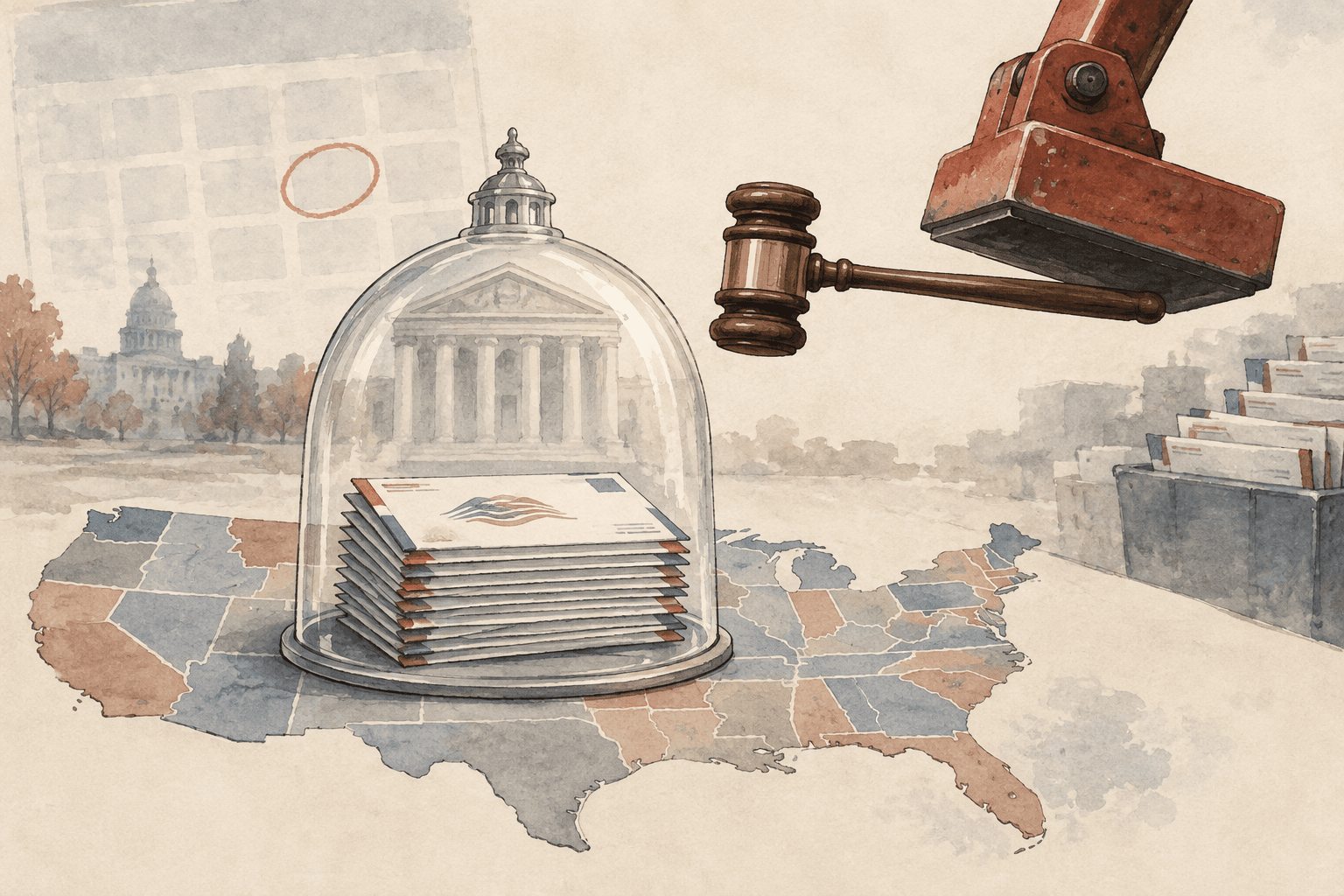
The justices refused to let the Postal Service enforce new mail-ballot restrictions for the 2026 midterms, leaving election officials to proceed under existing procedures while lower-court injunctions remain in place. The dispute turns on whether USPS and the president can impose federal ballot-mail conditions over state election systems so close to Election Day.

Beijing rejected a report that Iranian forces obtained satellite imagery of a U.S. base in Jordan from Chinese entities before a deadly July attack. The allegation remains unverified by other outlets, but it highlights how commercial space imagery is becoming part of a wider technology-control dispute involving China, the United States and Middle East security.

The resignation of Chubu Electric’s top executives and withdrawal of Hamaoka reactor restart applications turn a utility governance failure into a political test for Tokyo’s push to normalize nuclear power. The case threatens to complicate Prime Minister Sanae Takaichi’s effort to accelerate restarts as Japan weighs energy costs, emissions targets and public trust.
Public Bill Committee
A Commons committee that examines a bill line by line after second reading, takes evidence where programmed, and considers amendments before the bill returns to the whole House.
Claim notice
A proposed notice requiring a person liable to removal or deportation to set out immigration, asylum, human-rights or modern-slavery information and evidence by a deadline.
Competent authority
The body responsible for deciding whether someone is a victim or potential victim of slavery or human trafficking.
Conclusive grounds decision
A final decision in the modern-slavery identification process on whether a person is a victim of slavery or human trafficking.
Comments