White House press-access fight tests Trump’s credential authority before midterms
ABC News
news
'This Week' Transcript 9-27-26: Attorney General Todd Blanche & Sen. Mark Kelly
The Guardian
news
Blanche defends Trump’s White House media ban: ‘It’s a privilege … not a right’
CNN Newsource via KION Central Coast
news
Blanche dice que las “noticias sesgadas” son un problema de seguridad nacional que justifica excluir a la prensa
Untracked bias
80% of tracked sources are High factuality
Los Angeles Times
CNN, MS NOW and Politico return to White House after judge lifts Trump’s press ban
CBS News
Judge skeptical of Trump's White House ban on CNN, MS NOW and Politico
Fox News
Federal judge orders Trump administration to restore White House access to CNN, MS NOW and Politico
WUNC
Journalists for CNN, MS NOW and Politico return to the White House upon judge's orders
The Independent
Judge orders Trump to lift White House media ban on CNN, MS NOW and Politico
Quartz
Federal judge orders Trump to restore White House access for CNN, MS NOW, and Politico
TheWrap
Trump Press Ban: CNN, MS NOW and Politico Return to White House After Court-Order Standoff
Bias and factuality ratings from Media Bias Fact Check. Outlets without a rating are marked “Untracked.”
Access restored
A federal judge temporarily ordered White House credentials restored for CNN, MS NOW and Politico.
Deadline looms
The outlets faced a Sept. 28 deadline to seek a preliminary injunction keeping access in place during litigation.
Pool dispute
CNN said it was still barred from an Air Force One pool assignment after the White House complex access order.
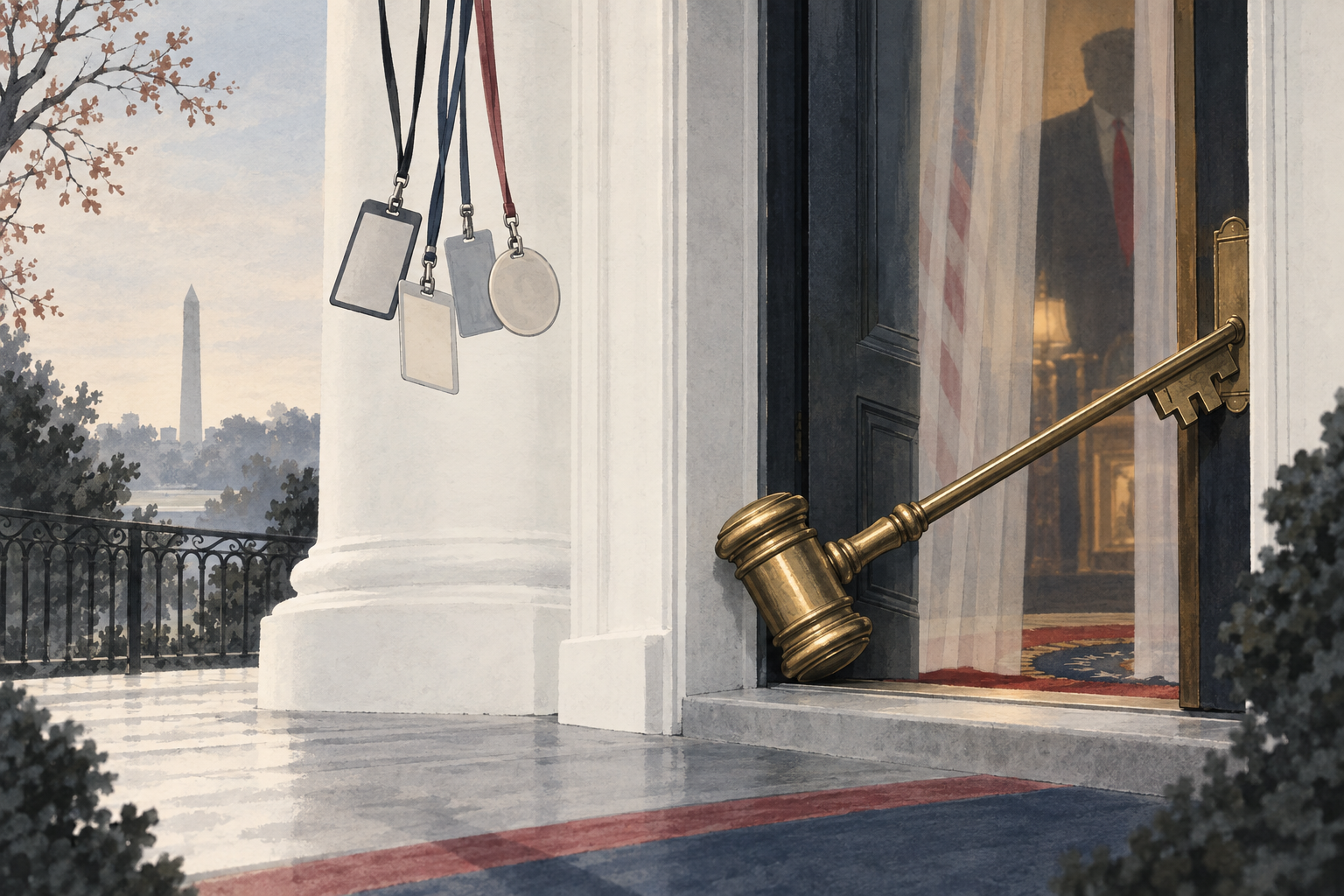
A federal judge’s temporary restoration of White House access for CNN, MS NOW and Politico has become a broader test of President Donald Trump’s authority over press credentials in the final weeks before the midterm elections.
The outlets face a Monday, Sept. 28, deadline to seek a preliminary injunction that would keep their access in place while the case proceeds.8
U.S. District Judge Timothy Kelly ordered the administration to restore the outlets’ hard passes after finding they had shown a likelihood of success on procedural due process grounds. The order temporarily blocked a ban Trump announced after criticizing the outlets’ coverage as false and negative.7
Kelly’s temporary restraining order, set to last 14 days, did not resolve the outlets’ First Amendment claims. But it forced an immediate legal fight over whether the White House can revoke credentials based on disputed coverage.8
The dispute escalated even after access to the White House complex was restored. CNN said it was barred from joining the Air Force One press pool for a presidential trip to Tennessee, despite being scheduled to provide television pool coverage for other networks.1
NPR reported that other major networks initially stood with CNN, MS NOW and Politico by declining to operate the pool. But the standoff left networks facing case-by-case decisions as presidential travel continued.4
Attorney General Todd Blanche defended the administration’s position Sunday on ABC’s “This Week.” He said the president had not denied access in the way critics described and argued that being inside the White House is “a privilege” rather than a right.1
Blanche said Trump was frustrated with what he viewed as inaccurate and one-sided coverage from certain outlets, linking those concerns to national security.1
He said the White House routinely decides who can fly on Air Force One and argued that misinformation from news organizations can affect U.S. relations with foreign partners and adversaries.1
The Guardian reported that Blanche offered no evidence during the interview to support the administration’s broader claim that the outlets’ reporting was inaccurate, rather than unfavorable to the president.2
Justice Department lawyers made a similar argument in court. The Associated Press reported that administration filings cited alleged “reporting incidents” by each outlet, including stories involving White House construction, leak inquiries and security-related details about a White House ballroom project.7
The outlets argued that the ban was viewpoint discrimination and an unconstitutional response to unfavorable coverage.7
Kelly was skeptical of the administration’s national-security defense. CNN Newsource reported that the judge said the cited articles appeared routine and that the government offered little support for its asserted security interest.3
He also wrote that nothing in the record before the lawsuit suggested the hard-pass revocations were driven by national-security concerns. Instead, he noted, Trump’s public explanation focused on the alleged lack of truthfulness and negativity in the outlets’ reporting.3
The ruling turned heavily on process. Kelly found the outlets were likely to succeed in showing their passes had been revoked without constitutionally adequate due process. The AP reported that he said the government must have clear standards for conduct that can lead to credential revocation.7
The judge called the White House’s standard for objectionable reporting vague, according to AP.7
That distinction matters because courts have historically treated White House hard passes differently from ordinary invitations. A president retains broad authority over security and access to sensitive areas. But once the government creates a credentialing system for journalists, judges may require neutral rules, notice and a fair process before access is withdrawn.7
The Air Force One episode underscored the unresolved limits of Kelly’s order. The temporary ruling restored White House press passes, but NPR described the aircraft dispute as a possible loophole because the order specifically addressed credentials for the White House complex.4
CNN Newsource reported that CNN was blocked from the Saturday flight while scheduled to serve in the rotating television pool, a small group that shares reporting with other outlets when space is limited.3
Blanche said it is common for the White House to decide which reporters travel with the president.1
But The Guardian reported that, before Trump’s second term, decisions about which correspondents served in the pool for presidential travel were generally left to the White House Correspondents’ Association and participating networks. The White House has since asserted more direct control over access to settings such as Air Force One and the Oval Office.2
The distinction could shape the next phase of litigation. A preliminary injunction would likely require the court to decide whether the temporary protections should remain in force and whether additional forms of access, including pool assignments tied to presidential travel, are covered by constitutional limits on retaliation or due process.8
The fight is unfolding as both parties enter the final stretch before the midterms. NPR framed the access dispute as part of a broader political environment in which Trump is confronting unfavorable public opinion on several issues, including the economy, tariffs and the war in Iran.4
The Guardian reported that Trump faces a difficult political landscape, while also noting that public trust in news organizations remains low.2
For the White House, the case tests whether the president can punish outlets he says are inaccurate or biased without violating constitutional protections. For the press corps, it tests whether access to cover the president can be conditioned on the tone or content of coverage.
Kelly’s temporary order gave CNN, MS NOW and Politico immediate relief, but not a final answer. The next filing deadline, Sept. 28, could determine whether the restored credentials remain in place long enough for the courts to address the larger question: how much control a president may exercise over the journalists assigned to cover him.8

President Donald Trump is scheduled to campaign Saturday in Vandalia, Ohio, for Republican Sen. Jon Husted after stops in Oklahoma and Alabama. The appearance moves Trump’s midterm travel into a Senate contest Republicans describe as a turnout priority.

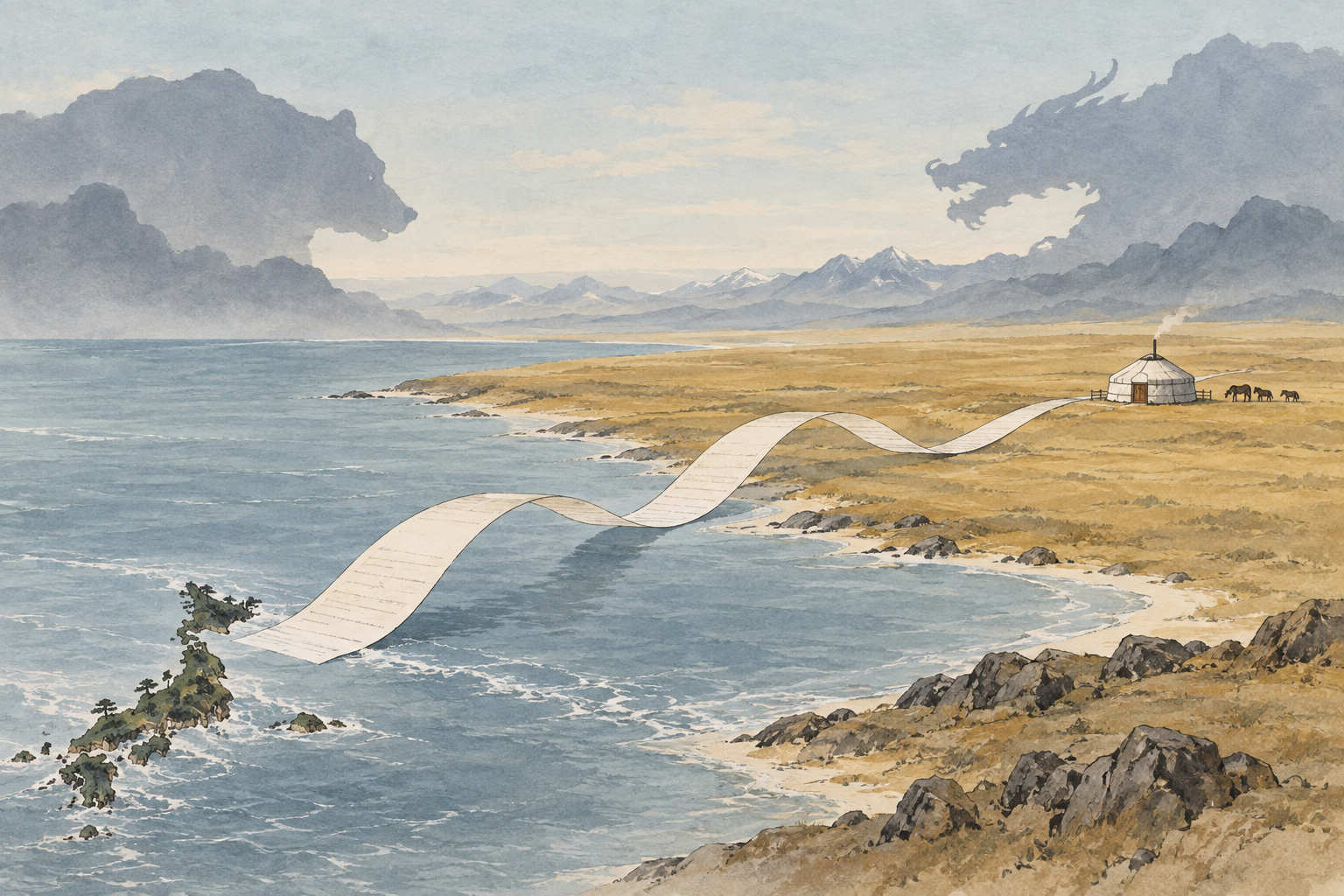
Mongolian Prime Minister Nyam-Osor Uchral began a Sept. 27–30 working visit to Japan, where talks with Prime Minister Sanae Takaichi are expected to deepen a partnership Tokyo frames around democracy, rule of law and strategic resilience. The visit highlights Japan’s effort to strengthen ties with inland partners positioned between China, Russia and the wider Indo-Pacific order.

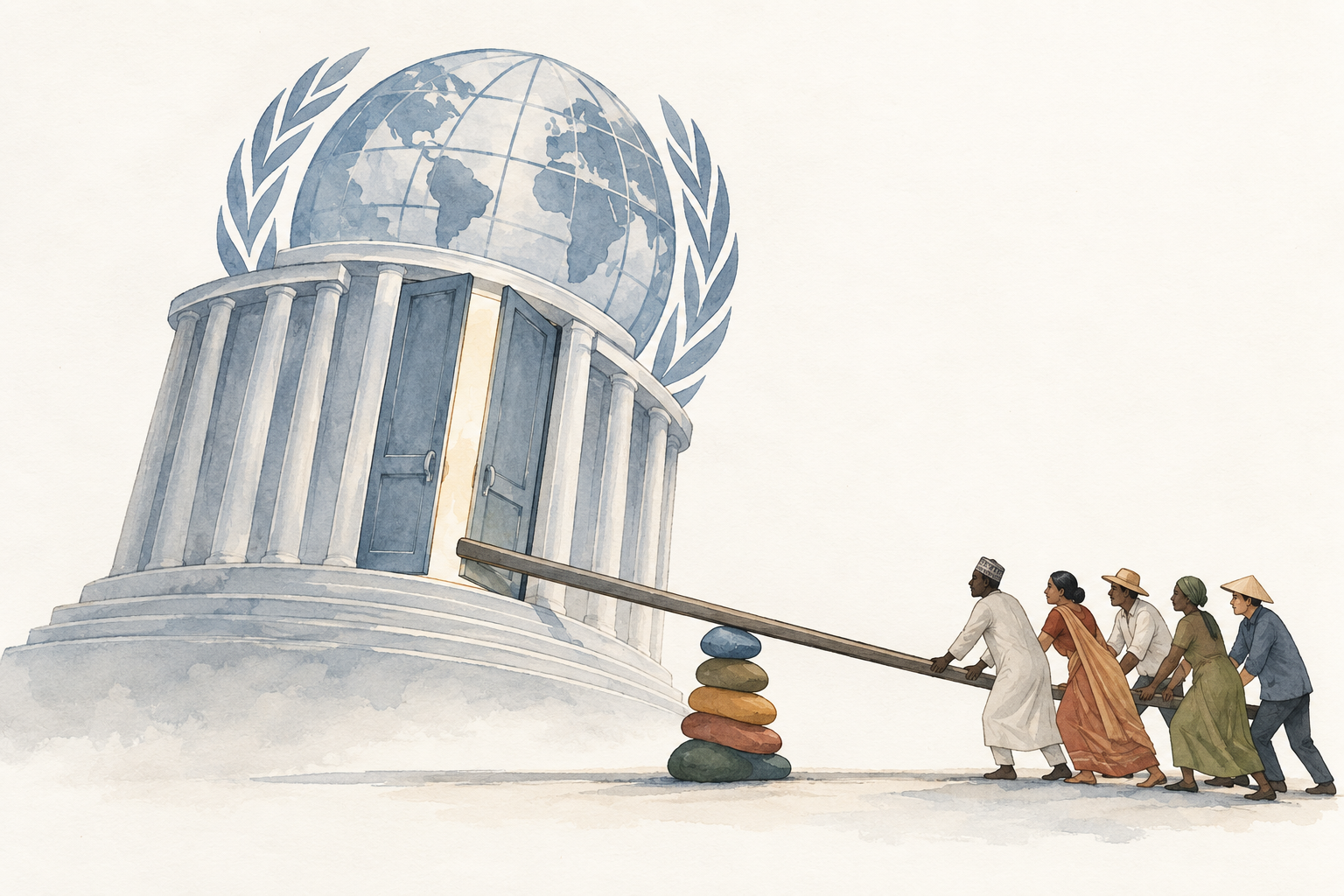
External Affairs Minister S. Jaishankar’s September 26 remarks framed BRICS as supportive of the United Nations and as a source of bottom-up pressure for reform. The message fits India’s effort to pair Global South leadership with continued investment in the UN-centred multilateral system.

Chinese Vice President Han Zheng used the UN General Assembly to present Beijing’s development, security, civilization and governance initiatives as answers to disorder in the international system. The speech underscored China’s effort to frame its own agenda as a reinforcement of UN authority, even as it challenges Western-led interpretations of multilateral reform.
Temporary restraining order
A short-term court order meant to preserve the status quo until a judge can consider more complete arguments.
Preliminary injunction
A longer-lasting order that can keep a policy blocked while a lawsuit proceeds.
Hard pass
A White House credential that allows approved journalists regular access to the White House complex.
Press pool
A small rotating group of journalists that covers the president in tight spaces and shares reports with other outlets.



Comments